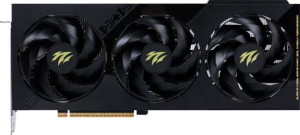
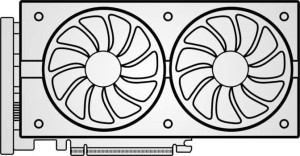
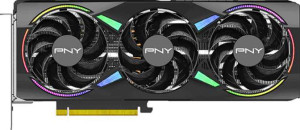
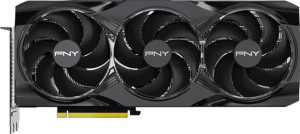
Nvidia GeForce RTX 5080 specifications and in-depth review

Nvidia GeForce RTX 5080

Manufacturer: Nvidia

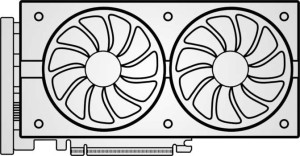
The Nvidia GeForce RTX 5080 is a high-performance graphics card designed for advanced gaming and professional applications. With 16GB of VRAM, this card offers substantial memory to handle demanding workloads and high-resolution gaming with ease.

Key technical features of the RTX 5080 include a GPU clock speed of 2300 MHz, a turbo boost up to 2620 MHz, and a peak floating-point performance of 56.34 TFLOPS. It also supports the latest DirectX 12 Ultimate, ray tracing, and multi-display technology, making it a robust option for modern gaming and creative tasks. Additionally, its 960 GB/s memory bandwidth ensures fast data transfer for smooth performance.

Pros
  • Supports up to 4 displays for multi-display setups.
  • Equipped with 16GB of VRAM, providing ample memory for high-resolution tasks and gaming.
  • Includes support for Intel Resizable BAR for improved memory access efficiency.
  • Offers ray tracing support for enhanced visual effects in compatible games and applications.
  • Built with PCIe 5.0 for fast data transfer, ensuring better overall performance with compatible systems.
Cons
  • Does not support USB-C, DVI, or mini DisplayPort outputs, limiting display connectivity options.
  • Lacks air-water cooling, which could affect cooling efficiency under heavy load.
  • Does not feature RGB lighting, which might be a downside for users who prefer customizable aesthetics.
Who is this for?

The Nvidia GeForce RTX 5080 is ideal for gamers and professionals who require high-performance graphics. Its support for ray tracing and DLSS makes it well-suited for visually demanding applications, while the 16GB of VRAM ensures smooth performance in high-resolution gaming and 3D rendering. The card’s ability to handle up to four displays simultaneously further benefits users working with multi-monitor setups for productivity or immersive gaming experiences.

Who is this NOT for?

This graphics card may not be suitable for users with limited space or those looking for low-power solutions, as its 360W TDP indicates a relatively high power draw. Additionally, its lack of USB-C and other display output options like DVI or mini DisplayPort could be limiting for users with specific connectivity needs. The absence of air-water cooling may also make it less ideal for environments with constrained airflow or heavy thermal loads.

Performance:

GPU clock speed 2300 MHz
GPU turbo 2620 MHz
pixel rate 293.4 GPixel/s
floating-point performance 56.34 TFLOPS
texture rate 880 GTexels/s
GPU memory speed 1875 MHz
shading units 10752
texture mapping units (TMUs) 336
render output units (ROPs) 112
Has Double Precision Floating Point (DPFP)

The performance of the Nvidia GeForce RTX 5080 is driven by impressive specifications, including a GPU clock speed of 2300 MHz and a turbo boost of 2620 MHz. It delivers a peak floating-point performance of 56.34 TFLOPS and a pixel rate of 293.4 GPixel/s. With 10752 shading units, 336 texture mapping units, and 112 render output units, the card ensures excellent graphical processing. Additionally, the GPU memory operates at 1875 MHz, and the card supports Double Precision Floating Point (DPFP) for high-precision tasks.

Memory:

effective memory speed 30000 MHz
maximum memory bandwidth 960 GB/s
VRAM 16GB
GDDR version GDDR7
memory bus width 256-bit
Supports ECC memory

The Nvidia GeForce RTX 5080 is equipped with 16GB of VRAM, ensuring ample memory for demanding tasks and high-resolution gaming. Its effective memory speed reaches 30000 MHz, and it features a maximum memory bandwidth of 960 GB/s for rapid data transfer. The card utilizes the latest GDDR7 memory and a 256-bit memory bus width, with support for ECC memory to enhance data integrity and reliability.

Features:

DirectX version DirectX 12 Ultimate
OpenGL version 4.6
OpenCL version 3
Supports multi-display technology
supports ray tracing
Supports 3D
supports DLSS
has XeSS (XMX)
AMD SAM / Intel Resizable BAR Intel Resizable BAR
has LHR
has RGB lighting
supported displays 4

The Nvidia GeForce RTX 5080 offers a range of advanced features for modern gaming and professional use. It supports DirectX 12 Ultimate and ray tracing for enhanced visual effects, while also being compatible with DLSS technology to improve frame rates. The card supports multi-display setups, enabling up to four displays, and is equipped with Intel Resizable BAR for better memory access. Additionally, it supports stereoscopic 3D, but does not include RGB lighting or XeSS (XMX).

Ports:

has an HDMI output
HDMI ports 1
HDMI version HDMI 2.1b
DisplayPort outputs 3
USB-C ports 0
DVI outputs 0
mini DisplayPort outputs 0

The Nvidia GeForce RTX 5080 offers versatile connectivity options, including one HDMI 2.1b port and three DisplayPort outputs for high-quality video and audio output. The card does not feature any USB-C, DVI, or mini DisplayPort outputs, ensuring focus on HDMI and DisplayPort for modern display needs.

General info:

GPU architecture Blackwell
release date January 2025
Thermal Design Power (TDP) 360W
PCI Express (PCIe) version 5
semiconductor size 5 nm
number of transistors 45600 million
Has air-water cooling
width 304 mm
height 137 mm

The Nvidia GeForce RTX 5080 is built on the Blackwell GPU architecture, utilizing a 5 nm semiconductor size and featuring a total of 45.6 billion transistors. With a thermal design power (TDP) of 360W, it operates efficiently within modern power and cooling constraints. The card supports PCIe 5.0 for high-speed data transfer and measures 304 mm in width and 137 mm in height. It does not include air-water cooling, but its design remains optimized for effective heat management.

Final Verdict

The Nvidia GeForce RTX 5080 is a powerful graphics card built for high-end gaming and professional applications, offering impressive features like 16GB of VRAM and support for ray tracing. Its robust performance, multi-display support, and compatibility with modern technologies like Intel Resizable BAR make it a solid choice for users who demand top-tier graphics. However, its relatively high power consumption and lack of some display outputs may limit its appeal to those with specific needs. Overall, it's a strong option for those seeking exceptional graphical performance in demanding environments.

Popular Comparisons

Nvidia GeForce RTX 5080
VS
AMD Radeon AI Pro R9700
Nvidia GeForce RTX 5080
VS
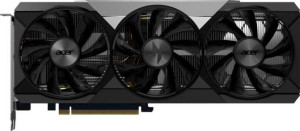
Acer Nitro Radeon RX 9070 XT
Nvidia GeForce RTX 5080
VS
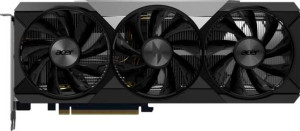
Acer Nitro Radeon RX 9070 OC
Nvidia GeForce RTX 5080
VS
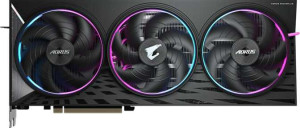
Gigabyte Aorus Radeon RX 9070 XT Elite
Nvidia GeForce RTX 5080
VS
Galax GeForce RTX 5080 Magic Blade
Nvidia GeForce RTX 5080
VS
Galax GeForce RTX 5080 HOF OC Lab Plus
Nvidia GeForce RTX 5080
VS
Nvidia GeForce RTX 5070 Ti
Nvidia GeForce RTX 5080
VS
AMD Radeon RX 9070 XT
Nvidia GeForce RTX 5080
VS
Nvidia GeForce RTX 4080 Super
Nvidia GeForce RTX 5080
VS
Asus ROG Astral GeForce RTX 5080
Nvidia GeForce RTX 5080
VS
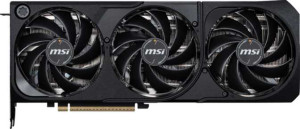
MSI GeForce RTX 5080 Shadow 3X
Nvidia GeForce RTX 5080
VS
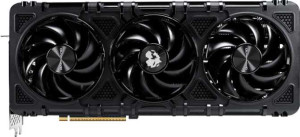
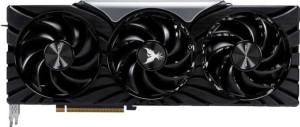
Gainward GeForce RTX 5080 Phantom GS
Nvidia GeForce RTX 5080
VS
Gainward GeForce RTX 5080 Phoenix GS
Nvidia GeForce RTX 5080
VS
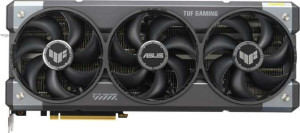
Asus TUF Gaming GeForce RTX 5080
Nvidia GeForce RTX 5080
VS
ASRock Arc B580 Challenger OC
Nvidia GeForce RTX 5080
VS
Sapphire Radeon AI Pro R9700
Nvidia GeForce RTX 5080
VS
Nvidia RTX Pro 4500 Blackwell
Nvidia GeForce RTX 5080
VS
Nvidia RTX Pro 5000 Blackwell
Nvidia GeForce RTX 5080
VS
Nvidia RTX Pro 4000 Blackwell
Nvidia GeForce RTX 5080
VS
Zotac Gaming GeForce RTX 5080 Solid Core
Nvidia GeForce RTX 5080
VS
Nvidia GeForce RTX 5090
Nvidia GeForce RTX 5080
VS
PNY GeForce RTX 5080 OC Triple Fan
Nvidia GeForce RTX 5080
VS
PNY GeForce RTX 5070 Ti ARGB Epic-X Triple Fan
Nvidia GeForce RTX 5080
VS
PNY GeForce RTX 5080 Triple Fan
Nvidia GeForce RTX 5080
VS
Palit GeForce RTX 5080 GamingPro OC
Nvidia GeForce RTX 5080
VS
Nvidia RTX 4000 Ada Generation
Nvidia GeForce RTX 5080
VS
Nvidia GeForce RTX 5080 Laptop