Nvidia RTX 1000 Ada Generation Laptop specifications and in-depth review

Nvidia RTX 1000 Ada Generation Laptop

Manufacturer: Nvidia

The Nvidia RTX 1000 Ada Generation Laptop is a mobile graphics card designed for workstation laptops, sitting within the Ada Lovelace GPU family. Built on a 5nm semiconductor process, it integrates 18,900 million transistors and connects to the host system via PCI Express 4.0, reflecting a relatively modern platform foundation for professional mobile use.

On the performance side, the GPU operates at a base clock of 1,485 MHz with a boost frequency reaching 2,025 MHz, delivering 10.37 TFLOPS of single-precision compute throughput alongside a texture rate of 162 GTexels/s and a pixel fill rate of 97.2 GPixels/s. Its 6GB of GDDR6 memory runs across a 96-bit bus at an effective speed of 16,000 MHz, yielding up to 192 GB/s of bandwidth. The card supports DirectX 12 Ultimate, OpenGL 4.6, OpenCL 3, hardware ray tracing, DLSS, Double Precision Floating Point, ECC memory, and Intel Resizable BAR, with output for up to four simultaneous displays and a configurable TDP of 35W.

Pros
  • Hardware ray tracing and DLSS support enable more advanced rendering capabilities within a mobile form factor
  • ECC memory support adds a layer of data reliability useful for professional and compute-oriented workloads
  • The 5nm fabrication process allows 18,900 million transistors to be packed into a thermally constrained design
  • Support for up to four simultaneous displays offers meaningful flexibility for multi-monitor setups
  • Intel Resizable BAR support allows the CPU broader access to GPU memory, which can improve data throughput in supported scenarios
  • Double Precision Floating Point (DPFP) support extends usability to compute tasks that require higher numerical accuracy
Cons
  • The 96-bit memory bus width is relatively narrow, which limits memory bandwidth headroom despite the GDDR6 speed
  • 6GB of VRAM may prove restrictive for memory-intensive professional or creative workloads
  • A 35W TDP, while efficient, places a ceiling on sustained performance under heavy load
  • No air-water cooling support is included, leaving thermal management entirely dependent on the laptop chassis design
Who is this for?

This mobile GPU is well-suited to professionals working in fields that benefit from Double Precision Floating Point and ECC memory support, such as scientific computing, CAD, or data visualization within a laptop form factor. Its hardware ray tracing and DLSS capabilities also make it a reasonable fit for creative professionals handling real-time rendering or visualization tasks who need portability without sacrificing compute reliability. The support for up to four simultaneous displays further suits users who rely on expanded screen real estate for complex workflows.

Who is this NOT for?

Users with demanding, memory-intensive workloads will likely find the 6GB VRAM paired with a 96-bit memory bus insufficient, as this combination can become a bottleneck when handling large textures, high-resolution assets, or complex simulation datasets. Similarly, those expecting sustained peak performance under prolonged heavy load may be constrained by the 35W TDP ceiling, which limits how aggressively the GPU can operate over extended sessions. This card is also not suited to users whose software pipelines depend on XeSS or workloads that require greater memory bandwidth than 192 GB/s can provide.

Performance:

GPU clock speed 1485 MHz
GPU turbo 2025 MHz
pixel rate 97.2 GPixel/s
floating-point performance 10.37 TFLOPS
texture rate 162 GTexels/s
GPU memory speed 2000 MHz
shading units 2560
texture mapping units (TMUs) 80
render output units (ROPs) 48
Has Double Precision Floating Point (DPFP)

The RTX 1000 Ada Generation Laptop GPU runs at a base clock of 1,485 MHz, boosting up to 2,025 MHz under load, and delivers 10.37 TFLOPS of floating-point performance alongside a texture rate of 162 GTexels/s and a pixel fill rate of 97.2 GPixels/s. Its 2,560 shading units are complemented by 80 texture mapping units and 48 render output units, while GPU memory operates at 2,000 MHz. The card also supports Double Precision Floating Point, extending its suitability beyond purely graphics-oriented workloads.

Memory:

effective memory speed 16000 MHz
maximum memory bandwidth 192 GB/s
VRAM 6GB
GDDR version GDDR6
memory bus width 96-bit
Supports ECC memory

The RTX 1000 Ada Generation Laptop GPU is equipped with 6GB of GDDR6 VRAM running across a 96-bit memory bus at an effective speed of 16,000 MHz, yielding a maximum memory bandwidth of 192 GB/s. ECC memory support is included, which helps detect and correct memory errors — a feature particularly relevant for reliability-sensitive professional workloads.

Features:

DirectX version DirectX 12 Ultimate
OpenGL version 4.6
OpenCL version 3
Supports multi-display technology
supports ray tracing
Supports 3D
supports DLSS
has XeSS (XMX)
AMD SAM / Intel Resizable BAR Intel Resizable BAR
has LHR
supported displays 4

The RTX 1000 Ada Generation Laptop GPU supports DirectX 12 Ultimate, OpenGL 4.6, and OpenCL 3, covering a broad range of graphics and compute API requirements. Hardware ray tracing and DLSS are both supported, alongside stereoscopic 3D and multi-display output for up to four screens simultaneously. Intel Resizable BAR is enabled for more flexible CPU-to-GPU memory access, while XeSS (XMX) and LHR are not present on this card.

Ports:

General info:

GPU architecture Ada Lovelace
Thermal Design Power (TDP) 35W
PCI Express (PCIe) version 4
semiconductor size 5 nm
number of transistors 18900 million
Has air-water cooling

The RTX 1000 Ada Generation Laptop GPU is built on the Ada Lovelace architecture, fabricated using a 5nm process node that integrates 18,900 million transistors into a compact die. It connects to the host system via PCI Express 4.0 and operates within a 35W TDP envelope, reflecting its design for thermally constrained mobile platforms. Air-water cooling is not included with this card.

Final Verdict

The Nvidia RTX 1000 Ada Generation Laptop is a thoughtfully scoped mobile GPU that targets professionals who need compute reliability and modern graphics feature support within a power-efficient package. Its Ada Lovelace architecture, hardware ray tracing, DLSS, and notably its Double Precision Floating Point and ECC memory support give it a distinct lean toward professional and mixed workloads rather than purely consumer-oriented use. That said, its 6GB VRAM, 96-bit bus, and 35W TDP are real constraints that define its ceiling, meaning users with the heaviest rendering or simulation demands will need to weigh those limitations carefully. For mobile professionals who prioritize compute accuracy, display flexibility, and a modern API feature set in a thermally manageable form factor, this card represents a focused and coherent offering.

Popular Comparisons

Nvidia RTX 1000 Ada Generation Laptop
VS
AMD Radeon Pro W7400
Nvidia RTX 1000 Ada Generation Laptop
VS
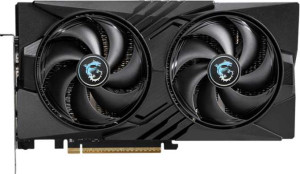
MSI GeForce RTX 5060 Gaming OC
Nvidia RTX 1000 Ada Generation Laptop
VS
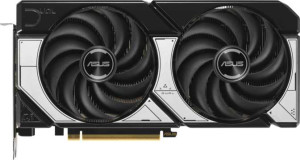
Asus Dual GeForce RTX 5070
Nvidia RTX 1000 Ada Generation Laptop
VS
Nvidia RTX Pro 2000 Blackwell
Nvidia RTX 1000 Ada Generation Laptop
VS
PNY GeForce RTX 5060 Dual Fan