Nvidia RTX 2000 ADA Generation specifications and in-depth review

Nvidia RTX 2000 ADA Generation

Manufacturer: Nvidia

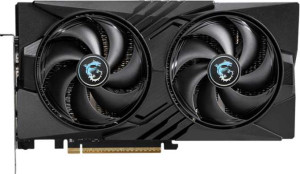
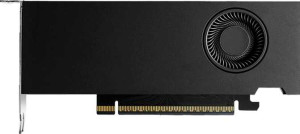
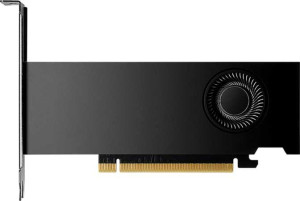
The Nvidia RTX 2000 Ada Generation is a workstation-class graphics card designed around Nvidia's Ada Lovelace architecture, fabricated on a 5 nm semiconductor process. With a compact form factor measuring 167.6 mm wide and 68.6 mm tall, it fits within space-constrained professional environments while still delivering a capable feature set for compute and visualization workloads. The card operates at a base GPU clock of 1620 MHz, boosting up to 2130 MHz under load, and carries a thermal design power rating of just 70W.

On the memory side, the RTX 2000 Ada Generation is equipped with 16GB of GDDR6 VRAM across a 128-bit memory bus, reaching an effective memory speed of 16000 MHz and a maximum bandwidth of 224 GB/s. ECC memory support is included, which is a notable consideration for error-sensitive professional applications. The card houses 2816 shading units, 88 texture mapping units, and 48 render output units, yielding a texture rate of 187.4 GTexels/s and a pixel rate of 102.2 GPixels/s. Connectivity is handled through four mini DisplayPort outputs, supporting up to four simultaneous displays, and the card connects to the host system via PCIe 4.0. Ray tracing support, DirectX 12, OpenGL 4.6, and OpenCL 3 compatibility round out the feature profile.

Pros
  • A 70W TDP keeps power consumption low, reducing heat output and strain on system power supplies
  • 16GB of GDDR6 VRAM provides substantial frame buffer capacity for memory-intensive professional workloads
  • ECC memory support adds data integrity protection, making it suitable for error-sensitive compute tasks
  • Double Precision Floating Point (DPFP) support broadens its usability for numerical and scientific workloads
  • The compact dimensions of 167.6 mm x 68.6 mm make it compatible with space-constrained workstation enclosures
  • Four mini DisplayPort outputs allow simultaneous connection of up to four displays
Cons
  • The 128-bit memory bus width is relatively narrow, which limits available memory bandwidth headroom
  • No HDMI output is present, requiring adapters for monitors that lack mini DisplayPort connectivity
  • DLSS is not supported, removing access to AI-based upscaling for applicable rendering workflows
  • No USB-C or standard DisplayPort outputs are available, limiting direct compatibility with certain display configurations
  • Air-water cooling is not included, leaving thermal management entirely dependent on the system environment
Who is this for?

This card is well-suited to professionals working in compute-intensive or precision-sensitive workstation environments, where ECC memory support and Double Precision Floating Point (DPFP) capability are meaningful requirements. Its 16GB of GDDR6 VRAM makes it a reasonable fit for tasks that involve large datasets or memory-heavy 3D visualization, while its 70W TDP and compact 167.6 mm x 68.6 mm footprint make it particularly appropriate for small form factor or thermally constrained workstation builds. Users who need to drive up to four simultaneous displays through mini DisplayPort connections will also find its output configuration well-matched to multi-monitor professional setups.

Who is this NOT for?

This card is not a strong fit for users seeking consumer gaming-oriented features, as it lacks DLSS support, RGB lighting, and standard DisplayPort or HDMI outputs, which limits direct compatibility with common gaming monitors and peripherals without additional adapters. The 128-bit memory bus may also prove restrictive for workloads that depend heavily on sustained high memory throughput, making it less suitable for bandwidth-demanding tasks at the upper end of professional graphics work. Additionally, users requiring air-water hybrid cooling or a more elaborate thermal solution will need to look elsewhere, as no such cooling system is included with this card.

Performance:

GPU clock speed 1620 MHz
GPU turbo 2130 MHz
pixel rate 102.2 GPixel/s
floating-point performance 12 TFLOPS
texture rate 187.4 GTexels/s
GPU memory speed 2000 MHz
shading units 2816
texture mapping units (TMUs) 88
render output units (ROPs) 48
Has Double Precision Floating Point (DPFP)

The RTX 2000 Ada Generation runs at a base GPU clock of 1620 MHz, climbing to 2130 MHz in turbo mode, while GPU memory operates at 2000 MHz. The card delivers 12 TFLOPS of floating-point performance alongside a texture rate of 187.4 GTexels/s and a pixel rate of 102.2 GPixels/s, supported by 88 texture mapping units and 48 render output units. Its 2816 shading units contribute to the overall throughput, and the inclusion of Double Precision Floating Point (DPFP) support makes it suited for workloads that require high numerical accuracy.

Memory:

effective memory speed 16000 MHz
maximum memory bandwidth 224 GB/s
VRAM 16GB
GDDR version GDDR6
memory bus width 128-bit
Supports ECC memory

The RTX 2000 Ada Generation is equipped with 16GB of GDDR6 VRAM running at an effective memory speed of 16000 MHz across a 128-bit memory bus, yielding a maximum memory bandwidth of 224 GB/s. ECC memory support is also included, adding a layer of data integrity protection that is particularly relevant for precision-sensitive professional workloads.

Features:

DirectX version DirectX 12
OpenGL version 4.6
OpenCL version 3
Supports multi-display technology
supports ray tracing
Supports 3D
supports DLSS
has XeSS (XMX)
AMD SAM / Intel Resizable BAR Intel Resizable BAR
has LHR
has RGB lighting
supported displays 4

The RTX 2000 Ada Generation supports ray tracing, stereoscopic 3D, and multi-display output across up to four screens, covering a solid range of rendering and visualization capabilities. On the API side, it is compatible with DirectX 12, OpenGL 4.6, and OpenCL 3, while Intel Resizable BAR support is also present. The card does not include DLSS, XeSS (XMX), LHR, or RGB lighting, and it lacks support for AMD SAM beyond the Intel Resizable BAR implementation.

Ports:

has an HDMI output
DisplayPort outputs 0
USB-C ports 0
DVI outputs 0
mini DisplayPort outputs 4

The RTX 2000 Ada Generation relies exclusively on four mini DisplayPort outputs for video connectivity, with no HDMI, standard DisplayPort, USB-C, or DVI outputs present on the card.

General info:

GPU architecture Ada Lovelace
Thermal Design Power (TDP) 70W
PCI Express (PCIe) version 4
semiconductor size 5 nm
number of transistors 18900 million
Has air-water cooling
width 167.6 mm
height 68.6 mm

The RTX 2000 Ada Generation is built on Nvidia's Ada Lovelace architecture, manufactured using a 5 nm process node and packing 18,900 million transistors onto the die. It connects to the host system via PCIe 4.0 and carries a TDP of just 70W, reflecting a notably restrained power envelope for its class. The card measures 167.6 mm in width and 68.6 mm in height, and it does not include air-water cooling.
Final Verdict

The Nvidia RTX 2000 Ada Generation is a workstation-oriented graphics card that carves out a clear niche through its combination of 16GB of ECC-capable GDDR6 VRAM, Double Precision Floating Point support, and a remarkably restrained 70W power envelope — all within a compact form factor well-suited to professional system builds. Its Ada Lovelace architecture and 5 nm fabrication underpin a capable feature set for compute and visualization work, though users should be mindful of its narrow 128-bit memory bus and the absence of consumer-facing features like DLSS or standard display outputs. For professionals prioritizing data integrity, multi-display output, and thermal efficiency over raw gaming-oriented capabilities, the RTX 2000 Ada Generation represents a focused and purposeful workstation solution.

Popular Comparisons

Nvidia RTX 2000 ADA Generation
VS
AMD Radeon Pro W7400
Nvidia RTX 2000 ADA Generation
VS
MSI GeForce RTX 5060 Gaming OC
Nvidia RTX 2000 ADA Generation
VS
Nvidia GeForce RTX 5060
Nvidia RTX 2000 ADA Generation
VS
Nvidia GeForce RTX 4060
Nvidia RTX 2000 ADA Generation
VS
Nvidia GeForce RTX 5060 Ti 16GB
Nvidia RTX 2000 ADA Generation
VS
Nvidia GeForce RTX 4070 GDDR6
Nvidia RTX 2000 ADA Generation
VS
Nvidia RTX Pro 2000 Blackwell