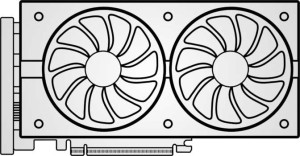
Nvidia RTX 500 Ada Generation Laptop specifications and in-depth review

Nvidia RTX 500 Ada Generation Laptop

Manufacturer: Nvidia

The Nvidia RTX 500 Ada Generation Laptop is a mobile graphics card based on the Ada Lovelace architecture, manufactured on a 5nm process node with 18,900 million transistors. Designed with efficiency in mind, it carries a Thermal Design Power of 35W, making it suited for slim and power-conscious laptop designs. It supports ray tracing, DLSS, DirectX 12 Ultimate, and Intel Resizable BAR, while also offering multi-display support and stereoscopic 3D output.

On the technical side, the RTX 500 Ada Generation Laptop features 2,048 shading units, 64 texture mapping units, and 32 render output units, delivering a texture rate of 129.6 GTexels/s and a pixel rate of 64.8 GPixel/s. The GPU operates at a base clock of 1,485 MHz with a boost of 2,025 MHz. Its 4GB of GDDR6 memory runs across a 64-bit bus at an effective speed of 16,000 MHz, providing up to 128 GB/s of memory bandwidth. The card connects via PCIe 4.0, supports ECC memory, OpenCL 3.0, and OpenGL 4.6, and includes Double Precision Floating Point capability.

Pros
  • Supports hardware-accelerated ray tracing and DLSS, enabling more advanced rendering capabilities within a mobile form factor
  • ECC memory support adds a layer of data reliability useful for compute-oriented workloads
  • Built on a 5nm process node with 18,900 million transistors, reflecting a dense and modern silicon design
  • Includes Double Precision Floating Point support, broadening its suitability beyond standard graphics tasks
  • Intel Resizable BAR support allows the CPU to access the full GPU memory pool, which can improve data transfer efficiency
  • Compatible with DirectX 12 Ultimate, OpenGL 4.6, and OpenCL 3, covering a wide range of graphics and compute workloads
Cons
  • A 64-bit memory bus width is narrow, which limits the amount of data that can be transferred per clock cycle
  • 4GB of VRAM may prove insufficient for memory-intensive workloads or higher-resolution rendering tasks
  • A 35W TDP, while efficient for mobile use, restricts sustained performance headroom compared to higher-power configurations
  • Does not support XeSS (XMX), reducing upscaling technology options to DLSS only
Who is this for?

This mobile GPU is a reasonable fit for laptop users who need a balance between energy efficiency and compute capability, particularly within thin-and-light or mid-range gaming notebook designs. Its 35W TDP makes it well-suited for systems where thermal and power headroom is limited, and the inclusion of ray tracing, DLSS, and DirectX 12 Ultimate support means it can handle modern graphical workloads at moderate settings. The ECC memory and Double Precision Floating Point support also make it a viable option for users engaged in light professional compute tasks such as data processing or GPU-accelerated applications that require memory reliability.

Who is this NOT for?

Users looking to run memory-intensive workloads or high-resolution rendering tasks will likely find the 4GB GDDR6 VRAM over a 64-bit bus a limiting factor, as both capacity and bandwidth may fall short under demanding conditions. Similarly, those pursuing high-fidelity gaming at elevated resolutions or complex 3D scene rendering will encounter performance ceilings given the constrained TDP and memory configuration. The absence of XeSS support also means users dependent on that specific upscaling technology will need to rely solely on DLSS, making this card a poor match for workflows tied to Intel-centric upscaling pipelines.

Performance:

GPU clock speed 1485 MHz
GPU turbo 2025 MHz
pixel rate 64.8 GPixel/s
floating-point performance 8.294 TFLOPS
texture rate 129.6 GTexels/s
GPU memory speed 2000 MHz
shading units 2048
texture mapping units (TMUs) 64
render output units (ROPs) 32
Has Double Precision Floating Point (DPFP)

The Performance section of the Nvidia RTX 500 Ada Generation Laptop reveals a GPU base clock of 1,485 MHz that boosts up to 2,025 MHz under load, supported by 2,048 shading units, 64 texture mapping units, and 32 render output units. These combine to produce a texture rate of 129.6 GTexels/s and a pixel rate of 64.8 GPixel/s, while overall compute throughput reaches 8.294 TFLOPS of floating-point performance. GPU memory operates at 2,000 MHz, and the card includes Double Precision Floating Point support, extending its utility beyond standard graphics workloads.

Memory:

effective memory speed 16000 MHz
maximum memory bandwidth 128 GB/s
VRAM 4GB
GDDR version GDDR6
memory bus width 64-bit
Supports ECC memory

The Nvidia RTX 500 Ada Generation Laptop is equipped with 4GB of GDDR6 VRAM running across a 64-bit memory bus, with an effective memory speed of 16,000 MHz that yields a maximum memory bandwidth of 128 GB/s. The card also supports ECC memory, which helps detect and correct data errors during operation, adding a layer of reliability for workloads where memory accuracy matters.

Features:

DirectX version DirectX 12 Ultimate
OpenGL version 4.6
OpenCL version 3
Supports multi-display technology
supports ray tracing
Supports 3D
supports DLSS
has XeSS (XMX)
AMD SAM / Intel Resizable BAR Intel Resizable BAR
has LHR

The Nvidia RTX 500 Ada Generation Laptop supports DirectX 12 Ultimate, OpenGL 4.6, and OpenCL 3, covering a broad range of graphics and compute APIs. It includes hardware-accelerated ray tracing and DLSS, alongside stereoscopic 3D and multi-display output. Intel Resizable BAR is supported, allowing the CPU broader access to GPU memory during data transfers. The card does not include XeSS (XMX) support and does not feature LHR (Lite Hash Rate) limiting.

Ports:

General info:

GPU architecture Ada Lovelace
Thermal Design Power (TDP) 35W
PCI Express (PCIe) version 4
semiconductor size 5 nm
number of transistors 18900 million

The Nvidia RTX 500 Ada Generation Laptop is built on the Ada Lovelace architecture, fabricated using a 5nm process node that integrates 18,900 million transistors into the die. It connects to the host system via PCIe 4.0 and operates within a 35W Thermal Design Power (TDP) envelope, reflecting its design for use in mobile and power-constrained environments.
Final Verdict

The Nvidia RTX 500 Ada Generation Laptop is a mobile graphics card that occupies a well-defined niche, pairing the efficiency of a 35W thermal envelope with the architectural foundations of Ada Lovelace, including ray tracing, DLSS, and ECC memory support. Its modern feature set and compute reliability make it a practical choice for users who need a capable mobile GPU within a power-constrained design, particularly for moderate gaming or light professional workloads. That said, the 4GB GDDR6 VRAM and narrow 64-bit memory bus place a ceiling on its scalability for heavier tasks. Overall, the RTX 500 Ada Generation Laptop is best understood as a thoughtfully scoped mobile GPU — one whose strengths lie in efficiency and feature coverage rather than raw throughput.

Popular Comparisons

Nvidia RTX 500 Ada Generation Laptop
VS
Nvidia GeForce RTX 5060
Nvidia RTX 500 Ada Generation Laptop
VS
Nvidia GeForce RTX 5070 Laptop
Nvidia RTX 500 Ada Generation Laptop
VS
Nvidia GeForce RTX 3050 6GB
Nvidia RTX 500 Ada Generation Laptop
VS
Nvidia GeForce RTX 5050
Nvidia RTX 500 Ada Generation Laptop
VS
Nvidia RTX Pro 2000 Blackwell
Nvidia RTX 500 Ada Generation Laptop
VS
Nvidia RTX Pro 500 Blackwell