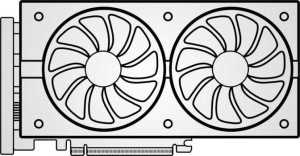
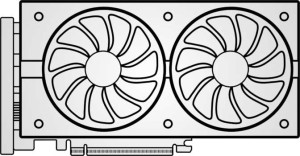
Nvidia RTX Pro 1000 Blackwell specifications and in-depth review

Nvidia RTX Pro 1000 Blackwell

Manufacturer: Nvidia

The Nvidia RTX Pro 1000 Blackwell is a graphics card designed around Nvidia's Blackwell architecture, fabricated on a 5 nm process with 16,900 million transistors. It operates at a base and turbo clock speed of 1020 MHz, and its 8 GB GDDR7 VRAM runs over a 128-bit memory bus, delivering up to 384 GB/s of memory bandwidth through an effective memory speed of 24,000 MHz.

On the compute side, the card fields 2,560 shading units, 80 texture mapping units, and 32 render output units, producing a floating-point throughput of 8.33 TFLOPS alongside a texture rate of 130.2 GTexels/s. It supports DirectX 12 Ultimate, OpenGL 4.6, OpenCL 3, and hardware ray tracing, while also featuring ECC memory support, Intel Resizable BAR, and a PCIe 5 interface. With a TDP of just 35W and no requirement for air-water cooling, it sits firmly in the low-power segment of the professional graphics card market.

Pros
  • A 35W TDP keeps power draw very low, making it suitable for compact or thermally constrained systems
  • GDDR7 memory delivers an effective speed of 24,000 MHz and up to 384 GB/s of bandwidth, benefiting memory-intensive workloads
  • ECC memory support improves data reliability for precision-sensitive or professional tasks
  • Hardware ray tracing is supported, enabling accurate light simulation in compatible applications
  • Built on a 5 nm process with 16,900 million transistors, reflecting a modern and efficient silicon design
  • Intel Resizable BAR support allows the CPU to access the full VRAM pool, which can improve data transfer efficiency
Cons
  • The 128-bit memory bus width is relatively narrow and may limit sustained throughput in bandwidth-demanding scenarios
  • 8 GB of VRAM may prove insufficient for workloads that require larger frame buffers or datasets
  • With only 32 ROPs, pixel output throughput is limited for high-resolution rendering tasks
  • XeSS (XMX) is not supported, restricting access to that upscaling technology
  • Air-water cooling is not included, which may limit thermal headroom in prolonged high-load conditions
Who is this for?

This card is well-suited to professionals and developers working in environments where low power consumption is a priority, such as small form factor workstations or thermally constrained builds. Its ECC memory support and Double Precision Floating Point capability make it a reasonable fit for precision-sensitive compute tasks like data processing or scientific workloads. The modern Blackwell architecture, GDDR7 memory, and hardware ray tracing support also make it relevant for users running professional visualization or CAD applications that benefit from accurate rendering without demanding high power budgets.

Who is this NOT for?

Users looking to drive high-resolution or multi-monitor gaming setups at demanding frame rates are likely to find the 32 ROPs and 128-bit memory bus width restrictive, as these figures limit pixel output and sustained memory throughput. Similarly, those working with large datasets or memory-intensive creative workloads — such as high-resolution texture work or complex scene rendering — may find 8 GB of VRAM insufficient. The card is also not a strong fit for users who require aggressive thermal headroom under sustained load, given the absence of air-water cooling support.

Performance:

GPU clock speed 1020 MHz
GPU turbo 1020 MHz
pixel rate 52.06 GPixel/s
floating-point performance 8.33 TFLOPS
texture rate 130.2 GTexels/s
GPU memory speed 1500 MHz
shading units 2560
texture mapping units (TMUs) 80
render output units (ROPs) 32
Has Double Precision Floating Point (DPFP)

The Performance section of the Nvidia RTX Pro 1000 Blackwell centers on a GPU clock speed and turbo speed of 1020 MHz, paired with a GPU memory speed of 1500 MHz. The card deploys 2,560 shading units alongside 80 texture mapping units and 32 render output units, translating into a texture rate of 130.2 GTexels/s and a pixel rate of 52.06 GPixel/s. Overall compute throughput reaches 8.33 TFLOPS of floating-point performance, and the GPU also includes support for Double Precision Floating Point (DPFP), broadening its suitability for precision-sensitive workloads.

Memory:

effective memory speed 24000 MHz
maximum memory bandwidth 384 GB/s
VRAM 8GB
GDDR version GDDR7
memory bus width 128-bit
Supports ECC memory

The Nvidia RTX Pro 1000 Blackwell is equipped with 8 GB of GDDR7 VRAM running across a 128-bit memory bus, with an effective memory speed of 24,000 MHz that yields a maximum memory bandwidth of 384 GB/s. The card also supports ECC memory, providing an added layer of data integrity for error-sensitive workloads.

Features:

DirectX version DirectX 12 Ultimate
OpenGL version 4.6
OpenCL version 3
Supports multi-display technology
supports ray tracing
Supports 3D
has XeSS (XMX)
AMD SAM / Intel Resizable BAR Intel Resizable BAR
has LHR

The Nvidia RTX Pro 1000 Blackwell supports DirectX 12 Ultimate, OpenGL 4.6, and OpenCL 3, covering a broad range of graphics and compute APIs. Hardware ray tracing is included, as are multi-display technology and stereoscopic 3D support. The card implements Intel Resizable BAR for improved CPU-to-GPU data access, while LHR and XeSS (XMX) are not present on this model.

Ports:

General info:

GPU architecture Blackwell
Thermal Design Power (TDP) 35W
PCI Express (PCIe) version 5
semiconductor size 5 nm
number of transistors 16900 million
Has air-water cooling

The Nvidia RTX Pro 1000 Blackwell is built on the Blackwell architecture, manufactured using a 5 nm process and integrating 16,900 million transistors. It connects via a PCIe 5 interface and carries a Thermal Design Power (TDP) of just 35W, making it a notably low-power option within its category. The card does not include air-water cooling, relying instead on a conventional cooling solution.

Final Verdict

The Nvidia RTX Pro 1000 Blackwell occupies a well-defined niche as a professional graphics card built for efficiency and reliability rather than raw throughput. Its most compelling attribute is the combination of a modern Blackwell architecture with a 35W TDP, making it a practical choice for power-conscious workstation builds that still require ECC memory support, hardware ray tracing, and GDDR7 bandwidth. That said, the 128-bit bus width and 8 GB VRAM ceiling do impose real constraints on users with heavier rendering or compute demands. For professionals whose workflows align with its measured specification profile — precision compute, professional visualization, or compact deployment — the RTX Pro 1000 Blackwell delivers a coherent and purposeful package.

Popular Comparisons

Nvidia RTX Pro 1000 Blackwell
VS
Nvidia GeForce RTX 5060 Ti 16GB