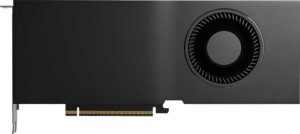
Nvidia RTX Pro 5000 Blackwell 72GB specifications and in-depth review

Nvidia RTX Pro 5000 Blackwell 72GB

Manufacturer: Nvidia

The Nvidia RTX Pro 5000 Blackwell, also marketed as the RTX Pro 5000 Blackwell 72GB, is a professional-grade graphics card designed around Nvidia's Blackwell GPU architecture. Manufactured on a 5 nm process node and packing 92,200 million transistors, it targets demanding workloads that require both substantial compute throughput and large memory capacity. The card operates with a base clock of 1740 MHz and a boost clock of 2377 MHz, while its 66.94 TFLOPS of single-precision floating-point performance reflects the scale of its 14,080 shading units working in concert with 440 texture mapping units and 176 render output units.

On the memory side, the RTX Pro 5000 Blackwell carries 72 GB of GDDR7 VRAM across a 512-bit memory bus, reaching an effective memory speed of 28,000 MHz and a peak bandwidth of 1,344 GB/s, with ECC support included. The card has a rated TDP of 300W and connects via PCIe 5.0. It supports DirectX 12 Ultimate, OpenGL 4.6, OpenCL 3, ray tracing, and DLSS, and outputs video through four DisplayPort connections with support for up to four simultaneous displays. Intel Resizable BAR is supported, while HDMI and USB-C outputs are absent from its port configuration.

Pros
  • The 72 GB of GDDR7 VRAM across a 512-bit bus accommodates very large datasets and memory-intensive workloads without requiring data to be split or paged
  • A peak memory bandwidth of 1,344 GB/s ensures that the GPU's compute units are kept well-supplied with data during sustained workloads
  • ECC memory support reduces the risk of data corruption during long-running or precision-sensitive tasks
  • Double Precision Floating Point (DPFP) support makes the card suitable for scientific, engineering, and simulation workloads that depend on 64-bit arithmetic
  • Four DisplayPort outputs allow connection of up to four displays simultaneously, which is useful for multi-monitor professional setups
  • Ray tracing and DLSS support extends the card's utility to graphics-intensive rendering and visualisation applications
Cons
  • A 300W TDP places significant demands on system power delivery and cooling infrastructure
  • The absence of HDMI, USB-C, DVI, and mini DisplayPort outputs limits display compatibility to DisplayPort-only monitors and adapters
  • Air-water cooling is not included, so thermal management relies entirely on whatever cooling solution accompanies the card
  • The card does not feature RGB lighting, which may matter in environments where visual system customisation is expected
  • XeSS (XMX) is not supported, restricting upscaling options to DLSS only
Who is this for?

This card is well-suited to professionals working in fields that demand both substantial compute throughput and large memory capacity, such as scientific simulation, engineering analysis, and data-intensive 3D rendering. The combination of 72 GB of GDDR7 VRAM with ECC support makes it a strong fit for workflows involving large models, high-resolution textures, or datasets that would exhaust the memory of more modest cards. The presence of Double Precision Floating Point (DPFP) also makes it appropriate for numerical computing and any application that requires 64-bit arithmetic precision, while four DisplayPort outputs serve users who rely on expansive multi-monitor setups for tasks like visual effects production or complex CAD work.

Who is this NOT for?

Users who need broad display connectivity will find this card restrictive, as the exclusive reliance on four DisplayPort outputs means that monitors or projectors requiring HDMI, DVI, or USB-C connections cannot be used without adapters. The card is also poorly matched to compact or thermally constrained system builds, given its 300W TDP and the absence of any built-in air-water cooling solution, which places the full burden of heat management on the host system. Additionally, users who prioritise system aesthetics with RGB lighting will find nothing here, and those seeking display upscaling flexibility beyond DLSS will be limited, as XeSS is not supported.

Performance:

GPU clock speed 1740 MHz
GPU turbo 2377 MHz
pixel rate 418.4 GPixel/s
floating-point performance 66.94 TFLOPS
texture rate 1045.9 GTexels/s
GPU memory speed 1750 MHz
shading units 14080
texture mapping units (TMUs) 440
render output units (ROPs) 176
Has Double Precision Floating Point (DPFP)

The RTX Pro 5000 Blackwell runs at a base GPU clock of 1740 MHz, boosting up to 2377 MHz under load, while the GPU memory operates at 1750 MHz. Its 14,080 shading units work alongside 440 texture mapping units and 176 render output units, producing a texture rate of 1045.9 GTexels/s and a pixel rate of 418.4 GPixel/s. Floating-point performance reaches 66.94 TFLOPS, and the card also supports Double Precision Floating Point (DPFP), making it capable of handling workloads that rely on 64-bit precision arithmetic.

Memory:

effective memory speed 28000 MHz
maximum memory bandwidth 1344 GB/s
VRAM 72GB
GDDR version GDDR7
memory bus width 512-bit
Supports ECC memory

The RTX Pro 5000 Blackwell is equipped with 72 GB of GDDR7 VRAM running across a 512-bit memory bus, with an effective memory speed of 28,000 MHz. This configuration yields a maximum memory bandwidth of 1,344 GB/s, providing substantial throughput for memory-intensive tasks. The card also supports ECC memory, which enables error detection and correction to help maintain data integrity during operation.

Features:

DirectX version DirectX 12 Ultimate
OpenGL version 4.6
OpenCL version 3
Supports multi-display technology
supports ray tracing
Supports 3D
supports DLSS
has XeSS (XMX)
AMD SAM / Intel Resizable BAR Intel Resizable BAR
has LHR
has RGB lighting
supported displays 4

The RTX Pro 5000 Blackwell supports DirectX 12 Ultimate, OpenGL 4.6, and OpenCL 3, covering a broad range of graphics and compute APIs. Ray tracing and DLSS are both supported, as is stereoscopic 3D, while XeSS (XMX) is not available on this card. Multi-display technology is supported with a maximum of four simultaneous displays, and Intel Resizable BAR is included to help improve data transfer between system memory and the GPU. LHR is present, but the card does not feature RGB lighting.

Ports:

has an HDMI output
DisplayPort outputs 4
USB-C ports 0
DVI outputs 0
mini DisplayPort outputs 0

The RTX Pro 5000 Blackwell's output configuration consists exclusively of four DisplayPort outputs, with no HDMI, DVI, mini DisplayPort, or USB-C ports present on the card.

General info:

GPU architecture Blackwell
Thermal Design Power (TDP) 300W
PCI Express (PCIe) version 5
semiconductor size 5 nm
number of transistors 92200 million
Has air-water cooling
width 266.7 mm
height 111.8 mm

The RTX Pro 5000 Blackwell is built on the Blackwell GPU architecture, fabricated using a 5 nm process node and integrating 92,200 million transistors. It connects to the host system via PCIe 5.0 and carries a Thermal Design Power (TDP) of 300W. The card measures 266.7 mm in width and 111.8 mm in height, and it does not include an air-water cooling solution.

Final Verdict

The Nvidia RTX Pro 5000 Blackwell is a graphics card built with a clear professional focus, anchored by its 72 GB of GDDR7 VRAM with ECC support and Double Precision Floating Point capability — a combination that makes it well-positioned for compute-intensive and precision-sensitive workloads. Its 92,200 million transistor Blackwell architecture, paired with a 1,344 GB/s memory bandwidth ceiling, gives it the headroom to handle demanding tasks that would strain less capable hardware. Users should be aware that its 300W TDP and exclusive DisplayPort output configuration place real constraints on system compatibility and peripheral flexibility. On balance, the RTX Pro 5000 Blackwell is a focused professional tool that delivers where it counts for the right workload — those who fit that profile will find its specifications purposefully matched to their needs.