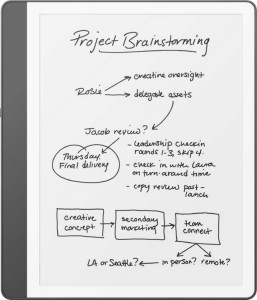
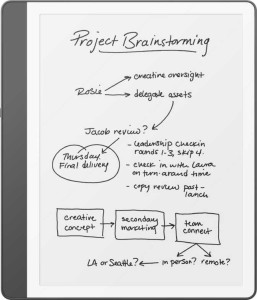
The Onyx Boox Note Air 4 C has a height of 226 mm and a width of 193 mm, giving it a footprint suited to a full-size e-reader experience. At just 5.8 mm thick, the device maintains a notably slim profile, while its weight of 430 g and total volume of 252.98 cm³ reflect a build that balances screen size with physical presence.
The device features a 10.3″ e-paper touch screen with a resolution of 1860 x 2480 px and a pixel density of 300 ppi, delivering sharp, detailed rendering across text and graphics. It is self-lit and includes an anti-reflection coating, reducing glare for more comfortable viewing in various lighting conditions. The display does not incorporate branded damage-resistant glass.
The device is powered by an 8-core CPU running at 2 GHz per core and comes paired with 6 GB of RAM, providing a capable foundation for handling documents, apps, and multitasking. It includes 64 GB of internal storage and an external memory slot that supports expansion up to 2000 GB, offering considerable flexibility for users with large media or document libraries.
Wireless connectivity is handled through Wi-Fi 4 (802.11n) and Wi-Fi 5 (802.11ac), alongside Bluetooth 5.1 for peripheral and device pairing. A built-in browser is also included for web access. The device does not support cellular connectivity, NFC, or HDMI output.
The device is equipped with a 3700 mAh rechargeable battery that charges via USB Type-C, and it includes a battery level indicator to keep track of remaining charge. The battery is non-removable, and the device does not support fast charging or wireless charging.
On the audio side, the device includes stereo speakers with text-to-speech support, though it lacks a 3.5 mm headset jack. A built-in dictionary is available alongside support for 26 file types, making it versatile for reading across a range of document formats. The display features a built-in HDR mode, and motion sensing is handled by both an accelerometer and a gyroscope. The device does not include GPS, a compass, a radio, a front camera, or a child lock.
The software side of the device is notably broad, covering privacy and customization through features such as location privacy options, camera and microphone access controls, app tracking blocking, clipboard warnings, and dynamic theming with full theme customization and dark mode. It supports multi-user operation, customizable notifications, notification permissions, a media picker, widgets, split-screen multitasking, Picture-in-Picture, sharing intents, Live Text, voice commands, and offline voice recognition. Additional capabilities include on-device machine learning, device position tracking, full-page screenshots, slow-motion video recording, in-camera panorama capture, an extra dim mode, and the ability to play content while downloading. The platform is free and open source. Features not present include Mail Privacy Protection, cross-site tracking blocking, Quick Start, focus modes, Wi-Fi password sharing, battery health check, and the ability to offload apps.