Oppo Pad Neo specifications and in-depth review

Oppo Pad Neo

Manufacturer: Oppo

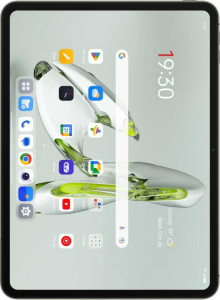
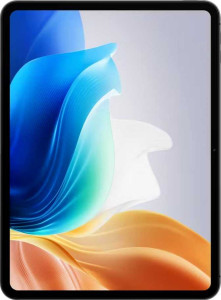
The Oppo Pad Neo is a mid-range Android 13 tablet built around a large 11.4-inch IPS LCD screen with a notably high resolution of 2408 x 1720 pixels, making it one of the sharper displays in its class at 260 ppi. At just 6.9 mm thick, it carries a remarkably slim profile for a device of this size, though it does tip the scales at 538 g. It supports a cellular module with GPS and Galileo satellite navigation, giving it an edge over strictly Wi-Fi-only alternatives in terms of on-the-go usability.

Internally, the Oppo Pad Neo runs on the MediaTek Helio G99 chipset, a 6 nm octa-core processor paired with 8 GB of DDR4 RAM at 4266 MHz and 128 GB of eMMC 5.2 storage, expandable via an external memory slot. The 8000 mAh battery supports fast charging, and the device connects via Wi-Fi 5, Bluetooth 5.2, and USB Type-C at USB 2.0 speeds. On the audio side, stereo speakers are present alongside aptX and aptX HD Bluetooth codec support, though there is no 3.5 mm headphone jack. The main camera captures 8 MP stills at an f/2.0 aperture and records up to 1080p at 30 fps, while the front camera also offers 8 MP at the same aperture for video calls.

Pros
  • The 11.4-inch display outputs a 2408 x 1720 resolution at 260 ppi, delivering noticeably sharp detail across a large screen area
  • A 6.9 mm thickness makes this one of the slimmer tablets at this screen size, keeping the physical profile relatively compact
  • Cellular connectivity with GPS and Galileo satellite support enables location-aware use and mobile data on the go without relying solely on Wi-Fi
  • Stereo speakers combined with aptX and aptX HD Bluetooth codec support give the audio setup more versatility than a basic mono or codec-limited configuration
  • The 8000 mAh battery supports fast charging, reducing downtime when the device needs to be replenished
  • Both the front and rear cameras share an 8 MP resolution, making the front camera more capable for video calls than the minimal sensors often found on tablets
Cons
  • No water resistance rating of any kind leaves the device unprotected against accidental moisture or spills
  • The absence of a 3.5 mm headphone jack means wired audio always requires a separate adapter
  • There is no fingerprint scanner, iris scanner, or 3D facial recognition, so no biometric authentication method is available
  • 5G is not supported, limiting cellular data speeds to LTE despite the device having a cellular module
  • The display lacks branded damage-resistant glass, an anti-reflection coating, and HDR support of any kind, reducing both durability assurance and content quality for HDR media
  • No flash is present on either camera, ruling out the device for photography in low-light situations that require artificial lighting
Who is this for?

The Oppo Pad Neo suits users who want a large-screen tablet for media consumption, casual browsing, and video calls in environments where Wi-Fi or cellular LTE coverage is available. Its sharp 2408 x 1720 display at 11.4 inches makes it a comfortable device for reading, streaming, and viewing detailed content, while the slim 6.9 mm profile means it sits well in hand or on a surface despite its generous screen size. The inclusion of a cellular module with GPS and Galileo satellite support also makes it a practical option for users who need occasional on-the-go connectivity and location services without relying entirely on Wi-Fi, and the stereo speakers with aptX HD support add genuine value for those who use Bluetooth headphones regularly for media or calls.

Who is this NOT for?

Users who work in environments where moisture exposure is a risk will find this tablet unsuitable, as it carries no water resistance rating of any kind, making even minor splashes a concern. Those who depend on biometric security for fast and reliable device access will also be disappointed, since no fingerprint scanner, iris scanner, or facial recognition system is present. Photography-focused users should look elsewhere, as the main camera has no flash, no optical image stabilization, and is capped at 1080p video at 30 fps with no slow-motion support — limitations that significantly restrict its usefulness beyond basic documentation shots. Similarly, users who need future-proof mobile connectivity will be constrained by the absence of 5G support despite the cellular module being present.

Design:

weight 538 g
thickness 6.9 mm
width 255.1 mm
height 188 mm
volume 330.91572 cm³
Stylus included
Has a detachable keyboard
Has a backlit keyboard
water resistance None
Has tilt sensitivity

The Oppo Pad Neo measures 255.1 mm wide by 188 mm tall with a thickness of just 6.9 mm, giving it a genuinely slim form factor for a tablet of this footprint, though its 538 g weight is something users will notice during extended handheld use. The device carries no water resistance rating whatsoever, leaving it unprotected against moisture. It does not include a stylus, a detachable keyboard, or a backlit keyboard, and pen tilt sensitivity is also absent.

Display:

screen size 11.4"
resolution 2408 x 1720 px
pixel density 260 ppi
Display type LCD, IPS
refresh rate 90Hz
touch sampling rate 180Hz
has branded damage-resistant glass
has anti-reflection coating
supports HDR10
brightness (typical) 400 nits
has a touch screen
Has sapphire glass display
supports HDR10+
supports Dolby Vision
Has an e-paper display

The Oppo Pad Neo features an 11.4-inch IPS LCD touchscreen with a resolution of 2408 x 1720 pixels and a pixel density of 260 ppi, delivering a fairly detailed image across its large panel. A 90 Hz refresh rate keeps on-screen motion smooth, while the 180 Hz touch sampling rate ensures responsive input during interactions. Typical brightness is rated at 400 nits, and the panel does not include an anti-reflection coating, branded damage-resistant glass, or sapphire glass for additional protection. HDR10, HDR10+, and Dolby Vision are all unsupported, so the display is limited to standard dynamic range content.

Performance:

internal storage 128GB
RAM 8GB
Chipset (SoC) name Mediatek Helio G99
GPU name Mali G57
CPU speed 2 x 2.2 & 6 x 2 GHz
Geekbench 6 result (multi) 1979
Geekbench 6 result (single) 729
has an external memory slot
semiconductor size 6 nm
Supports 64-bit
Has integrated LTE
Uses big.LITTLE technology
DirectX version DirectX 11
Has integrated graphics
GPU clock speed 950 MHz
CPU threads 8 threads
RAM speed 4266 MHz
Has TrustZone
GPU turbo 2133 MHz
maximum memory amount 12GB
supported displays 2
Android version Android 13
Thermal Design Power (TDP) 5W
CPU temperature 95 °C
Uses HMP
maximum memory bandwidth 17.1 GB/s
memory channels 2
OpenGL ES version 3.2
shading units 32
eMMC version 5.2
OpenCL version 2

The Oppo Pad Neo is driven by the MediaTek Helio G99, a 6 nm octa-core chip with two performance cores at 2.2 GHz and six efficiency cores at 2.0 GHz, operating within a 5W TDP envelope and a maximum CPU temperature of 95°C. It is paired with 8 GB of DDR4 RAM running at 4266 MHz across two memory channels, with a maximum memory bandwidth of 17.1 GB/s and support for up to 12 GB total memory. Internal storage sits at 128 GB via eMMC 5.2, and an external memory slot is available for further expansion. Graphics are handled by the integrated Mali G57 GPU, clocking at 950 MHz with a turbo of 2133 MHz, 32 shading units, and support for up to two displays, along with compatibility for DirectX 11, OpenGL ES 3.2, and OpenCL 2. The chipset employs big.LITTLE and HMP scheduling, supports 64-bit processing, integrates LTE, and includes TrustZone security. Geekbench 6 results come in at 1979 for multi-core and 729 for single-core. The tablet ships with Android 13.

Cameras:

megapixels (main camera) 8 MP
megapixels (front camera) 8MP
video recording (main camera) 1080 x 30 fps
has a flash
has a front camera
has a built-in HDR mode
can create panoramas in-camera
supports slow-motion video recording
has touch autofocus
optical zoom 0x
has a BSI sensor
has manual white balance
has a CMOS sensor
wide aperture (main camera) 2f
supports HDR10 recording
has continuous autofocus when recording movies
supports Dolby Vision recording
Has a front-facing LED flash
has manual ISO
has a video light
Has timelapse function
wide aperture (front camera) 2f
Shoots 360° panorama
has a serial shot mode
has built-in optical image stabilization
has 3D photo/video recording capabilities
Has a dual-tone LED flash
has manual focus
Has a RGB LED flash
has manual exposure
has manual shutter speed

Both the rear and front cameras on the Oppo Pad Neo feature 8 MP CMOS sensors, each with an f/2.0 aperture, making the front camera a more capable option for video calls than is typical on many tablets. The main camera records video at up to 1080p and 30 fps, supports HDR mode, timelapse, touch autofocus, continuous autofocus during recording, and a range of manual controls including ISO, focus, and exposure, though manual shutter speed and optical zoom are not available. There is no flash of any kind on either camera, no video light, and the rear sensor is not back-illuminated. Slow-motion video recording, panorama, burst mode, optical image stabilization, HDR10 recording, and Dolby Vision recording are all absent as well.

Audio:

has aptX
has aptX HD
has LDAC
has aptX Low Latency
has aptX Adaptive
has aptX Lossless
has stereo speakers
has a socket for a 3.5 mm audio jack
Has a radio

The Oppo Pad Neo is equipped with stereo speakers for two-channel audio output, and its Bluetooth audio support extends to both aptX and aptX HD codecs, enabling higher-quality wireless playback when paired with compatible headphones. However, LDAC, aptX Low Latency, aptX Adaptive, and aptX Lossless are not supported. There is no 3.5 mm headphone jack, so wired audio requires an adapter, and no built-in radio tuner is present.

Battery:

battery power 8000 mAh
Supports fast charging
has wireless charging
has a battery level indicator
has a rechargeable battery
has a removable battery

The Oppo Pad Neo houses an 8000 mAh rechargeable battery with fast charging support, allowing the large cell to be topped up more quickly than standard charging would permit. A battery level indicator keeps remaining charge visible at a glance. The battery is not removable by the user, and wireless charging is not supported.

Connectivity & Features:

Wi-Fi version Wi-Fi 4 (802.11n), Wi-Fi 5 (802.11ac)
SIM cards 1 SIM
has Mail Privacy Protection
has on-device machine learning
has clipboard warnings
has location privacy options
has camera/microphone privacy options
can block app tracking
blocks cross-site tracking
supports split screen
has Live Text
has notification permissions
has full-page screenshots
has Quick Start
has theme customization
has Wi-Fi password sharing
has PiP
Can play games while they download
has an extra dim mode
can offload apps
has focus modes
has media picker
has dynamic theming
has dark mode
has battery health check
Has USB Type-C
has a cellular module
has 5G support
is a multi-user system
gets direct OS updates
has GPS
has a child lock
has an HDMI output
has NFC
Has a fingerprint scanner
USB version 2
Supports widgets
Bluetooth version 5.2
download speed 650 MBits/s
has a gyroscope
Is free and open source
Has offline voice recognition
has a compass
upload speed 150 MBits/s
supports Wi-Fi
Has sharing intents
Has customizable notifications
Uses 3D facial recognition
supports Galileo
has an accelerometer
has voice commands
Has an iris scanner
Has a built-in projector
supports Ethernet
Has an infrared sensor
Tracks the current position of a mobile device

The Oppo Pad Neo connects wirelessly via Wi-Fi 5 (802.11ac) and Wi-Fi 4, with download speeds up to 650 Mbits/s and upload speeds up to 150 Mbits/s, and it also carries a cellular module supporting a single SIM card, though 5G is not available. Bluetooth 5.2 handles wireless peripheral connections, and a USB Type-C port at USB 2.0 speeds covers wired transfers and charging, while HDMI output and Ethernet are absent. Location capabilities include GPS, Galileo satellite support, and a compass, alongside a gyroscope and accelerometer for motion sensing. NFC, a fingerprint scanner, iris scanner, and 3D facial recognition are all absent, leaving the device without any biometric or proximity-based authentication. On the software side, the tablet supports split screen, Picture-in-Picture, dark mode, dynamic and manual theme customization, widgets, media picker, full-page screenshots, customizable notifications, voice commands, offline voice recognition, on-device machine learning, and the ability to play games while downloading. Privacy controls include location privacy, camera and microphone access management, clipboard warnings, and app tracking blocking, though cross-site tracking blocking, Mail Privacy Protection, and Wi-Fi password sharing are not included. Multi-user support, a child lock, sharing intents, and mobile device tracking are present, while battery health check, Quick Start, app offloading, focus modes, a built-in projector, and direct OS vendor updates are not offered.

Miscellaneous:

DDR memory version 4

The Oppo Pad Neo uses DDR4 memory, the fourth generation of double data rate RAM technology.
Final Verdict

The Oppo Pad Neo is a large-screen Android 13 tablet that makes a reasonable case for itself among users who prioritize display real estate and portable media consumption, with its sharp 2408 x 1720 resolution across an 11.4-inch IPS panel and slim 6.9 mm chassis standing out as its most compelling physical attributes. Cellular connectivity with GPS and Galileo support adds genuine on-the-go utility that pure Wi-Fi tablets cannot offer, and the stereo speakers with aptX HD Bluetooth codec support round out a respectable media experience. That said, the absence of water resistance, any form of biometric authentication, and a flash on either camera are practical gaps that will matter to certain users, and the cellular module's LTE-only limitation narrows its long-term appeal for mobile-first users. Overall, the Oppo Pad Neo is best suited to those whose needs centre around screen quality, portability, and connected use in everyday environments — for that audience, it delivers a coherent and capable package.

Popular Comparisons

Oppo Pad Neo
Oppo Pad Neo
VS
Honor Pad X9
Honor Pad X9
Oppo Pad Neo
Oppo Pad Neo
VS
OnePlus Pad Go
OnePlus Pad Go
Oppo Pad Neo
Oppo Pad Neo
VS
Realme Pad 2 Lite
Realme Pad 2 Lite
Oppo Pad Neo
Oppo Pad Neo
VS
Samsung Galaxy Tab A9 Plus