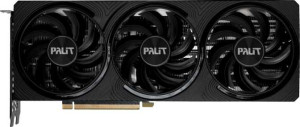
Palit GeForce RTX 4070 Super Infinity 3 specifications and in-depth review

Palit GeForce RTX 4070 Super Infinity 3

Manufacturer: Palit

The Palit GeForce RTX 4070 Super Infinity 3 is a graphics card based on NVIDIA's Ada Lovelace architecture, manufactured on a 5nm process with 35,800 million transistors. It delivers 35.48 TFLOPS of floating-point performance alongside a boost clock of 2475 MHz, making it a capable option within the RTX 4070 Super lineup. The card measures 294mm in length and 116mm in height, and does not include RGB lighting.

On the memory side, the card is equipped with 12GB of GDDR6X VRAM on a 192-bit bus, achieving an effective memory speed of 21,000 MHz and a maximum bandwidth of 504 GB/s. It supports DirectX 12 Ultimate, OpenGL 4.6, OpenCL 3, ray tracing, and DLSS, along with Intel Resizable BAR. Display connectivity includes one HDMI 2.1a port and three DisplayPort outputs, supporting up to four displays simultaneously. The card draws 220W via PCIe 4.0 and does not require liquid cooling.

Pros
  • Supports up to four simultaneous displays, offering flexible multi-monitor setups
  • 504 GB/s of memory bandwidth enables high data throughput for demanding workloads
  • Ray tracing and DLSS are both supported, expanding compatibility with modern rendering techniques
  • ECC memory support adds a layer of reliability for error-sensitive compute tasks
  • Three DisplayPort outputs alongside an HDMI 2.1a port provide versatile connectivity options
  • Intel Resizable BAR support allows the CPU to access the full GPU frame buffer more efficiently
Cons
  • The 192-bit memory bus width is narrower than what some higher-tier cards in this category offer
  • No USB-C output is available, limiting compatibility with certain monitors and adapters
  • Does not support water cooling, restricting thermal management to air cooling only
  • No RGB lighting for users who prefer a customizable visual aesthetic in their build
Who is this for?

This card is well-suited for users running ray tracing and DLSS-enabled titles, where its 35.48 TFLOPS of compute throughput and 12GB of GDDR6X memory provide a solid foundation for modern rendering workloads. The four-display output support — combining three DisplayPort and one HDMI 2.1a connection — makes it a practical choice for users who need multi-monitor setups, whether for productivity, simulation, or content creation. Those working in compute-adjacent tasks will also benefit from ECC memory support and DPFP capability, which add reliability and broader compatibility for certain general-purpose GPU compute workloads.

Who is this NOT for?

Users requiring the widest possible memory bus for extremely high-resolution texture streaming may find the 192-bit bus width a limiting factor in the most demanding scenarios. The card also lacks a USB-C output, making it a poor fit for anyone relying on USB-C or Thunderbolt-connected displays without an adapter. Additionally, since water cooling is not supported, users building systems in thermally constrained or near-silent environments where liquid cooling solutions are preferred will need to look elsewhere.

Performance:

GPU clock speed 1980 MHz
GPU turbo 2475 MHz
pixel rate 198 GPixel/s
floating-point performance 35.48 TFLOPS
texture rate 554.4 GTexels/s
GPU memory speed 1313 MHz
shading units 7168
texture mapping units (TMUs) 224
render output units (ROPs) 80
Has Double Precision Floating Point (DPFP)

The Performance section of this card centers on a base GPU clock of 1980 MHz that boosts up to 2475 MHz, paired with a floating-point throughput of 35.48 TFLOPS. Rasterization output is handled by 80 ROPs and 224 texture mapping units, producing a pixel rate of 198 GPixel/s and a texture rate of 554.4 GTexels/s. The GPU memory runs at 1313 MHz, and the card features 7168 shading units working in parallel to handle rendering workloads. Double Precision Floating Point (DPFP) is supported, extending its compute capabilities beyond standard single-precision tasks.

Memory:

effective memory speed 21000 MHz
maximum memory bandwidth 504 GB/s
VRAM 12GB
GDDR version GDDR6X
memory bus width 192-bit
Supports ECC memory

This card is equipped with 12GB of GDDR6X VRAM running across a 192-bit memory bus, reaching an effective memory speed of 21,000 MHz and a maximum bandwidth of 504 GB/s. The GDDR6X memory type contributes to the high throughput figures available at this bus width. ECC memory support is also included, which helps detect and correct memory errors during operation.

Features:

DirectX version DirectX 12 Ultimate
OpenGL version 4.6
OpenCL version 3
Supports multi-display technology
supports ray tracing
Supports 3D
supports DLSS
has XeSS (XMX)
AMD SAM / Intel Resizable BAR Intel Resizable BAR
has LHR
has RGB lighting
supported displays 4

The card supports DirectX 12 Ultimate, OpenGL 4.6, and OpenCL 3, covering a broad range of graphics and compute workloads. Ray tracing and DLSS are both supported, alongside stereoscopic 3D and multi-display technology spanning up to four simultaneous outputs. Intel Resizable BAR is included to help the CPU access GPU memory more efficiently. XeSS (XMX) and LHR are not present, and the card does not feature RGB lighting.

Ports:

has an HDMI output
HDMI ports 1
HDMI version HDMI 2.1a
DisplayPort outputs 3
USB-C ports 0
DVI outputs 0
mini DisplayPort outputs 0

The card's output configuration consists of one HDMI 2.1a port and three DisplayPort outputs, providing a total of four available display connections. There are no USB-C, DVI, or mini DisplayPort outputs on this model.

General info:

GPU architecture Ada Lovelace
Thermal Design Power (TDP) 220W
PCI Express (PCIe) version 4
semiconductor size 5 nm
number of transistors 35800 million
Has air-water cooling
width 294 mm
height 116 mm

Built on the Ada Lovelace architecture, this card uses a 5nm manufacturing process and integrates 35,800 million transistors, connecting to the system via PCIe 4.0. It carries a Thermal Design Power of 220W and relies solely on air cooling, as water cooling is not supported. The card measures 294mm in width and 116mm in height.

Final Verdict

The Palit GeForce RTX 4070 Super Infinity 3 is a graphics card that brings together a well-rounded set of specifications for users working with modern rendering workloads. Its Ada Lovelace architecture, combined with 12GB of GDDR6X memory at 504 GB/s bandwidth, positions it as a capable choice for ray tracing, DLSS-enabled applications, and multi-display configurations of up to four screens. While the 192-bit bus width and absence of USB-C output represent practical limitations for certain users, the inclusion of ECC memory, DPFP support, and Intel Resizable BAR rounds out a feature set that extends its relevance beyond gaming alone. Overall, the RTX 4070 Super Infinity 3 is a solid option for users whose workloads align with its strengths, provided its connectivity and cooling constraints are acceptable within their intended setup.

Popular Comparisons

Palit GeForce RTX 4070 Super Infinity 3
VS
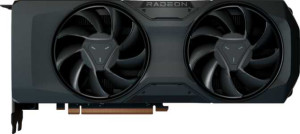
AMD Radeon RX 7800 XT
Palit GeForce RTX 4070 Super Infinity 3
VS
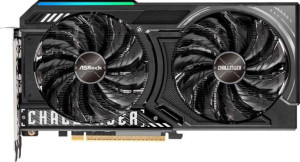
ASRock Radeon RX 9060 XT Challenger OC 16GB