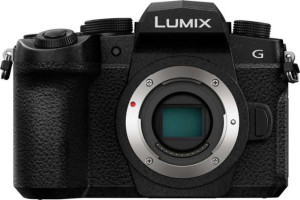
Panasonic Lumix DC-G97 specifications and in-depth review

Panasonic Lumix DC-G97

Manufacturer: Panasonic

The Panasonic Lumix DC-G97 is a mirrorless camera built around the Micro Four Thirds system, offering a versatile combination of stills and video capabilities in a weather-sealed body. It features a 3″ flip-out touchscreen with 1840k-dot resolution alongside a 100% coverage electronic viewfinder, making it adaptable to a range of shooting situations. The camera supports in-body sensor-shift image stabilization rated at 5 stops under CIPA standards, which can also be combined with compatible lens-based stabilization for added flexibility.

On the imaging side, the DC-G97 uses a 20.3 MP CMOS sensor with a maximum ISO of 25600 and continuous mechanical shooting at 9 fps. It records 4K video at 2160p/30 fps with a bitrate of up to 100 Mbps, and includes both a 3.5 mm microphone input and a stereo microphone for audio versatility. Connectivity covers Wi-Fi 4 (802.11n), Bluetooth 5, USB Type-C, and HDMI output, while the Venus Engine processor handles image processing duties. Battery life is rated at 290 shots per charge from the removable 1200 mAh pack, and the camera supports raw shooting alongside standard formats.

Pros
  • The flip-out touchscreen with 1840k-dot resolution and 100% EVF coverage gives flexible framing options across a range of shooting angles
  • Sensor-shift image stabilization rated at 5 stops (CIPA) can be combined with lens-based stabilization for added steadiness in handheld shooting
  • 4K video at 30 fps with a 100 Mbps bitrate, a 24p cinema mode, and a dedicated 3.5 mm microphone input make it a capable option for video work
  • Full manual control over shutter speed, ISO, white balance, and exposure, alongside raw shooting support, allows thorough hands-on image management
  • The weather-sealed body supports operation between 0 °C and 40 °C, adding resilience in varied outdoor conditions
  • Bluetooth 5 and Wi-Fi 4 with smartphone remote control support provide convenient wireless connectivity for file transfer and remote operation
Cons
  • Battery life is rated at only 290 shots per charge, which may require carrying a spare for extended shooting sessions
  • Phase-detection autofocus is absent for both photos and video, relying solely on contrast-detect methods
  • Slow-motion video recording is not supported, limiting creative options for motion-based content
  • The camera lacks GPS, NFC, and first-party live streaming support, reducing its connectivity versatility
  • Only a single memory card slot is available, offering no redundancy or simultaneous backup during shooting
  • USB connectivity is limited to version 2.0, which can make transferring large raw files or 4K footage noticeably slower
Who is this for?

This camera suits photographers and videographers who want a well-rounded hybrid system in a weather-sealed body. The flip-out touchscreen, 5-stop sensor-shift stabilization, and 4K/30fps video at 100 Mbps make it a practical choice for travel, documentary, and outdoor content creators who need reliable stills and decent video in a single body. The Micro Four Thirds system also appeals to those who value access to a broad ecosystem of lenses, while full manual controls and raw file support make it a workable tool for enthusiast photographers who prefer hands-on shooting over automated modes. The built-in stereo microphone combined with a 3.5 mm input further supports run-and-gun video shooters who need flexible audio options in the field.

Who is this NOT for?

Users who prioritize fast and precise autofocus will find this camera limiting, as it lacks phase-detection autofocus for both photos and video, which can affect tracking performance in fast-moving or unpredictable subject scenarios. The 290-shot battery rating makes it a poor fit for long event, wildlife, or sports sessions where frequent recharging or carrying multiple batteries would be impractical. Those looking to shoot slow-motion video will need to look elsewhere, as that capability is entirely absent here. Similarly, professionals requiring dual card slots for on-the-fly backup, or users who depend on NFC, GPS, or live streaming support, will find the feature set insufficient for those specific workflows.

Design:

Type Mirrorless
viewfinder Electronic viewfinder (EVF)
is weather-sealed (splashproof)
screen resolution 1840k dots
Has a flip-out screen
viewfinder coverage 100%
screen size 3"
weight 530 g
has a touch screen
Has a hot shoe
volume 943.69176 cm³
is a system camera
has a flash
lowest potential operating temperature 0 °C
maximum operating temperature 40 °C
Has a tilting viewfinder
width 130.4 mm
height 93.5 mm
thickness 77.4 mm

The Panasonic Lumix DC-G97 is a mirrorless system camera with an electronic viewfinder (EVF) offering 100% coverage, making it suitable for accurate framing. It features a 3″ flip-out touchscreen with 1840k-dot resolution, giving shooters flexibility in how they compose and interact with the camera. The body is weather-sealed (splashproof) and operates within a temperature range of 0 °C to 40 °C, providing a degree of resilience in varied conditions. A hot shoe is present for external flash accessories, and the camera also includes a built-in flash. Physically, it measures 130.4 mm wide, 93.5 mm tall, and 77.4 mm thick, with a volume of approximately 943.69 cm³ and a weight of 530 g. Note that the viewfinder does not tilt.

Optics:

sensor size Micro Four Thirds
lens mount Micro Four Thirds
focus points 49
megapixels (main camera) 20.3 MP
maximum ISO 25600 ISO
maximum expanded ISO 25600 ISO
has sensor shift stabilization
continuous shooting (mechanical) 9 fps
has AF tracking
Has phase-detection autofocus for photos
fastest shutter speed 0.00025 s
has manual focus
has touch autofocus
has manual shutter speed
has a built-in HDR mode
has a BSI sensor
has manual exposure
has a two-stage shutter
has a serial shot mode
has a CMOS sensor
has manual ISO
has manual white balance
can create panoramas in-camera
exposure time 60 s
Maximum electronic shutter speed 6.25E-5 s
has a stacked CMOS sensor
image stabilization rating (CIPA) 5 stops
can combine image stabilization

The DC-G97 uses a Micro Four Thirds CMOS sensor — neither back-illuminated nor stacked — delivering 20.3 MP of resolution and accepting lenses via the Micro Four Thirds mount. Autofocus is handled across 49 focus points with AF tracking and touch autofocus supported, though phase-detection autofocus for photos is not available. The camera offers full manual control over focus, shutter speed, ISO, exposure, and white balance, and supports a two-stage shutter along with burst shooting at 9 fps. Shutter speeds reach as fast as 0.00025 s mechanically and 6.25E-5 s electronically, while the longest exposure time stretches to 60 s. Sensitivity tops out at 25600 ISO with no expanded range beyond that. Sensor-shift image stabilization is rated at 5 stops (CIPA) and can be combined with compatible lens-based stabilization. The camera does not offer a built-in HDR mode but does support in-camera panorama creation.

Videography:

video recording (main camera) 2160 x 30 fps
Has phase-detection autofocus for videos
has continuous autofocus when recording movies
has a microphone input
has a socket for a 3.5 mm audio jack
has a stereo microphone
Has timelapse function
movie bitrate 100 Mbps
has a 24p cinema mode
supports slow-motion video recording

The DC-G97 records video at 2160p (4K) up to 30 fps with a maximum bitrate of 100 Mbps, and also supports a 24p cinema mode for a more filmic look. Continuous autofocus is available during recording, though phase-detection autofocus for video is not supported. Audio options are well covered, with a built-in stereo microphone, a dedicated microphone input, and a 3.5 mm headset jack for external audio monitoring or input. The camera includes a timelapse function but does not support slow-motion video recording.

Battery:

Battery life (CIPA) 290 shots
has a removable battery
has a rechargeable battery
has a battery level indicator
battery power 1200 mAh

The DC-G97 is powered by a removable, rechargeable 1200 mAh battery rated for approximately 290 shots per charge under CIPA testing conditions. A battery level indicator is present, allowing the user to monitor remaining power during use.

Features:

processor Venus Engine
supports Wi-Fi
Has Bluetooth
Has dual card slots
has pixel shift shot
shoots raw
Wi-Fi version Wi-Fi 4 (802.11n)
supports a remote smartphone
has an HDMI output
has GPS
has first-party support for live streaming
has an advanced hot shoe
DxOMark Portrait score 8 bits
has NFC
has an external memory slot
Has USB Type-C
Bluetooth version 5

The DC-G97 is built around Panasonic's Venus Engine processor and supports raw file capture alongside an external memory slot for storage. Wireless connectivity includes Wi-Fi 4 (802.11n) and Bluetooth 5, with smartphone remote control also supported; NFC, however, is not available. The camera offers HDMI output and a USB Type-C port for wired connectivity, while the hot shoe present on the body is a standard type rather than an advanced one. It does not include GPS, pixel shift shot, dual card slots, or first-party live streaming support. The DxOMark Portrait score for the sensor is recorded at 8 bits.

Miscellaneous:

USB version 2

The DC-G97 uses a USB 2.0 interface for wired data transfer and connectivity.

Final Verdict

The Panasonic Lumix DC-G97 is a competent Micro Four Thirds mirrorless camera that strikes a reasonable balance between stills and video in a weather-sealed, travel-friendly body. Its 5-stop sensor-shift stabilization combined with 4K/30fps video at 100 Mbps and a flexible flip-out touchscreen give it genuine appeal for enthusiast photographers and hybrid shooters who work across varied environments. That said, the absence of phase-detection autofocus, slow-motion video, and a modest battery life mean it is better suited to deliberate, controlled shooting than fast-action or high-demand professional workflows. For users invested in the Micro Four Thirds ecosystem who want a versatile, manually controllable camera with solid stabilization and decent video credentials, the DC-G97 represents a well-specified, if selectively capable, option.