Peladn GeForce RTX 4070 Ti Super ShouHeng specifications and in-depth review

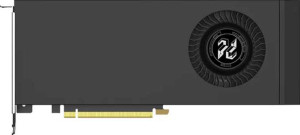
Peladn GeForce RTX 4070 Ti Super ShouHeng

Manufacturer: Peladn

The Peladn GeForce RTX 4070 Ti Super ShouHeng is a graphics card based on NVIDIA's Ada Lovelace architecture, manufactured on a 5 nm process with 76,300 million transistors. It operates at a base clock of 2340 MHz and reaches a boost of 2610 MHz, while its 44.1 TFLOPS of floating-point performance reflects the computational throughput available for rendering workloads. The card measures 269 mm in width and 111 mm in height, carries a two-year warranty, and draws up to 285W under load.

On the memory side, the card is equipped with 16GB of GDDR6X across a 256-bit bus, delivering an effective speed of 21,000 MHz and a maximum bandwidth of 672.3 GB/s, with ECC support included. Its 8,448 shading units are paired with 264 texture mapping units and 96 ROPs, yielding a texture rate of 689 GTexels/s and a pixel rate of 250.6 GPixel/s. Display connectivity consists of one HDMI 2.1 port and three DisplayPort outputs, supporting up to four monitors simultaneously. The card is compatible with DirectX 12 Ultimate, OpenGL 4.6, and OpenCL 3, and includes support for ray tracing, DLSS, stereoscopic 3D, and Intel Resizable BAR.

Pros
  • Supports up to four displays simultaneously through a combination of one HDMI 2.1 and three DisplayPort outputs
  • 16GB of GDDR6X VRAM with a 256-bit bus provides a substantial memory pool for demanding rendering tasks
  • ECC memory support adds a layer of data integrity for workloads that require it
  • Ray tracing and DLSS are both supported, enabling hardware-accelerated lighting and upscaling capabilities
  • Intel Resizable BAR support allows the CPU to access the full GPU frame buffer, which can improve data throughput
  • Double Precision Floating Point support extends the card's utility to compute-oriented workloads beyond standard graphics rendering
Cons
  • A 285W TDP places notable demands on the system power supply and case airflow
  • No USB-C output is available, limiting connectivity options for certain modern displays and devices
  • RGB lighting is absent, which may not suit users who prioritize visual customization in their build
  • Air-water cooling is not included, leaving thermal management entirely dependent on the card's stock cooler
  • The card does not support XeSS, restricting upscaling options to DLSS only
Who is this for?

This card is well-suited to users who regularly work with demanding rendering, ray tracing, and DLSS-enabled titles, given its 44.1 TFLOPS of compute throughput and hardware support for both features. The 16GB of GDDR6X VRAM also makes it a reasonable fit for those handling high-resolution textures or content creation workloads that benefit from a large frame buffer. Additionally, users who need to drive up to four displays simultaneously will find the output configuration practical, and the inclusion of ECC memory support adds relevance for light compute and numerical workloads that require data accuracy.

Who is this NOT for?

Users looking for a compact card for a small form factor build may find the 269 mm width and 285W TDP challenging to accommodate, as both dimensions and power draw require adequate case space and a capable power supply. The absence of a USB-C output makes this card a poor match for users whose monitors or capture devices rely exclusively on that connection type. Furthermore, those who prefer a unified upscaling ecosystem that includes XeSS will find the card limiting, since only DLSS is supported, and users who prioritize visual build customization through RGB lighting will not find that option here.

Performance:

GPU clock speed 2340 MHz
GPU turbo 2610 MHz
pixel rate 250.6 GPixel/s
floating-point performance 44.1 TFLOPS
texture rate 689 GTexels/s
GPU memory speed 1313 MHz
shading units 8448
texture mapping units (TMUs) 264
render output units (ROPs) 96
Has Double Precision Floating Point (DPFP)

The Performance section of this card centers on a GPU base clock of 2340 MHz that boosts up to 2610 MHz, supported by 8,448 shading units, 264 texture mapping units, and 96 render output units. These figures translate into a texture rate of 689 GTexels/s and a pixel rate of 250.6 GPixel/s, while overall compute throughput reaches 44.1 TFLOPS of floating-point performance. GPU memory operates at 1313 MHz, and the card includes support for Double Precision Floating Point, broadening its suitability for tasks that require higher numerical accuracy.

Memory:

effective memory speed 21000 MHz
maximum memory bandwidth 672.3 GB/s
VRAM 16GB
GDDR version GDDR6X
memory bus width 256-bit
Supports ECC memory

This card carries 16GB of GDDR6X VRAM running at an effective speed of 21,000 MHz across a 256-bit memory bus, resulting in a maximum memory bandwidth of 672.3 GB/s. ECC memory support is included, which helps maintain data integrity during sustained computational workloads.

Features:

DirectX version DirectX 12 Ultimate
OpenGL version 4.6
OpenCL version 3
Supports multi-display technology
supports ray tracing
Supports 3D
supports DLSS
has XeSS (XMX)
AMD SAM / Intel Resizable BAR Intel Resizable BAR
has LHR
has RGB lighting
supported displays 4

The card supports DirectX 12 Ultimate, OpenGL 4.6, and OpenCL 3, covering a broad range of graphics and compute workloads. Ray tracing and DLSS are both supported, alongside stereoscopic 3D and multi-display technology spanning up to four screens simultaneously. Intel Resizable BAR is included to help improve data transfer between the CPU and GPU, while XeSS (XMX) and LHR are not present on this card. RGB lighting is also absent, and the design carries no hardware-based mining limiter.

Ports:

has an HDMI output
HDMI ports 1
HDMI version HDMI 2.1
DisplayPort outputs 3
USB-C ports 0
DVI outputs 0
mini DisplayPort outputs 0

The card's output configuration consists of one HDMI 2.1 port and three DisplayPort outputs, providing a total of four display connections. There are no USB-C, DVI, or mini DisplayPort outputs present on this card.

General info:

GPU architecture Ada Lovelace
release date June 2024
Thermal Design Power (TDP) 285W
PCI Express (PCIe) version 4
semiconductor size 5 nm
number of transistors 76300 million
warranty period 2 years
Has air-water cooling
width 269 mm
height 111 mm

Built on the Ada Lovelace architecture, this card uses a 5 nm manufacturing process and integrates 76,300 million transistors, with a PCIe 4 interface for system connectivity. It carries a thermal design power of 285W and does not include an air-water cooling solution. The card measures 269 mm in width and 111 mm in height, and comes with a two-year warranty.
Final Verdict

The Peladn GeForce RTX 4070 Ti Super ShouHeng presents a well-rounded specification profile for users whose workloads center on high-resolution rendering, ray tracing, and multi-display setups. Its 16GB of GDDR6X VRAM paired with 672.3 GB/s of memory bandwidth gives it a capable foundation for texture-heavy and compute-adjacent tasks, while hardware support for DLSS and ray tracing keeps it relevant for modern rendering pipelines. The 285W TDP and physical dimensions do impose practical system requirements that narrower builds may struggle to meet, and the absence of USB-C output and XeSS support will leave some users underserved. On balance, the card is a focused, capable option for users who can accommodate its power and space demands, and who stand to benefit from the features it genuinely delivers.