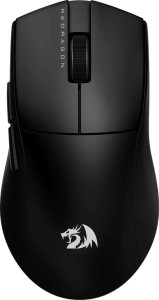
Redragon M996 K1NG 8K specifications and in-depth review

Redragon M996 K1NG 8K

Manufacturer: Redragon

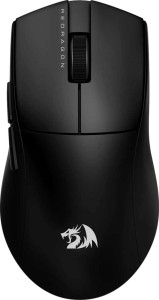
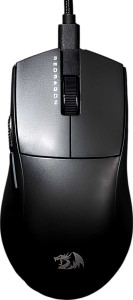
The Redragon M996 K1NG 8K is a gaming mouse built around high-frequency input reporting and a compact, ambidextrous form factor. Weighing just 42 g, it is designed to minimize physical fatigue during extended sessions, and its symmetrical shape accommodates both left- and right-handed users equally. With five programmable buttons including two side buttons and a dedicated DPI switching button, it offers a functional layout suited to a range of gaming styles.

At its core, the M996 K1NG 8K uses a PixArt PMW3327 sensor capable of tracking up to 26000 DPI, with a floor of 1000 DPI for finer adjustability. It reaches a maximum tracking speed of 650 IPS and handles acceleration up to 50G. The standout specification is its 8000 Hz polling rate, which significantly reduces input latency compared to standard 1000 Hz devices. It connects via USB with a 1.8 m cable, measures 120.8 mm in length, 64.3 mm in width, and 37.9 mm in thickness, and carries a one-year warranty. The mouse has no onboard memory profiles, no RGB lighting, and no tilt scroll wheel.

Pros
  • The 8000 Hz polling rate delivers input data to the system at an exceptionally high frequency, significantly reducing latency during use
  • At just 42 g, the mouse is notably light, which reduces hand and wrist strain during extended sessions
  • The ambidextrous shape accommodates both left- and right-handed users without requiring separate models
  • All five buttons are fully programmable, giving users flexibility in how they configure each input
  • The maximum tracking speed of 650 IPS and 50G acceleration provide substantial headroom for fast, wide movements
  • A dedicated DPI switching button allows sensitivity to be adjusted on the fly without opening any software
Cons
  • The minimum DPI is fixed at 1000, which may be too high for users who prefer very low sensitivity settings
  • There are no onboard memory profiles, so any configuration will be lost if the mouse is used on a different system without software
  • The mouse lacks RGB lighting, which may be a drawback for users who prefer visual customization
  • No profile switching button is present, limiting the ability to cycle between configurations directly on the device
  • Extra weights are not included, so users who prefer a heavier feel have no built-in way to adjust the weight
  • A one-year warranty period is relatively short for a peripheral intended for regular intensive use
Who is this for?

This mouse is well-suited to users who prioritize low-latency input, particularly those engaged in fast-paced gaming genres where responsiveness is critical. Its 42 g lightweight build and ambidextrous shape make it a practical choice for both left- and right-handed players who prefer a light mouse during long sessions, reducing fatigue over time. The 8000 Hz polling rate and high tracking ceiling of 650 IPS also make it a reasonable fit for users who make quick, wide movements across large surfaces and need consistent sensor accuracy throughout.

Who is this NOT for?

Users who rely on onboard memory profiles to carry configurations between systems will find this mouse limiting, as it stores no profiles on-device. Those who prefer a heavier mouse or want to fine-tune weight distribution will also find the fixed 42 g build restrictive, since no additional weights are included. Additionally, users who prefer very low DPI sensitivity settings may be constrained by the 1000 DPI minimum floor, and anyone who values visual customization through RGB lighting will find that feature entirely absent here.

Performance:

polling rate 8000 Hz
maximum speed 650 IPS
maximum acceleration 50G
maximum DPI 26000 DPI
minimum DPI 1000 DPI
has adjustable DPI

The performance specifications of this mouse center on its 8000 Hz polling rate, which reports positional data to the host system at an exceptionally high frequency, helping to minimize input latency. The sensor supports a maximum of 26000 DPI and a minimum of 1000 DPI, with adjustable DPI stepping available to suit different sensitivity preferences. Tracking capability extends up to 650 IPS at maximum speed, and the mouse handles acceleration up to 50G, reflecting solid physical tracking headroom for fast, broad movements.

General info:

Type Gaming
connection type USB
sensor PixArt PMW3327
onboard memory profiles 0
has gesture support
warranty period 1 years

This is a gaming mouse that connects via USB and is built around the PixArt PMW3327 sensor, a dedicated optical tracking unit suited to gaming applications. It stores no onboard memory profiles, meaning configuration is not saved directly on the device, and it does not support gesture input. The mouse comes with a one-year warranty and carries no gesture support functionality.

Buttons:

number of buttons 5
number of side buttons 2
number of programmable buttons 5
has a DPI switching button
has a profile switching button

The mouse features 5 buttons in total, all of which are programmable, giving users full control over the function assigned to each input. Two of these are side buttons, positioned for thumb access, and a dedicated DPI switching button allows on-the-fly sensitivity adjustments without entering software. There is no profile switching button included, so cycling between configuration profiles directly on the mouse is not supported.

Design:

Orientation Ambidextrous
weight 42 g
has RGB lighting
has a tilting scroll wheel
has a thumb scroll wheel
has extra weights
cable length 1.8 m
volume 294.385976 cm³
thickness 37.9 mm
height 120.8 mm
width 64.3 mm

The mouse uses an ambidextrous orientation, making it suitable for both left- and right-handed users, and comes in at a light 42 g with a volume of 294.39 cm³. Its physical dimensions measure 120.8 mm in height, 64.3 mm in width, and 37.9 mm in thickness, giving it a compact footprint. It ships with a 1.8 m cable and does not include extra weights, RGB lighting, a tilting scroll wheel, or a thumb scroll wheel.
Final Verdict

The Redragon M996 K1NG 8K is a focused, no-frills gaming mouse built around a clear set of priorities: minimal weight, ambidextrous usability, and an 8000 Hz polling rate that places it firmly in high-frequency input territory. Its lightweight 42 g frame and fully programmable button layout reflect a design philosophy centered on responsiveness and accessibility rather than feature density. The absence of onboard memory, RGB lighting, and weight customization options signals that this mouse is intended for users who want a clean, fast, uncomplicated peripheral rather than a highly configurable one. For that specific type of user, the M996 K1NG 8K delivers a coherent and well-defined specification set that largely delivers on its core premise.

Popular Comparisons

Redragon M996 K1NG 8K
VS
Corsair M55
Corsair M55
Redragon M996 K1NG 8K
VS
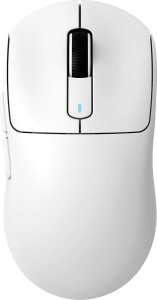
Attack Shark X3 Max
Attack Shark X3 Max
Redragon M996 K1NG 8K
VS
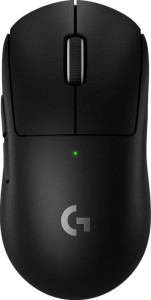
Logitech G Pro X Superlight 2
Redragon M996 K1NG 8K
VS
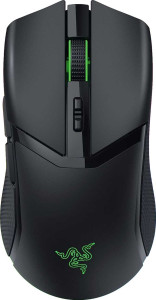
Razer Cobra Pro
Razer Cobra Pro
Redragon M996 K1NG 8K
VS
Redragon M916 Pro 4K
Redragon M996 K1NG 8K
VS
Redragon M916 Pro
Redragon M916 Pro