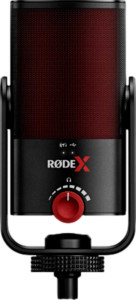
Rode XCM-50 specifications and in-depth review

Rode XCM-50

Manufacturer: Rode

The Rode XCM-50 is a USB microphone designed for desktop use, offering a straightforward plug-and-play connection to Windows and Mac OS X systems. It features a built-in pop filter and an onboard control panel, making it a self-contained unit that requires no additional accessories for basic operation. The microphone weighs 495 g and measures 120 mm in height, giving it a solid, compact form factor suited to fixed desktop setups.

On the technical side, the XCM-50 captures audio across a 20 Hz to 20,000 Hz frequency range and operates with a 24-bit bit depth at a 48kHz sampling rate, which reflects a standard professional digital audio specification. Its single cardioid polar pattern focuses on sound coming from the front of the capsule, while the microphone handles a maximum sound pressure level of 121dB. The headphone output includes a 3.5 mm jack with the same 20 Hz to 20,000 Hz response, allowing for direct monitoring without additional hardware. The device is not compatible with Android or iOS platforms.

Pros
  • Includes a built-in pop filter, removing the need to purchase one separately
  • Features an onboard control panel for direct adjustments without reaching for software
  • Connects via USB, requiring no audio interface for use with Windows or Mac OS X
  • Captures audio across a full 20 Hz to 20,000 Hz frequency range
  • Records at 24-bit depth and 48kHz sampling rate, meeting standard professional audio specifications
  • Handles up to 121dB sound pressure level, providing useful headroom for louder sources
Cons
  • No shock mount is included, leaving the microphone without vibration isolation out of the box
  • Limited to a single cardioid polar pattern with no omni, hyper-cardioid, or bidirectional options
  • Not compatible with Android or iOS devices, restricting use to desktop operating systems only
  • Does not have a flat DSP mode, offering no built-in signal processing flexibility
  • No 3.5 mm headphone jack alternative at 6.35 mm, limiting monitoring connector options
Who is this for?

The Rode XCM-50 is well suited to desktop recording on Windows or Mac OS X, making it a practical choice for podcasters, voice-over artists, or remote workers who need a straightforward USB setup without additional hardware. Its built-in pop filter and onboard control panel mean it works as a self-contained unit right away, which suits users who prefer a clean, low-maintenance desk setup. The 24-bit, 48kHz audio specification and 121dB SPL handling also make it a reasonable fit for home studio recording of vocals or spoken word in controlled acoustic environments.

Who is this NOT for?

Users who need flexible polar pattern options — such as interviewers requiring bidirectional pickup or broadcasters working in untreated rooms who might benefit from an omni pattern — will find this microphone too restrictive with its single fixed cardioid pattern. It is also not suitable for mobile recording workflows, since it offers no compatibility with Android or iOS devices, ruling out smartphone or tablet-based setups entirely. Additionally, the absence of a shock mount means users working in environments with significant desk vibrations or handling noise may experience unwanted interference without sourcing separate isolation accessories.

Sound quality:

Connection USB
lowest mic frequency 20 Hz
audio interface frequency rate 48kHz
sound pressure level 121dB
highest mic frequency 20000 Hz
audio interface bit rate 24-bit

The Rode XCM-50 connects via USB and delivers audio at a 24-bit bit depth with a 48kHz sampling rate, reflecting a standard professional-grade digital audio specification. Its microphone capsule covers a full 20 Hz to 20,000 Hz frequency range and can handle a maximum sound pressure level of 121dB, giving it reasonable headroom for louder sound sources without clipping.

Features:

number of polar patterns 1
has cardioid pattern
has omni pattern
Is compatible with Android
Is compatible with iOS
Is compatible with Windows
Is compatible with Mac OS X
has hyper-cardioid pattern
has flat DSP mode
has bidirectional pattern

The Rode XCM-50 features a single cardioid polar pattern, which is the only pickup pattern available — omni, hyper-cardioid, and bidirectional patterns are not supported. Platform compatibility is limited to Windows and Mac OS X; the microphone does not work with Android or iOS devices. There is no flat DSP mode available on this model.

Headphone output:

has a socket for a 3.5 mm audio jack
lowest frequency 20 Hz
highest frequency 20000 Hz
Has a connector for a 6.35 mm audio jack

The Rode XCM-50 includes a 3.5 mm headphone jack for direct monitoring, covering a frequency range of 20 Hz to 20,000 Hz. There is no 6.35 mm jack available on this model.

Design:

shock mount included
pop filter included
control panel placed on a device
Has LED sound level indicator
has RGB lighting
has an integrated touchpad
volume 332.64 cm³
weight 495 g
height 120 mm
thickness 44 mm
width 63 mm

The Rode XCM-50 has a compact physical footprint, measuring 120 mm in height, 63 mm in width, and 44 mm in thickness, with a total volume of 332.64 cm³ and a weight of 495 g. It comes with a built-in pop filter and an onboard control panel, making it a self-contained unit out of the box. A shock mount is not included, and the microphone does not feature an LED sound level indicator, RGB lighting, or an integrated touchpad.

Final Verdict

The Rode XCM-50 is a focused, no-frills USB condenser microphone that delivers a dependable desktop recording experience for Windows and Mac OS X users. Its 24-bit, 48kHz audio specification combined with a built-in pop filter and onboard control panel make it a practical, self-contained option for podcasters, voice-over artists, and remote professionals working in controlled environments. Where it falls short is in flexibility — the fixed cardioid pattern, lack of mobile device support, and absence of a shock mount narrow its appeal to a specific type of stationary, desktop-based workflow. For users whose needs align with that profile, the XCM-50 represents a straightforward and capable solution; those requiring broader connectivity or pattern versatility will need to look beyond what this microphone offers.