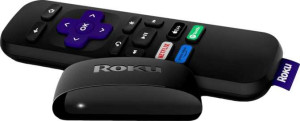
Roku Express (2023) specifications and in-depth review

Roku Express (2023)

Manufacturer: Roku

The Roku Express (2023) is a compact streaming device that brings a broad range of smart TV functionality to any compatible display. It includes built-in smart TV capabilities, making it straightforward to access streaming content without relying on a television's native platform. Voice command support adds a layer of hands-free convenience, and the remote control keeps everyday navigation simple.

On the connectivity side, the Roku Express (2023) features AirPlay and Chromecast built-in, alongside compatibility with Google Assistant and Amazon Alexa. It offers one USB port for peripheral use, though there is no external memory slot, USB Type-C port, or wired Ethernet connection. The device measures 94 mm wide, 20 mm tall, and 11 mm thick, resulting in a volume of 20.68 cm³. It does not support HDR formats such as HDR10, HDR10+, HLG, or Dolby Vision, and audio technologies like Dolby Atmos, Dolby Digital, and DTS:X are absent from its feature set.

Pros
  • Includes a remote control for straightforward navigation without needing a separate device
  • Supports AirPlay and Chromecast built-in, enabling wireless casting from multiple device ecosystems
  • Compatible with both Google Assistant and Amazon Alexa for hands-free voice control
  • Built-in smart TV functionality removes dependence on a television's native software
  • Voice command support adds a convenient layer of interaction beyond the remote
  • Compact physical footprint with dimensions of 94 x 20 x 11 mm makes it easy to place or conceal behind a display
Cons
  • No support for any HDR format, including HDR10, HDR10+, HLG, or Dolby Vision, limiting picture quality on capable displays
  • Lacks all advanced audio technologies including Dolby Atmos, Dolby Digital, Dolby Digital Plus, and DTS:X
  • Remote control is not rechargeable and offers no customization options
  • No headphone jack on the remote, ruling out private listening through that route
  • No wired Ethernet port, restricting network connectivity to wireless only
  • Does not work with Siri or Apple HomeKit, limiting integration within Apple smart home setups
Who is this for?

This streaming device suits users who want a simple, no-frills way to add smart TV functionality to a standard display without relying on the television's built-in software. Its support for AirPlay, Chromecast, Google Assistant, and Alexa makes it a practical fit for households already using Android, Google, or Amazon ecosystems, where voice-driven control and wireless casting are everyday habits. The compact form factor also makes it a convenient option for those who need a portable streaming solution for travel or secondary rooms.

Who is this NOT for?

Users who prioritize high-quality video output will find this device lacking, as it offers no support for HDR10, HDR10+, HLG, or Dolby Vision — making it a poor match for anyone with an HDR-capable display looking to take full advantage of their screen. Similarly, home theater enthusiasts who rely on advanced audio formats such as Dolby Atmos, Dolby Digital, or DTS:X will not find those capabilities here. It is also not well-suited for users embedded in the Apple ecosystem, given the absence of Siri and Apple HomeKit compatibility, or for those who prefer a wired network connection for more stable streaming.

Features:

supports Dolby Vision
supports HDR10+
has voice commands
has built-in smart TV
has Dolby Atmos
Ad-free
has AirPlay
supports HLG
has Chromecast built-in
compatible with Google Assistant
works with Alexa
works with Siri/Apple HomeKit
has Dolby Audio
supports Dolby Digital
supports Dolby Digital Plus
has DTS:X
supports HDR10

The Features section of the Roku Express (2023) reflects a mix of supported and absent capabilities. On the supported side, the device includes built-in smart TV functionality, voice commands, AirPlay, Chromecast built-in, and compatibility with both Google Assistant and Amazon Alexa. It does not work with Siri or Apple HomeKit, nor does it carry an ad-free experience. In terms of audio, Dolby Atmos, Dolby Audio, Dolby Digital, Dolby Digital Plus, and DTS:X are all absent. Display-side, none of the advanced HDR formats are supported — including HDR10, HDR10+, HLG, and Dolby Vision — meaning the device is limited to standard dynamic range output.

Performance:

Connectivity:

supports Matter
has an external memory slot
RJ45 ports 0
USB ports 1
Has USB Type-C

The Roku Express (2023) connectivity options are relatively minimal. It includes one USB port, which provides basic peripheral connectivity, but there is no USB Type-C port and no external memory slot available. Wired networking is not an option, as the device has no RJ45 Ethernet port, and it does not support the Matter smart home protocol.

General info:

has a rechargeable remote control
has a customizable remote
has a remote control
has headphone jack on remote
height 20 mm
thickness 11 mm
volume 20.68 cm³
width 94 mm

The Roku Express (2023) comes with a remote control included, though it is neither rechargeable nor customizable, and it does not feature a headphone jack. In terms of physical dimensions, the device measures 94 mm wide, 20 mm tall, and 11 mm thick, with a total volume of 20.68 cm³, making it a notably compact unit.

Final Verdict

The Roku Express (2023) is a straightforward streaming device that delivers on the essentials — bringing built-in smart TV functionality, voice command support, and broad casting compatibility through AirPlay, Chromecast, Google Assistant, and Alexa into a notably compact form. It is a capable option for users who want a simple, reliable way to stream content on a secondary display or in a space where a full smart TV setup is not practical. That said, the absence of HDR support across all formats and the lack of advanced audio technologies mean it falls short for users with more demanding home entertainment requirements. For casual, everyday streaming needs without the complexity, the Roku Express (2023) gets the job done — but those seeking a richer audio-visual experience will need to look beyond what this device can deliver.