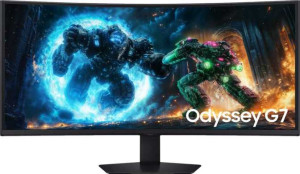
The Samsung Odyssey G7 (G75F) features a 40″ LED-backlit LCD panel using VA technology, delivering a 5120 x 2160 resolution at 138 ppi across its ultrawide surface. It operates at a 180Hz refresh rate with a 1ms response time and supports AMD FreeSync Premium Pro for adaptive synchronization. The display offers wide viewing angles of 178° both horizontally and vertically, and comes with a glossy finish — it does not include a matte panel, anti-glare coating, or touch screen capability.
The Samsung Odyssey G7 (G75F) is a curved ultrawide gaming monitor with physical dimensions of 929 mm wide, 421 mm tall, and 195 mm thick, weighing approximately 11,294 g. Its stand supports tilt, swivel, and portrait mode, and the monitor is also VESA mount compatible for those who prefer an alternative mounting solution. Operating temperatures are rated between 10 °C and 40 °C, keeping typical indoor environments well within the acceptable range for use.
The display delivers a typical brightness of 350 nits alongside a contrast ratio of 3000:1, giving it a solid dynamic range for a VA panel. It is capable of reproducing 1,070 million colors with 99% sRGB coverage, making it well-suited for color-conscious work and content consumption. Color calibration is also supported, allowing users to fine-tune output accuracy to their specific needs.
For video input, the monitor includes two HDMI 2.1 ports and one DisplayPort 1.4 output, covering the most common modern connection standards, while older interfaces such as DVI, VGA, and mini DisplayPort are absent. A 3.5mm headset jack is present for audio passthrough, and three USB ports are available for peripheral connectivity. The monitor does not support USB Type-C, Thunderbolt, Ethernet, Wi-Fi, or AirPlay, keeping its connectivity focused on wired display and basic peripheral use.
The monitor's feature set is fairly minimal, with Picture-in-Picture (PiP) being the one notable inclusion, allowing multiple signal sources to be displayed simultaneously on screen. It does not include stereo speakers, a front camera, an ambient light sensor, or a remote control, and there is no built-in smart TV functionality. Audio-related features such as Dolby Digital, Dolby Digital Plus, and DTS Surround are also absent, reflecting its focus as a display device rather than an all-in-one media unit.