XFX Speedster SWFT 210 Radeon RX 7700 XT Core Edition specifications and in-depth review

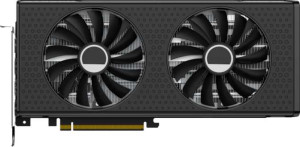
XFX Speedster SWFT 210 Radeon RX 7700 XT Core Edition

Manufacturer: XFX

The XFX Speedster SWFT 210 Radeon RX 7700 XT Core Edition is a graphics card from XFX based on AMD's RDNA 3.0 architecture, manufactured using a 5 nm process and packing 28,100 million transistors. It operates with a base GPU clock of 1425 MHz and a boost clock reaching up to 2544 MHz, delivering 35.17 TFLOPS of floating-point performance alongside a pixel rate of 244.2 GPixel/s and a texture rate of 549.5 GTexels/s.

The card is equipped with 12GB of GDDR6 memory running across a 192-bit bus at an effective speed of 18,000 MHz, yielding a maximum memory bandwidth of 432 GB/s. It supports DirectX 12 Ultimate, OpenGL 4.6, and OpenCL 2.2, along with ray tracing, AMD SAM, and multi-display output across up to four screens via one HDMI 2.1 port and three DisplayPort outputs. The card has a rated TDP of 245W, connects via PCIe 4.0, and measures 283 mm in length and 125 mm in height.

Pros
  • The 192-bit memory bus paired with 12GB of GDDR6 VRAM and 432 GB/s of bandwidth provides substantial throughput for demanding rendering workloads
  • Hardware ray tracing support enables more realistic lighting and shadow rendering in compatible titles and applications
  • Four simultaneous display outputs — one HDMI 2.1 and three DisplayPort — offer flexible multi-monitor configurations
  • AMD SAM support allows the processor to access the full VRAM pool directly, which can improve frame delivery in compatible systems
  • ECC memory support adds a layer of data integrity protection, useful for workloads where computational accuracy matters
  • The 5 nm fabrication process and 28,100 million transistors reflect a dense, modern chip design within a 283 x 125 mm form factor
Cons
  • A 245W TDP demands a capable power supply and adequate case airflow, with no liquid cooling option available
  • DLSS is not supported, limiting AI-based upscaling to platforms that use AMD's own upscaling technologies
  • XeSS (XMX) is also absent, narrowing the upscaling compatibility further
  • No USB-C output is present, which may be a limitation for users with USB-C monitors or VR headsets that rely on that connection
  • The card lacks RGB lighting, which may not suit builds where visual customisation of components is a priority
Who is this for?

This card is well-suited to users who need a capable desktop GPU for demanding rendering tasks and modern gaming workloads, particularly those who can take advantage of hardware ray tracing and DirectX 12 Ultimate support. The combination of 12GB GDDR6 VRAM with 432 GB/s of memory bandwidth makes it a practical choice for creators or enthusiasts working with texture-heavy scenes or multi-display setups, especially given the four simultaneous output capability. Systems built around AMD platforms will also benefit from AMD SAM support, which can meaningfully improve how the GPU and CPU exchange data.

Who is this NOT for?

Users who rely on AI-based upscaling through DLSS or XeSS will find those options unavailable here, making this card a poor fit for workflows or gaming setups that depend on those technologies for performance scaling. Its 245W TDP also means it is not suitable for compact or thermally constrained builds, as it requires adequate case airflow and a robust power supply with no liquid cooling support available. Additionally, users who need a USB-C display output — for example, those using certain monitors or VR headsets — will find the port selection limiting.

Performance:

GPU clock speed 1425 MHz
GPU turbo 2544 MHz
pixel rate 244.2 GPixel/s
floating-point performance 35.17 TFLOPS
texture rate 549.5 GTexels/s
GPU memory speed 2250 MHz
shading units 3456
texture mapping units (TMUs) 216
render output units (ROPs) 96
Has Double Precision Floating Point (DPFP)

The XFX Speedster SWFT 210 Radeon RX 7700 XT Core Edition runs a base GPU clock of 1425 MHz with a turbo frequency of 2544 MHz, and delivers 35.17 TFLOPS of floating-point performance alongside a texture rate of 549.5 GTexels/s and a pixel rate of 244.2 GPixel/s. Under the hood, it features 3456 shading units, 216 texture mapping units, and 96 render output units, with GPU memory operating at 2250 MHz. The card also supports Double Precision Floating Point (DPFP), adding versatility for workloads that benefit from higher-precision computation.

Memory:

effective memory speed 18000 MHz
maximum memory bandwidth 432 GB/s
VRAM 12GB
GDDR version GDDR6
memory bus width 192-bit
Supports ECC memory

This card comes equipped with 12GB of GDDR6 VRAM running across a 192-bit memory bus at an effective speed of 18,000 MHz, resulting in a maximum memory bandwidth of 432 GB/s. ECC memory support is also included, which helps maintain data integrity during operation.

Features:

DirectX version DirectX 12 Ultimate
OpenGL version 4.6
OpenCL version 2.2
Supports multi-display technology
supports ray tracing
Supports 3D
supports DLSS
has XeSS (XMX)
AMD SAM / Intel Resizable BAR AMD SAM
has LHR
has RGB lighting
supported displays 4

The card supports DirectX 12 Ultimate, OpenGL 4.6, and OpenCL 2.2, and includes hardware-level ray tracing along with stereoscopic 3D and multi-display output across up to four screens. AMD SAM (Smart Access Memory) is supported to help optimize data throughput between the CPU and GPU. DLSS and XeSS (XMX) are not supported, and the card does not feature LHR or RGB lighting.

Ports:

has an HDMI output
HDMI ports 1
HDMI version HDMI 2.1
DisplayPort outputs 3
USB-C ports 0
DVI outputs 0
mini DisplayPort outputs 0

The card's output configuration consists of one HDMI 2.1 port and three DisplayPort outputs, with no USB-C, DVI, or mini DisplayPort connections present on the bracket.

General info:

GPU architecture RDNA 3.0
Thermal Design Power (TDP) 245W
PCI Express (PCIe) version 4
semiconductor size 5 nm
number of transistors 28100 million
Has air-water cooling
width 283 mm
height 125 mm

Built on the RDNA 3.0 architecture and fabricated using a 5 nm process, the GPU integrates 28,100 million transistors and connects to the host system via PCIe 4.0. It carries a Thermal Design Power rating of 245W and relies on air cooling, with no liquid cooling support. The card measures 283 mm in width and 125 mm in height.
Final Verdict

The XFX Speedster SWFT 210 Radeon RX 7700 XT Core Edition is a well-specified desktop graphics card that brings together a modern RDNA 3.0 architecture, ray tracing support, and a 12GB GDDR6 memory configuration with 432 GB/s of bandwidth — making it a capable option for users who prioritize VRAM headroom and multi-display flexibility. Its four simultaneous outputs, AMD SAM compatibility, and DirectX 12 Ultimate support round out a feature set that aligns well with current desktop workloads, though users should factor in its 245W thermal footprint and the absence of DLSS or XeSS upscaling when evaluating it for their specific setup. For those building or upgrading an AMD-centric system with sufficient power delivery and airflow, this card presents a technically coherent choice grounded in a mature and well-supported GPU platform.