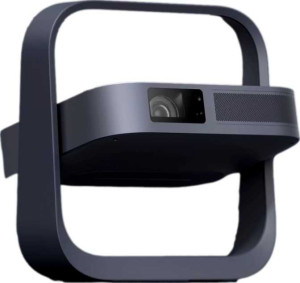
XGIMI Z9X specifications and in-depth review

XGIMI Z9X

Manufacturer: XGIMI

The XGIMI Z9X is a laser-based projector designed for home entertainment use, capable of throwing images up to a 200-inch screen size. It runs a built-in smart TV platform and supports wireless casting through both AirPlay and Chromecast, making it straightforward to stream content from a variety of devices. At 1500 g, it sits on the lighter end of the projector spectrum, and a dedicated smartphone app adds another layer of control flexibility.

On the technical side, the Z9X outputs at 4K resolution with a 240Hz refresh rate and supports HDR10 for compatible content. Connectivity is well-rounded, with two HDMI ports, two USB ports, Bluetooth, Wi-Fi, Miracast, and an S/PDIF output for external audio routing. The built-in stereo speaker system delivers 2 x 7W of audio output, and a 3.5mm headphone jack is also available. Notably, the projector does not include lens shift in either axis, and features like 3D display, Dolby Vision, and HLG are absent from its specification set.

Pros
  • 4K output resolution paired with a 240Hz refresh rate makes for smooth, detailed image reproduction
  • Supports AirPlay, Chromecast built-in, and Miracast, covering a wide range of wireless casting options
  • Built-in smart TV platform removes the need for an external streaming device
  • Two HDMI ports and two USB ports provide solid wired connectivity for multiple devices
  • Laser light source serves as the core projection technology
  • Stereo speakers with 2 x 7W output and a 3.5mm headphone jack offer flexible audio options
Cons
  • No lens shift in either vertical or horizontal direction limits placement flexibility
  • Does not support Dolby Vision, HDR10+, or HLG, restricting HDR format compatibility
  • No ethernet port available, making the unit dependent on wireless networking
  • Lacks a sleep timer and voice command support, reducing hands-free and automation convenience
  • No external memory slot limits local storage expansion options
  • 3D content playback with glasses is not supported
Who is this for?

This projector is a solid fit for home entertainment setups where large-screen 4K viewing is the primary goal, particularly given its 200-inch maximum projection size and HDR10 support. The built-in smart TV platform, combined with AirPlay, Chromecast, and Miracast support, makes it well-suited for users who regularly stream content from phones, tablets, or laptops without relying on external media players. The stereo speaker system and 3.5mm audio output also make it practical for casual viewing rooms where a separate sound system is not always required.

Who is this NOT for?

Users who require precise installation flexibility will find the absence of lens shift — in both vertical and horizontal directions — a significant limitation, as it restricts where the projector can be physically positioned relative to the screen. Those who rely on a wired home network will be affected by the lack of an ethernet port, since the unit depends entirely on Wi-Fi for network connectivity. Additionally, viewers with a home theater setup that demands wide HDR format support will find the omission of Dolby Vision, HDR10+, and HLG restrictive, as only HDR10 content is covered.

General info:

has laser light source
weight 1500 g
Has a dedicated smartphone app

The XGIMI Z9X uses a laser light source, which serves as the core of its projection system. The unit weighs 1500 g, keeping it relatively compact for a laser projector. It also comes with a dedicated smartphone app, allowing users to manage settings and controls directly from their mobile device.

Projection quality:

output resolution 4K
displays 3D with glasses
maximum projection size 200"
supports HDR10+
refresh rate 240Hz
supports Dolby Vision
supports HDR10
supports HLG

The XGIMI Z9X delivers a 4K output resolution with a 240Hz refresh rate, and can project images up to 200 inches in size. It supports HDR10 for compatible content, though HDR10+, Dolby Vision, and HLG are not included. 3D display with glasses is also not supported.

Connectivity:

HDMI ports 2
has AirPlay
Has Bluetooth
supports Wi-Fi
USB ports 2
has Chromecast built-in
has a VGA connector
is DLNA-certified
has a DVI connector
supports Miracast
RJ45 ports 0
Has S/PDIF Out port

The XGIMI Z9X offers a well-rounded set of connectivity options, including two HDMI ports and two USB ports for wired device connections. Wireless casting is covered through AirPlay, Chromecast built-in, and Miracast, alongside Wi-Fi and Bluetooth support. An S/PDIF output is available for routing audio to an external system. The projector does not include a VGA or DVI connector, has no RJ45 ethernet port, and is not DLNA-certified.

Features:

has stereo speakers
has lens shift (vertical)
has lens shift (horizontal)
has a remote control
has built-in smart TV
has a built-in speaker
audio output power 2 x 7W
has a socket for a 3.5 mm audio jack
has a sleep timer
has an external memory slot
has voice commands

The XGIMI Z9X includes built-in stereo speakers rated at 2 x 7W, along with a 3.5mm headphone jack for connecting external audio devices. It features a built-in smart TV platform and comes with a remote control for navigation. Lens shift is not available in either the vertical or horizontal direction, and there is no sleep timer, external memory slot, or voice command support.

Final Verdict

The XGIMI Z9X is a capable laser projector that delivers on the essentials for home viewing, combining 4K resolution with a 240Hz refresh rate and a generous 200-inch maximum projection size. Its broad wireless casting support — covering AirPlay, Chromecast, and Miracast — alongside a built-in smart TV platform makes it a self-contained solution for everyday streaming. Where it falls short is in installation flexibility and HDR format breadth, with no lens shift and support limited to HDR10 alone. For users prioritizing large-screen 4K streaming without complex installation requirements, the Z9X presents a well-rounded feature set; those with more demanding setup or format compatibility needs may find its limitations harder to overlook.