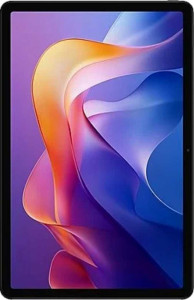
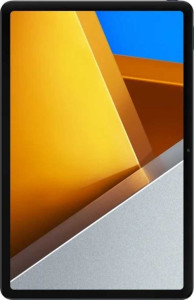
Xiaomi Pad 7 specifications and in-depth review

Xiaomi Pad 7

Manufacturer: Xiaomi

The Xiaomi Pad 7 is a mid-to-upper-range Android tablet built around a sizeable 11.2″ IPS LCD panel that supports a 144Hz refresh rate alongside a 360Hz touch sampling rate, making everyday navigation and content consumption feel notably responsive. Running Android 15, it comes equipped with 12GB of RAM and 256GB of internal storage, while the Qualcomm Snapdragon 7 Plus Gen 3 chipset handles day-to-day workloads and media tasks without breaking a sweat.

On the display side, the screen resolves at 3200 x 2136 pixels for a pixel density of 344 ppi, and it covers Dolby Vision and HDR10 support alongside an anti-reflection coating and a typical brightness of 800 nits. Audio is handled by stereo speakers paired with four microphones, and the tablet supports aptX Adaptive, LDAC, and aptX HD for high-fidelity wireless audio. Connectivity options include Wi-Fi 6E, Bluetooth 5.4, and USB 3.2 Type-C, while the 8850 mAh battery supports fast wired charging, though wireless charging is absent. The unit weighs 500 g and measures just 6.2 mm thick.

Pros
  • The 11.2-inch IPS LCD panel runs at 144Hz with a 360Hz touch sampling rate, making scrolling and touch input feel smooth and immediate
  • Wireless audio support covers aptX, aptX HD, aptX Adaptive, and LDAC, giving the tablet a wide range of high-quality Bluetooth codec options
  • The Snapdragon 7 Plus Gen 3 chipset is built on a 4 nm process and supports multithreading with DDR5 RAM running at 4200 MHz, reflecting a capable and modern memory subsystem
  • Wi-Fi 6E support enables access to the 6 GHz band for faster and less congested wireless connections
  • The display supports both Dolby Vision and HDR10, broadening compatibility with high dynamic range content
  • At 6.2 mm thick and 500 g, the tablet has a slim and relatively manageable physical profile for its screen size
Cons
  • There is no 3.5 mm headphone jack, so wired audio requires an adapter or USB-C headphones
  • The tablet lacks a cellular module entirely, meaning it relies solely on Wi-Fi for internet connectivity with no mobile data option
  • NFC, GPS, and a fingerprint scanner are all absent, limiting contactless functionality, navigation use, and biometric security
  • No wireless charging is supported, restricting charging to wired connections only
  • The rear camera does not include optical image stabilization or a back-illuminated sensor, which are notable omissions for a rear shooter
  • No water resistance rating is provided, leaving the device unprotected against liquid exposure
Who is this for?

This tablet is a solid fit for users who consume a lot of media, thanks to its Dolby Vision and HDR10-capable 11.2-inch display running at 144Hz with 800 nits of brightness and an anti-reflection coating, making it comfortable for extended viewing in varied lighting conditions. The Snapdragon 7 Plus Gen 3 paired with 12GB of DDR5 RAM and 256GB of storage handles everyday productivity tasks, split-screen multitasking, and casual gaming with ease, so it suits students and working users who rely on a single device for mixed workloads. The broad Bluetooth audio codec support — including LDAC and aptX Adaptive — also makes it a practical choice for users who prioritize high-fidelity wireless audio through headphones, and the quad-microphone setup adds utility for video calls and voice input.

Who is this NOT for?

Users who need to stay connected on the move will find the tablet limiting, as it has no cellular module or GPS, restricting internet access to Wi-Fi environments only and ruling out navigation use cases entirely. Those looking to use the device for serious photography will be let down by the 13 MP rear camera's lack of optical image stabilization and a back-illuminated sensor, making it unsuitable for low-light or action shooting scenarios. The absence of a fingerprint scanner, NFC, and any water resistance rating also makes it a poor match for users who require biometric security, contactless payments, or the ability to use their device in environments where exposure to moisture is a realistic concern.

Design:

weight 500 g
thickness 6.2 mm
width 251.2 mm
height 173.4 mm
volume 270.060096 cm³
Stylus included
Has a detachable keyboard
Has a backlit keyboard
water resistance None
Has tilt sensitivity
pen pressure levels 4096

The Xiaomi Pad 7 has a footprint of 251.2 x 173.4 mm and a total volume of 270.06 cm³, while keeping its thickness down to just 6.2 mm and its weight at 500 g. Neither a stylus nor a detachable or backlit keyboard is included in the box, and the pen tilt sensitivity is absent, though the tablet does support up to 4096 pressure levels for compatible stylus input. It carries no water resistance rating, so exposure to liquids is not covered under its design specifications.

Display:

screen size 11.2"
resolution 3200 x 2136 px
pixel density 344 ppi
Display type LCD, IPS
refresh rate 144Hz
touch sampling rate 360Hz
has branded damage-resistant glass
has anti-reflection coating
supports HDR10
brightness (typical) 800 nits
has a touch screen
Has sapphire glass display
supports HDR10+
supports Dolby Vision
Has an e-paper display

The Xiaomi Pad 7 features an 11.2″ IPS LCD touchscreen with a resolution of 3200 x 2136 pixels, translating to a pixel density of 344 ppi, and the panel runs at a 144Hz refresh rate backed by a 360Hz touch sampling rate for smooth and responsive input. Typical brightness sits at 800 nits, and the display includes an anti-reflection coating to help manage glare. It supports both HDR10 and Dolby Vision for compatible content, though HDR10+ is not available. Branded damage-resistant glass and sapphire glass are absent from the display construction, and this is not an e-paper panel.

Performance:

internal storage 256GB
RAM 12GB
Chipset (SoC) name Qualcomm Snapdragon 7 Plus Gen 3
GPU name Adreno 732
CPU speed 1 x 2.8 & 3 x 2.6 & 4 x 1.9 GHz
Geekbench 6 result (multi) 5098
Geekbench 6 result (single) 1913
has an external memory slot
semiconductor size 4 nm
Supports 64-bit
Has integrated LTE
Uses big.LITTLE technology
DirectX version DirectX 12
Has integrated graphics
GPU clock speed 950 MHz
CPU threads 8 threads
RAM speed 4200 MHz
Has TrustZone
maximum memory amount 24GB
Android version Android 15
Thermal Design Power (TDP) 6W
maximum memory bandwidth 64 GB/s
OpenGL ES version 3.2
shading units 768
OpenCL version 2

The Xiaomi Pad 7 is powered by the Qualcomm Snapdragon 7 Plus Gen 3 system-on-chip, built on a 4 nm process with an 8-thread CPU configuration running at up to 2.8 GHz on the performance core, alongside three cores at 2.6 GHz and four efficiency cores at 1.9 GHz, with a thermal design power of 6W and big.LITTLE technology in use. It comes with 12GB of RAM running at 4200 MHz and 256GB of internal storage, with no external memory slot available; the maximum supported memory amount reaches 24GB at a peak bandwidth of 64 GB/s. Graphics are handled by the integrated Adreno 732 GPU clocked at 950 MHz, offering 768 shading units, DirectX 12, OpenGL ES 3.2, and OpenCL 2 support. Geekbench 6 scores land at 1913 single-core and 5098 multi-core, and the chipset includes integrated LTE, TrustZone security, and 64-bit support, with the tablet shipping on Android 15.

Cameras:

megapixels (main camera) 13 MP
megapixels (front camera) 8MP
video recording (main camera) 2160 x 30 fps
has a flash
has a front camera
has a built-in HDR mode
can create panoramas in-camera
supports slow-motion video recording
has touch autofocus
has a BSI sensor
has manual white balance
has a CMOS sensor
wide aperture (main camera) 2.2f
has continuous autofocus when recording movies
Has a front-facing LED flash
number of flash LEDs 1
has manual ISO
has a video light
Has timelapse function
wide aperture (front camera) 2.3f
Shoots 360° panorama
has a serial shot mode
has built-in optical image stabilization
Has a dual-tone LED flash
has manual focus
Has a RGB LED flash
has manual exposure

The Xiaomi Pad 7 carries a 13 MP rear camera with a CMOS sensor, an f/2.2 aperture, and a single dual-tone LED flash, capable of recording video at up to 2160p at 30 fps with continuous autofocus during recording and a built-in video light. Manual controls cover ISO, white balance, focus, and exposure, while shooting modes include HDR, in-camera panorama, slow-motion video, burst, and timelapse, though 360-degree panorama and optical image stabilization are not available; the rear sensor is also not back-illuminated. On the front, an 8 MP camera sits behind an f/2.3 aperture and supports touch autofocus, but there is no front-facing LED flash.

Audio:

has aptX
has aptX HD
has LDAC
has aptX Adaptive
has stereo speakers
has a socket for a 3.5 mm audio jack
number of microphones 4
Has a radio

The Xiaomi Pad 7 includes stereo speakers and a quad-microphone setup, and on the wireless audio side it supports aptX, aptX HD, aptX Adaptive, and LDAC, covering a broad range of high-quality Bluetooth audio codecs. There is no 3.5 mm headphone jack and no built-in radio.

Battery:

battery power 8850 mAh
Supports fast charging
has wireless charging
has a battery level indicator
has a rechargeable battery
has a removable battery

The Xiaomi Pad 7 houses an 8850 mAh rechargeable battery with support for fast wired charging and a battery level indicator, though wireless charging is not available and the battery is not user-removable.

Connectivity & Features:

Wi-Fi version Wi-Fi 4 (802.11n), Wi-Fi 5 (802.11ac), Wi-Fi 6 (802.11ax), Wi-Fi 6E (802.11ax)
has Mail Privacy Protection
has on-device machine learning
has clipboard warnings
has location privacy options
has camera/microphone privacy options
can block app tracking
blocks cross-site tracking
supports split screen
has Live Text
has notification permissions
has full-page screenshots
has Quick Start
has theme customization
has Wi-Fi password sharing
has PiP
Can play games while they download
has an extra dim mode
can offload apps
has focus modes
has media picker
has dynamic theming
has dark mode
has battery health check
Has USB Type-C
has a cellular module
has 5G support
is a multi-user system
gets direct OS updates
has GPS
has a child lock
has an HDMI output
has NFC
Has a fingerprint scanner
USB version 3.2
Supports widgets
Bluetooth version 5.4
download speed 5000 MBits/s
has a gyroscope
Is free and open source
Has offline voice recognition
has a compass
upload speed 3500 MBits/s
supports Wi-Fi
Has sharing intents
Has customizable notifications
Uses 3D facial recognition
has an accelerometer
has voice commands
Has an iris scanner
Has a built-in projector
supports Ethernet
Has an infrared sensor
Tracks the current position of a mobile device

The Xiaomi Pad 7 connects wirelessly via Wi-Fi 6E (802.11ax), with backwards compatibility covering Wi-Fi 4 and Wi-Fi 5 as well, and pairs over Bluetooth 5.4; it does not have a cellular module, 5G support, NFC, GPS, or Ethernet, and there is no HDMI output. The USB Type-C port runs at USB 3.2 and supports download speeds up to 5000 Mbits/s and upload speeds up to 3500 Mbits/s. On the software side, the tablet supports split screen, Picture-in-Picture, widgets, dark mode, dynamic and manual theme customization, an extra dim mode, full-page screenshots, a media picker, sharing intents, customizable notifications, notification controls, a child lock, multi-user accounts, app offloading, and the ability to play games while they download. Privacy features include location privacy options, camera and microphone access controls, clipboard warnings, and app tracking blocking, though cross-site tracking blocking, Mail Privacy Protection, and Wi-Fi password sharing are absent. Sensors on board include a gyroscope, accelerometer, compass, and infrared sensor, while device tracking is supported; biometric options such as a fingerprint scanner, iris scanner, and 3D facial recognition are not present. The tablet also offers on-device machine learning, offline voice recognition, voice commands, and battery health monitoring, but does not receive direct OS vendor updates and does not include focus modes or Quick Start.

Miscellaneous:

DDR memory version 5
uses multithreading

The Xiaomi Pad 7 uses DDR5 memory and supports multithreading for handling concurrent processing tasks.
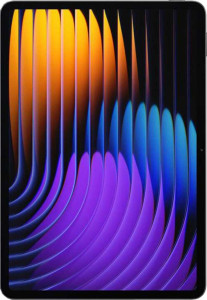
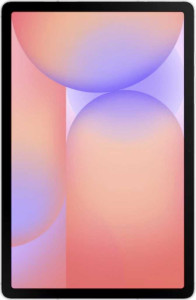
Final Verdict

The Xiaomi Pad 7 is a well-rounded Android tablet that covers the fundamentals of media consumption and everyday productivity with confidence, anchored by its 144Hz Dolby Vision-capable display and a modern Snapdragon 7 Plus Gen 3 chipset backed by DDR5 RAM. Its slim build, broad Wi-Fi 6E connectivity, and comprehensive Bluetooth audio codec support round out a feature set that serves home-based users and content-focused workflows well. That said, the lack of cellular connectivity, GPS, biometric security, and water resistance means it is best understood as a Wi-Fi-only device for controlled environments rather than an all-purpose companion for users on the move. For those whose needs align with its strengths, the Xiaomi Pad 7 delivers a capable and feature-rich experience within its intended scope.

Popular Comparisons

Xiaomi Pad 7
Xiaomi Pad 7
VS
Samsung Galaxy Tab S10 Lite
Xiaomi Pad 7
Xiaomi Pad 7
VS
Honor Pad 10
Honor Pad 10
Xiaomi Pad 7
Xiaomi Pad 7
VS
Motorola Moto Pad 60 Pro
Xiaomi Pad 7
Xiaomi Pad 7
VS
Alldocube iPlay 70 Mini Ultra
Xiaomi Pad 7
Xiaomi Pad 7
VS
Samsung Galaxy Tab S10 FE
Xiaomi Pad 7
Xiaomi Pad 7
VS
Lenovo Idea Tab Pro
Lenovo Idea Tab Pro
Xiaomi Pad 7
Xiaomi Pad 7
VS
Apple iPad (2025)
Apple iPad (2025)
Xiaomi Pad 7
Xiaomi Pad 7
VS
Huawei MatePad 11.5 (2025)
Xiaomi Pad 7
Xiaomi Pad 7
VS
Lenovo Legion Tab Gen 3
Xiaomi Pad 7
Xiaomi Pad 7
VS
TCL NxtPaper 11 Plus
Xiaomi Pad 7
Xiaomi Pad 7
VS
Honor Pad V9
Honor Pad V9
Xiaomi Pad 7
Xiaomi Pad 7
VS
Huawei MatePad Pro 13.2 (2024)
Xiaomi Pad 7
Xiaomi Pad 7
VS
Teclast T60 Plus
Teclast T60 Plus
Xiaomi Pad 7
Xiaomi Pad 7
VS
Samsung Galaxy Tab A9 Plus
Xiaomi Pad 7
Xiaomi Pad 7
VS
Huawei MatePad 11.5 S
Xiaomi Pad 7
Xiaomi Pad 7
VS
Lenovo Legion Y700 (2025)
Xiaomi Pad 7
Xiaomi Pad 7
VS
Honor Pad GT Pro
Honor Pad GT Pro
Xiaomi Pad 7
Xiaomi Pad 7
VS
Apple iPad Mini (2024)
Xiaomi Pad 7
Xiaomi Pad 7
VS
Samsung Galaxy Tab S10 Plus
Xiaomi Pad 7
Xiaomi Pad 7
VS
Huawei MatePad Pro 12.2
Xiaomi Pad 7
Xiaomi Pad 7
VS
Xiaomi Pad 7 Pro
Xiaomi Pad 7 Pro
Xiaomi Pad 7
Xiaomi Pad 7
VS
Xiaomi Pad 8
Xiaomi Pad 8
Xiaomi Pad 7
Xiaomi Pad 7
VS
Xiaomi Redmi Pad 2 Pro
Xiaomi Pad 7
Xiaomi Pad 7
VS
Xiaomi Redmi K Pad
Xiaomi Redmi K Pad
Xiaomi Pad 7
Xiaomi Pad 7
VS
Xiaomi Redmi Pad 2
Xiaomi Redmi Pad 2
Xiaomi Pad 7
Xiaomi Pad 7
VS
ZTE Nubia Pad Pro
ZTE Nubia Pad Pro
Xiaomi Pad 7
Xiaomi Pad 7
VS
Xiaomi Poco Pad
Xiaomi Poco Pad