Xiaomi Redmibook 14 Pro (2024) 14" Intel Core Ultra 5 125H 1.2GHz / 32GB RAM / 1TB SSD specifications and in-depth review

Xiaomi Redmibook 14 Pro (2024) 14" Intel Core Ultra 5 125H 1.2GHz / 32GB RAM / 1TB SSD

Manufacturer: Xiaomi

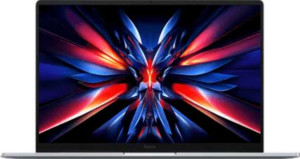
The Xiaomi Redmibook 14 Pro (2024) is a 14″ laptop built around the Intel Core Ultra 5 125H and aimed at users who want a high-resolution screen and strong multitasking headroom in a mid-sized form factor. It weighs 1460 g and features a 2880 x 1800 display running at 120Hz, delivering sharp detail at 242 ppi with a typical brightness of 400 nits. The device ships with 32GB of DDR5 RAM and a 1TB NVMe SSD, making it a reasonably well-provisioned machine for productivity and general computing workloads straight out of the box.

The Core Ultra 5 125H uses a hybrid big.LITTLE layout with four performance cores at 1.2 GHz and eight efficiency cores at 0.7 GHz across 18 threads, reaching a turbo frequency of 4.5 GHz within a 28W TDP envelope. It is built on a 7 nm process with an 18 MB L3 cache and includes integrated graphics capable of boosting to 2200 MHz. On connectivity, the device offers one Thunderbolt 4 port, one USB 3.2 Gen 1 Type-C port, two USB 3.2 Gen 1 Type-A ports, and HDMI 2.1 output, alongside Wi-Fi 6 and Bluetooth 5.3. The rated battery life stands at 31.1 hours from an 80 Wh cell, and sleep-and-charge USB support is included. The system also supports up to four simultaneous displays.

Pros
  • The 31.1-hour rated battery life backed by an 80 Wh cell offers substantial endurance for users who spend extended periods away from a power outlet
  • A 120Hz refresh rate on a 2880 x 1800 display delivers noticeably smoother motion compared to standard 60Hz panels at this resolution
  • 32GB of DDR5 RAM ships as standard, providing a solid foundation for multitasking and memory-intensive workflows
  • The memory ceiling of 96GB leaves meaningful room for future expansion well beyond the base configuration
  • One Thunderbolt 4 port enables high-bandwidth peripheral connections and supports up to four simultaneous external displays
  • Sleep-and-charge USB support allows connected devices to be powered even when the laptop is in sleep mode
Cons
  • The keyboard lacks backlighting, reducing usability in low-light environments
  • A typical brightness of 400 nits may be insufficient for comfortable use in bright outdoor or high-ambient-light settings
  • No fingerprint scanner or 3D facial recognition is present, leaving the device without any biometric authentication method
  • The device is not weather-sealed, offering no protection against accidental moisture exposure
  • There is no external memory slot, so onboard storage cannot be supplemented without replacing internal components
  • Wi-Fi 6 is the highest supported wireless standard, with no Wi-Fi 6E or Wi-Fi 7 capability available
Who is this for?

The Xiaomi Redmibook 14 Pro (2024) is well-matched to users who spend long stretches working away from a power source, where its 31.1-hour rated battery life from an 80 Wh cell provides a meaningful buffer for all-day and extended-day use. The 120Hz refresh rate at 2880 x 1800 resolution suits those who value display fluidity for scrolling, document work, or media consumption, while the generous base configuration of 32GB DDR5 RAM with a path to 96GB makes it a practical fit for users running memory-heavy applications or planning to keep the device for several years. Those who regularly connect external monitors will also find the four-display support and Thunderbolt 4 port useful for desk-based setups.

Who is this NOT for?

Users who depend on biometric security will find the device limiting, as it offers no fingerprint scanner or facial recognition of any kind. The 400-nit typical brightness may prove insufficient for anyone who frequently works outdoors or in brightly lit spaces where screen legibility becomes a challenge. Those who need the fastest available wireless connectivity will also be constrained by the absence of Wi-Fi 6E or Wi-Fi 7 support, with Wi-Fi 6 being the ceiling. Additionally, users who regularly transfer files via removable media will face friction with no external memory slot available, and the lack of a backlit keyboard makes the device a poor fit for those who often work in dim environments.

Design:

weight 1460 g
Uses a fanless design
Has a backlit keyboard
is weather-sealed (splashproof)

The device weighs 1460 g and does not use a fanless design, meaning active cooling is present. The keyboard is not backlit, and the chassis is not weather-sealed against splashes or moisture.

Display:

screen size 14"
resolution 2880 x 1800 px
pixel density 242 ppi
has a touch screen
brightness (typical) 400 nits
refresh rate 120Hz
has anti-reflection coating
supported displays 4

The 14″ screen outputs a resolution of 2880 x 1800 px at 242 ppi, with a 120Hz refresh rate for smoother motion across everyday tasks. Typical brightness is rated at 400 nits, and the panel supports up to four simultaneous external displays. Touch input and an anti-reflection coating are not included.

Performance:

RAM 32GB
Uses flash storage
internal storage 1024GB
CPU speed 4 x 1.2 & 8 x 0.7 GHz
CPU threads 18 threads
Is an NVMe SSD
DirectX version DirectX 12
GPU clock speed 300 MHz
uses multithreading
maximum memory amount 96GB
DDR memory version 5
turbo clock speed 4.5GHz
GPU turbo 2200 MHz
PCI Express (PCIe) version 4
semiconductor size 7 nm
Supports 64-bit

The processor uses a hybrid big.LITTLE layout with four performance cores at 1.2 GHz and eight efficiency cores at 0.7 GHz across 18 threads, with multithreading support and a turbo frequency of 4.5 GHz. Built on a 7 nm process and fully 64-bit capable, it pairs with an integrated GPU running at 300 MHz base and boosting to 2200 MHz, with DirectX 12 support. The system ships with 32GB of DDR5 RAM — expandable up to 96GB — across two memory channels, alongside a 1TB NVMe SSD connected via PCIe 4 using flash storage technology.

Benchmarks:

Geekbench 6 result (multi) 10239
Geekbench 6 result (single) 2256
PassMark result 21104
PassMark result (single) 3400

In benchmark testing, the processor scores 21,104 on PassMark multi-core and 3,400 on the PassMark single-core test, while Geekbench 6 results stand at 10,239 for multi-core and 2,256 for single-core, collectively reflecting the chip's overall throughput and individual core responsiveness.

Connectivity:

USB 3.2 Gen 2 ports (USB-C) 0
USB 3.2 Gen 2 ports (USB-A) 0
USB 4 20Gbps ports 0
USB 4 40Gbps ports 1
Thunderbolt 4 ports 1
USB 3.2 Gen 1 ports (USB-C) 1
USB 3.2 Gen 1 ports (USB-A) 2
Thunderbolt 3 ports 0
has an HDMI output
Has USB Type-C
supports Wi-Fi
Wi-Fi version Wi-Fi 6 (802.11ax), Wi-Fi 5 (802.11ac), Wi-Fi 4 (802.11n)
has an external memory slot
Bluetooth version 5.3
RJ45 ports 0
HDMI ports 1
HDMI version HDMI 2.1
DisplayPort outputs 0
has AirPlay
mini DisplayPort outputs 0
has a VGA connector

The port selection includes one Thunderbolt 4 port (also functioning as USB 4 40Gbps), one USB 3.2 Gen 1 Type-C port, two USB 3.2 Gen 1 Type-A ports, and one HDMI 2.1 output; there are no DisplayPort, mini DisplayPort, VGA, RJ45, or external memory slot options. USB Type-C is present, and AirPlay is supported. Wireless connectivity covers Wi-Fi 6 alongside Wi-Fi 5 and 4, paired with Bluetooth 5.3.

Battery:

Battery life 31.1 hours
battery size 80 Wh
Has sleep-and-charge USB ports
Has a MagSafe power adapter

The device is equipped with an 80 Wh battery with a rated life of 31.1 hours, indicating a strong endurance profile for extended use away from a power source. Sleep-and-charge USB support is included, allowing connected devices to be charged while the laptop is in sleep mode. A MagSafe power adapter is not part of the setup.

Features:

has stereo speakers
has a socket for a 3.5 mm audio jack
supports ray tracing
supports DLSS
has Dolby Atmos
Stylus included
Has a fingerprint scanner
number of microphones 1
Uses 3D facial recognition
has voice commands
has a front camera
Has S/PDIF Out port
has a gyroscope
has GPS
has an accelerometer
has a compass
Has an optical disc drive

Audio is handled by stereo speakers with a 3.5 mm headset jack available for wired headphones or headsets, though Dolby Atmos is not supported. A front camera and a single built-in microphone are present, while biometric authentication options such as a fingerprint scanner and 3D facial recognition are both absent, and voice commands are not supported. No stylus is included, and the device lacks an S/PDIF output, optical disc drive, and all motion and location sensors including gyroscope, accelerometer, compass, and GPS. Ray tracing and DLSS are also not supported.

Miscellaneous:

clock multiplier 36
PassMark result (overclocked) 22756
render output units (ROPs) 24
texture mapping units (TMUs) 48
shading units 768
GPU execution units 7
Type Laptop
instruction sets MMX, F16C, FMA3, AES, AVX, AVX2, SSE 4.1, SSE 4.2
L3 cache 18 MB
Has an unlocked multiplier
Has NX bit
CPU temperature 110 °C
OpenCL version 3
OpenGL version 4.6
Has integrated graphics
Supports ECC memory
memory channels 2
RAM speed (max) 5600 MHz
Thermal Design Power (TDP) 28W
Uses big.LITTLE technology

This laptop CPU operates within a 28W TDP, uses big.LITTLE technology, carries a clock multiplier of 36 without an unlocked multiplier, and supports an 18 MB L3 cache alongside NX bit protection and a maximum operating temperature of 110 °C. Supported instruction sets include MMX, F16C, FMA3, AES, AVX, AVX2, SSE 4.1, and SSE 4.2. The integrated GPU features 768 shading units, 48 texture mapping units, 24 render output units, and 7 execution units, with OpenCL 3 and OpenGL 4.6 support. System memory runs across two channels at up to 5600 MHz with ECC not supported, and the overclocked PassMark result is recorded at 22,756.
Final Verdict

The Xiaomi Redmibook 14 Pro (2024) presents a coherent package for productivity-focused users who prioritize endurance and display quality in a 14-inch form factor. Its 31.1-hour rated battery life paired with a 120Hz 2880 x 1800 display gives it a practical edge for extended work sessions, and the 32GB DDR5 base configuration with room to grow to 96GB keeps it relevant for memory-demanding workflows. That said, the absence of biometric authentication, a non-backlit keyboard, and a Wi-Fi ceiling of 6 mean there are real-world scenarios where users will encounter friction. For those whose priorities align with its strengths — long battery life, sharp display, and a well-provisioned memory setup — the Redmibook 14 Pro (2024) is a focused and capable choice within the 14-inch laptop segment.