Xiaomi Redmibook 14 Pro (2024) 14" Intel Core Ultra 7 155H 1.4GHz / 32GB RAM / 1TB SSD specifications and in-depth review

Xiaomi Redmibook 14 Pro (2024) 14" Intel Core Ultra 7 155H 1.4GHz / 32GB RAM / 1TB SSD

Manufacturer: Xiaomi

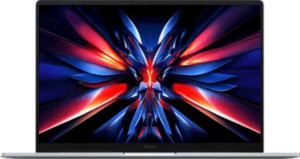
The Xiaomi Redmibook 14 Pro (2024) is a 14-inch laptop built around Intel's Core Ultra 7 155H processor, a hybrid chip running up to 4.8GHz turbo across 22 threads using big.LITTLE architecture. Paired with 32GB of DDR5 memory and a 1TB NVMe SSD, it targets users who need responsive multitasking and fast storage in a relatively compact 1,460g chassis.

The display measures 14 inches at a 2880x1800 resolution, delivering a pixel density of 242 ppi with a 120Hz refresh rate and 400 nits of typical brightness. Connectivity includes a Thunderbolt 4 port, one USB 3.2 Gen 1 Type-C, two USB-A ports, HDMI 2.1, Wi-Fi 6, and Bluetooth 5.3. The 80Wh battery is rated for up to 31.1 hours of use, and graphics are handled by the integrated Intel Arc Xe-LPG 128EU GPU with a turbo clock of 2,250MHz.

Pros
  • The 2880x1800 display at 120Hz and 242 ppi delivers sharp, smooth visuals on a 14-inch panel
  • 32GB of DDR5 RAM with support for up to 96GB gives substantial headroom for memory-intensive workloads
  • The NVMe PCIe 4 SSD provides fast storage access well suited to frequent file operations
  • A Thunderbolt 4 port enables high-bandwidth peripheral and external display connections
  • The 80Wh battery is rated for up to 31.1 hours, and USB sleep-and-charge keeps devices powered when the lid is closed
  • Support for up to four simultaneous displays via the available outputs adds flexibility for multi-screen setups
Cons
  • No backlit keyboard makes the laptop difficult to use in low-light conditions
  • The absence of a fingerprint scanner or 3D facial recognition leaves the device without biometric login options
  • There is no RJ45 Ethernet port, so wired network connections require an adapter
  • No anti-reflection coating on the display may cause visibility issues under bright ambient lighting
  • The single microphone offers limited audio capture capability for calls or recordings
  • There is no external memory card slot, restricting direct transfer from cameras or other storage media
Who is this for?

This laptop suits users who need sustained productivity across long sessions, given its rated battery life of 31.1 hours and 80Wh cell that reduces dependence on a power outlet throughout the day. The 32GB of DDR5 RAM, 22-thread processor with a 4.8GHz turbo, and fast NVMe PCIe 4 SSD make it a solid choice for demanding multitasking, content creation, and development workflows that require responsive system performance. Those who regularly work with external monitors will also find value in the ability to drive up to four displays simultaneously through the available Thunderbolt 4 and HDMI 2.1 outputs, while the sharp 2880x1800 panel at 120Hz serves users who spend long hours reading or editing on-screen.

Who is this NOT for?

Users who rely on biometric authentication will find this laptop lacking, as it offers neither a fingerprint scanner nor 3D facial recognition. The absence of a backlit keyboard makes it poorly suited to anyone who frequently works in dim or dark environments. Those involved in GPU-intensive tasks such as gaming or real-time 3D rendering will also be underserved, since the integrated graphics do not support ray tracing or DLSS and the GPU execution unit count is limited. Additionally, professionals who need direct media card transfers or wired Ethernet without adapters may find the lack of an external memory slot and RJ45 port a recurring inconvenience.

Design:

weight 1460 g
Uses a fanless design
Has a backlit keyboard
is weather-sealed (splashproof)

The Xiaomi Redmibook 14 Pro (2024) weighs 1,460g, making it a moderately light machine for its class. It does not use a fanless design, meaning active cooling is present to manage thermals. The laptop lacks a backlit keyboard, which may be a consideration for users who frequently work in low-light environments, and it is not weather-sealed or splashproof.

Display:

screen size 14"
resolution 2880 x 1800 px
pixel density 242 ppi
has a touch screen
brightness (typical) 400 nits
refresh rate 120Hz
has anti-reflection coating
supported displays 4

The Redmibook 14 Pro (2024) features a 14-inch screen with a 2880 x 1800 px resolution that works out to a pixel density of 242 ppi, producing a sharp visual output. The panel runs at a 120Hz refresh rate and reaches a typical brightness of 400 nits. It does not include a touch screen or an anti-reflection coating, but the system supports up to four connected displays simultaneously.

Performance:

RAM 32GB
Uses flash storage
internal storage 1024GB
CPU speed 6 x 1.4 & 8 x 0.9 GHz
CPU threads 22 threads
Is an NVMe SSD
DirectX version DirectX 12 Ultimate
GPU clock speed 300 MHz
uses multithreading
maximum memory amount 96GB
DDR memory version 5
turbo clock speed 4.8GHz
GPU turbo 2250 MHz
PCI Express (PCIe) version 4
semiconductor size 7 nm
Supports 64-bit

The Redmibook 14 Pro (2024) runs on a processor with six cores clocked at 1.4GHz and eight cores at 0.9GHz, reaching a turbo speed of 4.8GHz across 22 threads with multithreading enabled, all built on a 7nm semiconductor process. It comes with 32GB of DDR5 RAM, expandable to a maximum of 96GB, and stores data on a 1024GB NVMe SSD using PCIe 4 and flash storage technology. The integrated GPU runs at a base clock of 300MHz and boosts up to 2,250MHz, with support for DirectX 12 Ultimate. The system is 64-bit compatible throughout.

Benchmarks:

PassMark result 24879
PassMark result (single) 3468

In PassMark testing, the Redmibook 14 Pro (2024) records a multi-threaded score of 24,879, while its single-threaded result comes in at 3,468, reflecting the processor's per-core output under isolated workloads.

Connectivity:

USB 3.2 Gen 2 ports (USB-C) 0
USB 3.2 Gen 2 ports (USB-A) 0
USB 4 20Gbps ports 0
USB 4 40Gbps ports 1
Thunderbolt 4 ports 1
USB 3.2 Gen 1 ports (USB-C) 1
USB 3.2 Gen 1 ports (USB-A) 2
Thunderbolt 3 ports 0
has an HDMI output
Has USB Type-C
supports Wi-Fi
Wi-Fi version Wi-Fi 6 (802.11ax), Wi-Fi 5 (802.11ac), Wi-Fi 4 (802.11n)
has an external memory slot
Bluetooth version 5.3
RJ45 ports 0
HDMI ports 1
HDMI version HDMI 2.1
DisplayPort outputs 0
has AirPlay
mini DisplayPort outputs 0
has a VGA connector

The Redmibook 14 Pro (2024) offers a varied port selection, including one Thunderbolt 4 port that also functions as a USB 4 40Gbps port, one USB 3.2 Gen 1 Type-C port, and two USB 3.2 Gen 1 Type-A ports; there are no USB 3.2 Gen 2 or Thunderbolt 3 ports present. Video output is handled by a single HDMI 2.1 port, while DisplayPort, mini DisplayPort, and VGA outputs are absent. Wireless connectivity covers Wi-Fi 6, 5, and 4 standards alongside Bluetooth 5.3, and AirPlay is supported. The laptop does not include an RJ45 Ethernet port or an external memory card slot.

Battery:

Battery life 31.1 hours
battery size 80 Wh
Has sleep-and-charge USB ports
Has a MagSafe power adapter

The Redmibook 14 Pro (2024) is equipped with an 80Wh battery rated for up to 31.1 hours of use. The laptop supports sleep-and-charge through its USB ports, allowing connected devices to charge even when the machine is not in active use. It does not use a MagSafe power adapter.

Features:

has stereo speakers
has a socket for a 3.5 mm audio jack
supports ray tracing
supports DLSS
has Dolby Atmos
Stylus included
Has a fingerprint scanner
number of microphones 1
Uses 3D facial recognition
has voice commands
has a front camera
Has S/PDIF Out port
has a gyroscope
has GPS
has an accelerometer
has a compass
Has an optical disc drive

The Redmibook 14 Pro (2024) includes stereo speakers, a 3.5mm headset jack, and a single microphone, while Dolby Atmos and S/PDIF output are not supported. A front camera is present, but the laptop does not offer a fingerprint scanner, 3D facial recognition, or voice command functionality. On the graphics side, ray tracing and DLSS are not supported. The device ships without a stylus, and there is no optical disc drive. Sensor-wise, it lacks a gyroscope, accelerometer, compass, and GPS.

Miscellaneous:

clock multiplier 38
PassMark result (overclocked) 24880
shading units 1024
render output units (ROPs) 32
texture mapping units (TMUs) 64
GPU name Arc Xe-LPG 128EU
CPU socket BGA 2049
Type Laptop
Has an unlocked multiplier
instruction sets MMX, F16C, FMA3, AES, AVX, AVX2, SSE 4.1, SSE 4.2
L3 cache 24 MB
Has NX bit
CPU temperature 110 °C
OpenCL version 3
OpenGL version 4.6
GPU execution units 8
Has integrated graphics
Supports ECC memory
memory channels 2
RAM speed (max) 7467 MHz
Thermal Design Power (TDP) 28W
Uses big.LITTLE technology

The processor uses a BGA 2049 socket, a clock multiplier of 38, and a 28W TDP, with a maximum operating temperature of 110°C; the multiplier is locked and the chip employs big.LITTLE technology for workload distribution. It supports a broad set of instruction sets including MMX, F16C, FMA3, AES, AVX, AVX2, SSE 4.1, and SSE 4.2, alongside NX bit support, a 24MB L3 cache, and dual memory channels with a maximum RAM speed of 7,467MHz, though ECC memory is not supported. Graphics are handled by the integrated Intel Arc Xe-LPG 128EU, which features 1,024 shading units, 64 texture mapping units, 32 render output units, and 8 execution units, with OpenCL 3 and OpenGL 4.6 support. The overclocked PassMark result is recorded at 24,880.
Final Verdict

The Xiaomi Redmibook 14 Pro (2024) is a well-specified 14-inch laptop that positions itself around sustained productivity rather than any single standout feature. Its combination of a 22-thread processor, DDR5 memory, and fast NVMe storage makes it capable of handling demanding workloads, while the 31.1-hour rated battery life backed by an 80Wh cell is a practical strength for users who spend extended time away from a power source. The sharp 2880x1800 display at 120Hz and the Thunderbolt 4 connectivity further reinforce its appeal for professionals who value screen quality and flexible peripheral support. That said, the absence of biometric security, a backlit keyboard, and dedicated GPU capabilities means it is best directed at productivity-focused users rather than those with specialized security requirements or graphics-intensive workloads. On balance, it represents a capable and well-rounded option for everyday professional and creative use.