Xming Q5 Neo Plus specifications and in-depth review

Xming Q5 Neo Plus

Manufacturer: Xming

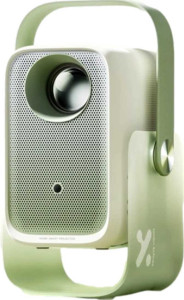
The Xming Q5 Neo Plus is a compact projector designed for versatile home use, combining wireless streaming capabilities with a built-in smart TV platform. It supports AirPlay, Chromecast, and Miracast, making it straightforward to mirror or cast content from a wide range of devices without additional hardware. A dedicated smartphone app and voice command support add further convenience to everyday operation.

On the technical side, the Q5 Neo Plus delivers a 1080p output resolution with a maximum projection size of 150″ and HLG support for compatible content. Connectivity includes one HDMI port, one USB port, Bluetooth, and Wi-Fi, while audio is handled by a built-in mono speaker rated at 3W, complemented by a 3.5 mm headphone jack. The unit measures 113 × 161.5 × 186 mm and weighs 2700 g, and it comes with a remote control, sleep timer, and a one-year warranty.

Pros
  • Supports AirPlay, Chromecast built-in, and Miracast, covering a wide range of wireless streaming and screen mirroring options
  • Built-in smart TV platform with voice command support reduces reliance on external streaming devices
  • Dedicated smartphone app provides an additional control option beyond the remote
  • Can project images up to 150″, offering a large screen experience in suitable environments
  • Outputs at 1080p resolution, providing full HD image quality
  • Includes a 3.5 mm headphone jack, allowing audio to be redirected to external speakers or headphones
Cons
  • Single 3W mono speaker offers very limited audio output with no stereo separation and no Dolby Atmos support
  • No motorized focus or zoom, requiring manual adjustments that may be less convenient during setup
  • No lens shift in either vertical or horizontal direction, restricting flexible placement options
  • No Ethernet port, making wired network connections unavailable
  • Does not support HDR10, HDR10+, or Dolby Vision, limiting compatibility with common HDR formats
  • Warranty period is limited to one year
Who is this for?

This projector suits users who want a straightforward home entertainment setup with flexible wireless streaming, as the combination of AirPlay, Chromecast built-in, and Miracast covers virtually any device ecosystem without additional hardware. The built-in smart TV platform with voice commands makes it a good fit for casual viewers who prefer a self-contained unit that does not depend on external media players. Those looking for a relatively compact projector capable of producing a large image up to 150″ at 1080p in a controlled indoor environment will also find it well-suited to their needs.

Who is this NOT for?

Users who require precise installation flexibility will find this projector limiting, as it offers no lens shift in either direction and relies entirely on manual focus and zoom adjustments, which can make placement finicky. Anyone who prioritizes high-quality HDR playback will be constrained by the lack of support for HDR10, HDR10+, and Dolby Vision, with only HLG available. Similarly, those who expect immersive built-in audio — whether through stereo output or Dolby Atmos — will be disappointed by the single 3W mono speaker, making this a poor match for users who do not have a separate audio setup.

General info:

has laser light source
release date April 2025
width 113 mm
height 186 mm
thickness 161.5 mm
weight 2700 g
Has a dedicated smartphone app
volume 3394.407 cm³
warranty period 1 years

The Xming Q5 Neo Plus has a footprint of 113 × 161.5 × 186 mm and weighs 2700 g, giving it a reasonably compact form for a home projector with a volume of approximately 3394 cm³. It does not use a laser light source, relying instead on a conventional lamp. A dedicated smartphone app is available, adding a convenient layer of control beyond the standard remote. The unit is backed by a one-year warranty.

Projection quality:

output resolution 1080p
has motorized focus
maximum projection size 150"
has motorized zoom
supports HDR10+
has manual focus
supports Dolby Vision
supports HDR10
supports HLG

The Xming Q5 Neo Plus outputs at 1080p resolution and can project images up to 150″ in size. Focus and zoom are both handled manually, as the unit includes neither motorized focus nor motorized zoom. In terms of HDR support, it is compatible with HLG, though it does not support HDR10, HDR10+, or Dolby Vision.

Connectivity:

HDMI ports 1
has AirPlay
Has Bluetooth
supports Wi-Fi
USB ports 1
has Chromecast built-in
has a VGA connector
has a DVI connector
supports Miracast
RJ45 ports 0
Has S/PDIF Out port

Wireless connectivity is well covered, with Wi-Fi, Bluetooth, AirPlay, Chromecast built-in, and Miracast all supported, allowing content to be streamed or mirrored from a broad range of devices. On the physical side, the projector provides one HDMI port and one USB port, while there is no RJ45 ethernet port, VGA connector, DVI connector, or S/PDIF audio output.

Features:

has stereo speakers
has lens shift (vertical)
has lens shift (horizontal)
has a remote control
has built-in smart TV
has a built-in speaker
audio output power 1 x 3W
has a socket for a 3.5 mm audio jack
has a sleep timer
has Dolby Atmos
has voice commands

The projector includes a built-in smart TV platform alongside voice command support and a remote control, making day-to-day navigation straightforward without relying on external devices. Audio is handled by a single built-in speaker rated at 3W — there is no stereo speaker configuration and no Dolby Atmos support — though a 3.5 mm headphone jack is available for routing sound to external speakers or headphones. Lens shift is not available in either the vertical or horizontal direction. Additional convenience features include a sleep timer for automated shutdown.
Final Verdict

The Xming Q5 Neo Plus is a capable 1080p home projector that earns its place through its broad wireless connectivity suite — covering AirPlay, Chromecast built-in, Miracast, and a built-in smart TV platform with voice commands — making it a genuinely self-sufficient unit for everyday streaming in a casual home environment. Its limitations around HDR support, fixed manual optics, and modest mono audio mean it is best appreciated by users with straightforward setup needs rather than those chasing a more demanding home cinema experience. For what it sets out to do — deliver a large-screen wireless viewing experience with minimal external dependencies — it presents a coherent and practical package.