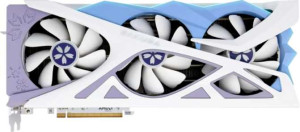
Yeston Sakura GeForce RTX 4060 Ti 16GB specifications and in-depth review

Yeston Sakura GeForce RTX 4060 Ti 16GB

Manufacturer: Yeston

The Yeston Sakura GeForce RTX 4060 Ti 16GB is a desktop graphics card based on the Ada Lovelace architecture, fabricated on a 5nm process with 22,900 million transistors. It ships with 16GB of GDDR6 VRAM, which is a notably generous allocation for this GPU tier, and includes RGB lighting as part of its Sakura-themed visual design. The card connects via PCIe 4.0, has a TDP of 165W, and measures 305mm in width and 125mm in height.

Clocked at a base of 2310 MHz with a turbo frequency of 2595 MHz, the card delivers 22.59 TFLOPS of floating-point performance through its 4352 shading units, 136 texture mapping units, and 48 render output units, resulting in a texture rate of 352.9 GTexels/s and a pixel rate of 124.6 GPixel/s. The 16GB of GDDR6 memory runs at an effective 18,000 MHz over a 128-bit bus, yielding 288 GB/s of maximum bandwidth, with ECC memory and DPFP support also present. Feature coverage includes DirectX 12 Ultimate, OpenGL 4.6, OpenCL 3, ray tracing, DLSS, stereoscopic 3D, Intel Resizable BAR, and output support for up to four displays via one HDMI 2.1a port and three DisplayPort connectors.

Pros
  • 16GB of GDDR6 VRAM provides substantial memory capacity for texture-heavy and memory-intensive workloads
  • A 165W TDP keeps power consumption relatively modest, reducing demands on the system power supply and cooling
  • Ray tracing and DLSS are both supported, enabling access to modern rendering and upscaling techniques
  • ECC memory support adds data integrity for compute-oriented tasks sensitive to memory errors
  • RGB lighting is included, offering visual customization for aesthetically focused builds
  • Up to four displays can be connected simultaneously via one HDMI 2.1a port and three DisplayPort outputs
Cons
  • The 128-bit memory bus significantly limits memory bandwidth at 288 GB/s, which may become a bottleneck in bandwidth-sensitive scenarios despite the large VRAM capacity
  • At 305mm in width, the card demands considerable case clearance and may not fit in compact or mid-tower builds with restricted GPU length
  • Air-water cooling is not supported, limiting thermal management options to the included air cooler
  • No USB-C output is present, restricting connectivity for monitors or devices that require that interface
  • XeSS (XMX) is not supported, limiting upscaling options to DLSS only
Who is this for?

This card is well-suited to users who prioritize large VRAM capacity for memory-intensive workloads such as texture-heavy rendering, machine learning inference, or creative applications that benefit from having 16GB of addressable GPU memory. Its 165W TDP makes it a practical fit for systems with moderate power delivery, and the support for ray tracing, DLSS, DirectX 12 Ultimate, and multi-display output across four screens covers the needs of users running modern graphics workloads or extended desktop setups. The inclusion of ECC memory support also makes it relevant for users who need a degree of memory error correction alongside standard rendering tasks.

Who is this NOT for?

Users who depend on high memory bandwidth for data-throughput-sensitive workloads may find the 128-bit bus and 288 GB/s bandwidth ceiling limiting, regardless of the available VRAM capacity. The card's 305mm length rules it out for compact and smaller mid-tower builds where GPU clearance is restricted, and the absence of air-water cooling support means users cannot integrate it into liquid cooling setups. Those who require USB-C display output will also find the card's port selection insufficient for their connectivity needs.

Performance:

GPU clock speed 2310 MHz
GPU turbo 2595 MHz
pixel rate 124.6 GPixel/s
floating-point performance 22.59 TFLOPS
texture rate 352.9 GTexels/s
GPU memory speed 2250 MHz
shading units 4352
texture mapping units (TMUs) 136
render output units (ROPs) 48
Has Double Precision Floating Point (DPFP)

The GPU runs at a base clock of 2310 MHz and reaches a turbo frequency of 2595 MHz, with 4352 shading units backed by 136 texture mapping units and 48 render output units. This configuration produces a texture rate of 352.9 GTexels/s and a pixel rate of 124.6 GPixel/s, with overall floating-point throughput measured at 22.59 TFLOPS. GPU memory operates at 2250 MHz, and Double Precision Floating Point (DPFP) is supported, adding value for compute workloads that require it.

Memory:

effective memory speed 18000 MHz
maximum memory bandwidth 288 GB/s
VRAM 16GB
GDDR version GDDR6
memory bus width 128-bit
Supports ECC memory

The card is equipped with 16GB of GDDR6 VRAM running at an effective speed of 18,000 MHz over a 128-bit bus, delivering a maximum memory bandwidth of 288 GB/s. While the 128-bit bus width constrains overall bandwidth relative to wider configurations, the large 16GB capacity provides substantial headroom for memory-intensive workloads. ECC memory support is also present, offering error correction for tasks where data integrity is a priority.

Features:

DirectX version DirectX 12 Ultimate
OpenGL version 4.6
OpenCL version 3
Supports multi-display technology
supports ray tracing
Supports 3D
supports DLSS
has XeSS (XMX)
AMD SAM / Intel Resizable BAR Intel Resizable BAR
has LHR
has RGB lighting
supported displays 4

The card supports DirectX 12 Ultimate, OpenGL 4.6, and OpenCL 3, covering modern graphics and compute API requirements. Ray tracing and DLSS are both enabled, alongside stereoscopic 3D and multi-display technology for up to four simultaneous outputs. Intel Resizable BAR is present, while XeSS (XMX) and LHR are not included. RGB lighting is featured on this model.

Ports:

has an HDMI output
HDMI ports 1
HDMI version HDMI 2.1a
DisplayPort outputs 3
USB-C ports 0
DVI outputs 0
mini DisplayPort outputs 0

Display connectivity is handled through one HDMI 2.1a port and three DisplayPort outputs, giving a total of four available connections. USB-C, DVI, and mini DisplayPort outputs are absent from this model.

General info:

GPU architecture Ada Lovelace
Thermal Design Power (TDP) 165W
PCI Express (PCIe) version 4
semiconductor size 5 nm
number of transistors 22900 million
Has air-water cooling
width 305 mm
height 125 mm

The card is based on the Ada Lovelace architecture, built on a 5nm process and integrating 22,900 million transistors. It connects to the motherboard via PCIe 4.0 and has a Thermal Design Power of 165W, which sits on the lower end for a card of this class. Physically, it measures 305mm in width and 125mm in height, and air-water cooling is not supported, meaning the card relies solely on its air cooling solution.

Final Verdict

The Yeston Sakura GeForce RTX 4060 Ti 16GB stands out primarily for its 16GB of GDDR6 VRAM, which gives it a meaningful advantage in memory-intensive workloads for a card with a 165W TDP. Built on the Ada Lovelace architecture with full support for ray tracing, DLSS, DirectX 12 Ultimate, and ECC memory, it covers a solid range of modern graphics and compute use cases. Prospective users should weigh the 128-bit bus width and the card's 305mm length against their system's capabilities before committing, as these factors can meaningfully affect both performance in bandwidth-sensitive scenarios and physical compatibility. For users whose setup accommodates it, the Yeston Sakura GeForce RTX 4060 Ti 16GB offers a distinctive combination of generous VRAM, modest power draw, and a complete modern feature set.

Popular Comparisons

Yeston Sakura GeForce RTX 4060 Ti 16GB
VS
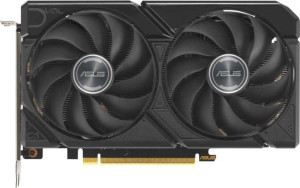
Asus Dual Radeon RX 9060 XT 16GB