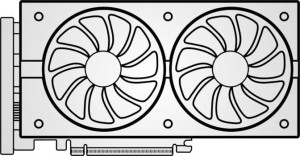
AMD Radeon RX 7400 specifications and in-depth review

AMD Radeon RX 7400

Manufacturer: AMD

The AMD Radeon RX 7400 is a graphics card designed around AMD's RDNA 3.0 architecture, fabricated on a 6 nm process with 13,300 million transistors. It operates at a base clock of 1452 MHz and reaches a boost of 2300 MHz, while its compact 55W thermal design power makes it notably frugal with energy relative to its compute tier. The card measures 167 mm in width and relies on passive airflow rather than a liquid cooling solution.

On the memory side, the RX 7400 carries 8GB of GDDR6 VRAM across a 128-bit bus, delivering a maximum bandwidth of 173 GB/s at an effective speed of 10,800 MHz. Its 1792 shading units, 112 texture mapping units, and 64 render output units contribute to a texture rate of 257.6 GTexels/s and a floating-point throughput of 16.49 TFLOPS. The card supports DirectX 12 Ultimate, OpenGL 4.6, ray tracing, and AMD FSR4, along with AMD SAM for resizable BAR access. Display connectivity includes one HDMI 2.1 port and three DisplayPort outputs, with no USB-C or DVI options present.

Pros
  • A 55W TDP keeps power consumption low, reducing heat output and allowing use in compact or power-constrained builds
  • Three DisplayPort outputs plus one HDMI 2.1 port allow connection of up to four monitors simultaneously
  • FSR4 support enables upscaling for smoother frame rendering without relying on third-party implementations
  • ECC memory support adds a layer of data integrity for workloads sensitive to memory errors
  • Ray tracing is supported, enabling hardware-accelerated lighting effects in compatible titles and applications
  • AMD SAM (Resizable BAR) is supported, allowing the CPU broader access to VRAM for improved data transfer efficiency
Cons
  • The 128-bit memory bus width limits memory bandwidth headroom compared to wider-bus configurations in the same card tier
  • No DLSS support, meaning users dependent on that upscaling technology must rely solely on FSR4
  • Zero USB-C outputs restrict direct connectivity to monitors or devices that require that interface
  • No DVI output, ruling out compatibility with older displays that lack DisplayPort or HDMI inputs
  • The card does not include an air-water cooling solution, leaving thermal management entirely dependent on the installed cooling configuration
Who is this for?

This card is well-suited to users building compact or low-power systems, given its 55W TDP and 167 mm width, which make it a practical fit for small form factor cases. Its support for ray tracing, FSR4, DirectX 12 Ultimate, and up to four simultaneous display outputs also makes it a reasonable choice for users who want a multi-monitor desktop setup or light creative workloads that benefit from ECC memory and OpenCL 2.2 support. Those looking for a card that can handle everyday compute and display tasks without demanding significant power or space will find its feature set well-aligned with those needs.

Who is this NOT for?

Users targeting demanding, high-resolution gaming or GPU-intensive rendering pipelines are likely to find this card limiting, as its 128-bit memory bus and 8GB VRAM ceiling leave little headroom for the data throughput those workloads require. The absence of DLSS support makes it a poor fit for users who specifically rely on that upscaling path in their software or game library. Similarly, those who need USB-C display connectivity or DVI output for legacy monitor setups will find the port selection incompatible with their requirements.

Performance:

GPU clock speed 1452 MHz
GPU turbo 2300 MHz
pixel rate 147.2 GPixel/s
floating-point performance 16.49 TFLOPS
texture rate 257.6 GTexels/s
GPU memory speed 2250 MHz
shading units 1792
texture mapping units (TMUs) 112
render output units (ROPs) 64
Has Double Precision Floating Point (DPFP)

The AMD Radeon RX 7400 runs at a base GPU clock of 1452 MHz, boosting up to 2300 MHz under load, while the GPU memory operates at 2250 MHz. Floating-point throughput reaches 16.49 TFLOPS, supported by 1792 shading units, 112 texture mapping units, and 64 render output units. These figures translate into a texture rate of 257.6 GTexels/s and a pixel rate of 147.2 GPixel/s. The card also supports Double Precision Floating Point (DPFP), adding flexibility for workloads that benefit from higher numerical precision.

Memory:

effective memory speed 10800 MHz
maximum memory bandwidth 173 GB/s
VRAM 8GB
GDDR version GDDR6
memory bus width 128-bit
Supports ECC memory

The RX 7400 is equipped with 8GB of GDDR6 VRAM running at an effective speed of 10,800 MHz across a 128-bit memory bus, yielding a maximum memory bandwidth of 173 GB/s. The card also supports ECC memory, which helps maintain data integrity in error-sensitive workloads.

Features:

DirectX version DirectX 12 Ultimate
OpenGL version 4.6
OpenCL version 2.2
Supports multi-display technology
supports ray tracing
Supports 3D
supports DLSS
has FSR4
has XeSS (XMX)
AMD SAM / Intel Resizable BAR AMD SAM
has LHR
has RGB lighting

The RX 7400 supports DirectX 12 Ultimate, OpenGL 4.6, and OpenCL 2.2, covering a broad range of graphics and compute workloads. Ray tracing, stereoscopic 3D, and multi-display output are all supported, and AMD SAM (Resizable BAR) is available for improved CPU-to-GPU data throughput. On the upscaling front, the card includes AMD FSR4 but does not support DLSS or XeSS (XMX). It has no LHR limitations and does not feature RGB lighting.

Ports:

has an HDMI output
HDMI ports 1
HDMI version HDMI 2.1
DisplayPort outputs 3
USB-C ports 0
DVI outputs 0
mini DisplayPort outputs 0

The RX 7400 offers a total of four display outputs: one HDMI 2.1 port and three DisplayPort outputs. There are no USB-C, DVI, or mini DisplayPort connections on this card.

General info:

GPU architecture RDNA 3.0
Thermal Design Power (TDP) 55W
PCI Express (PCIe) version 4
semiconductor size 6 nm
number of transistors 13300 million
Has air-water cooling
width 167 mm

The RX 7400 is built on AMD's RDNA 3.0 architecture, manufactured using a 6 nm process node and packing 13,300 million transistors into a card width of 167 mm. It connects via PCIe 4 and carries a 55W TDP, reflecting a low power draw by design. The card does not include an air-water cooling solution.

Final Verdict

The AMD Radeon RX 7400 is a graphics card that carves out a clear role for itself through its low power draw, compact footprint, and a feature set that covers the essentials without excess. Built on the RDNA 3.0 architecture with ray tracing, FSR4, DirectX 12 Ultimate, and four display outputs, it delivers a well-rounded set of capabilities for users whose needs revolve around multi-display productivity, light creative tasks, or space- and power-constrained builds. Its 55W TDP remains one of its most defining characteristics, making it genuinely practical for small form factor systems where thermal and power headroom is limited. Those seeking high-throughput gaming or workloads that demand wider memory bandwidth or DLSS support will need to look elsewhere, but for its intended use profile, the RX 7400 presents a coherent and purposeful specification.

Popular Comparisons

AMD Radeon RX 7400
AMD Radeon RX 7400
VS
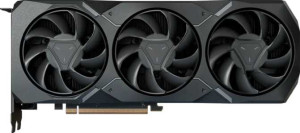
AMD Radeon RX 7900 GRE
AMD Radeon RX 7400
AMD Radeon RX 7400
VS
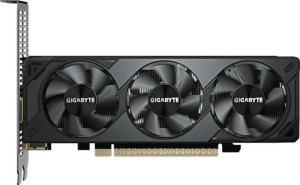
Gigabyte GeForce RTX 5060 OC Low Profile
AMD Radeon RX 7400
AMD Radeon RX 7400
VS
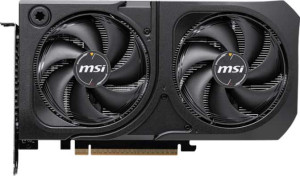
MSI GeForce RTX 5060 Ti Shadow 2X Plus 16GB