AMD Ryzen 5 9500F specifications and in-depth review

AMD Ryzen 5 9500F

Manufacturer: AMD

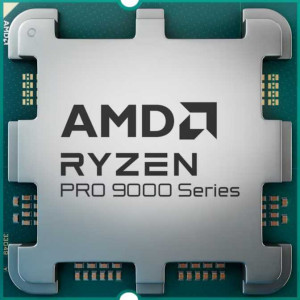
The AMD Ryzen 5 9500F is a desktop processor designed for the AM5 platform, targeting users who pair their system with a discrete GPU since it carries no integrated graphics. Built on a 4nm fabrication process, it operates with a base clock of 3.8GHz across six cores and supports an unlocked multiplier, giving enthusiasts room to push performance further without hard restrictions.

On the memory side, the Ryzen 5 9500F supports DDR5 RAM up to 5600MHz across dual channels, with a maximum addressable capacity of 192GB and optional ECC support. Its cache hierarchy consists of 480KB of L1, 6MB of L2, and 32MB of L3, while the 12 threads, PCIe 5.0 interface, and instruction set support covering AVX2, AES, FMA3, and SSE 4.2 round out a technically capable foundation within its 65W thermal envelope.

Pros
  • Unlocked multiplier allows clock speed adjustments beyond stock settings
  • ECC memory support adds a layer of data reliability for error-sensitive workloads
  • DDR5 support with speeds up to 5600MHz across dual channels
  • Turbo clock reaches 5GHz across six cores with 12 threads available
  • PCIe 5.0 compatibility ensures readiness for current-generation expansion hardware
  • 65W TDP keeps thermal demands relatively contained for a six-core desktop processor
Cons
  • No integrated graphics means a discrete GPU is mandatory for any display output
  • Six cores with no big.LITTLE architecture limits flexibility in workload distribution across efficiency and performance cores
  • L1 cache of 480KB is modest relative to the overall cache configuration
Who is this for?

This processor is a practical fit for users building a dedicated gaming or productivity desktop who plan to pair it with a discrete GPU, since the absence of integrated graphics is a non-issue in those configurations. The unlocked multiplier and 5GHz turbo clock make it well-suited for enthusiasts who want to adjust frequencies through their motherboard settings. Additionally, the ECC memory support and 192GB maximum RAM capacity mean it can serve lightly demanding workstation-oriented tasks where data integrity matters, while the broad AM5 chipset compatibility — spanning B650, B840, B850, X670, and X870 — gives builders reasonable flexibility in their platform choice.

Who is this NOT for?

This processor is a poor match for users who need integrated graphics, such as those building compact systems without a discrete GPU or anyone requiring display output without additional hardware. With only six cores and no big.LITTLE heterogeneous architecture, it is also less suited for workloads that benefit from a high core count or mixed efficiency-and-performance core layout, such as heavily threaded rendering or large-scale compilation tasks. Users who require a fully passive or extremely low-power build may also find the thermal requirements and platform demands of the AM5 ecosystem more than their use case calls for.

General info:

Type Desktop
CPU socket AM5
chipset X670, B650, X870, B840, B850
Has integrated graphics
Thermal Design Power (TDP) 65W
semiconductor size 4 nm
CPU temperature 95 °C
PCI Express (PCIe) version 5
Supports 64-bit

The AMD Ryzen 5 9500F is a desktop processor built on a 4nm semiconductor process and designed for the AM5 socket, with compatibility across a range of chipsets including X670, B650, X870, B840, and B850. It does not include integrated graphics, so a discrete GPU is required. The processor carries a 65W TDP with a maximum operating temperature of 95°C, supports PCIe 5.0, and is fully 64-bit compatible.

Performance:

CPU speed 6 x 3.8 GHz
CPU threads 12 threads
turbo clock speed 5GHz
Has an unlocked multiplier
L2 cache 6 MB
L3 cache 32 MB
L1 cache 480 KB
L2 core 1 MB/core
L3 core 5.33 MB/core
Uses big.LITTLE technology
clock multiplier 38

The Ryzen 5 9500F runs six cores at a base clock of 3.8GHz across all cores, with a turbo clock reaching up to 5GHz, and delivers 12 threads in total without using big.LITTLE heterogeneous core architecture. The clock multiplier is set at 38 and the processor ships with an unlocked multiplier, allowing frequency adjustments beyond stock settings. Cache is organized across three levels — 480KB of L1, 6MB of L2 at 1MB per core, and 32MB of L3 at 5.33MB per core — providing a tiered memory hierarchy to support sustained workloads.

Benchmarks:

Integrated graphics:

Memory:

RAM speed (max) 5600 MHz
DDR memory version 5
memory channels 2
maximum memory amount 192GB
Supports ECC memory

The Ryzen 5 9500F supports DDR5 memory across two channels, with a maximum RAM speed of 5600MHz and a total addressable capacity of up to 192GB. It also includes support for ECC memory, which allows for error detection and correction — a feature typically associated with workstation and reliability-focused use cases.

Features:

instruction sets MMX, F16C, FMA3, AES, AVX, AVX2, SSE 4.1, SSE 4.2
uses multithreading
Has NX bit

The Ryzen 5 9500F supports multithreading and includes the NX bit for hardware-level execution protection. Its instruction set support spans MMX, F16C, FMA3, AES, AVX, AVX2, SSE 4.1, and SSE 4.2, covering a broad range of operations from legacy multimedia extensions to floating-point acceleration and hardware-accelerated encryption.
Final Verdict

The AMD Ryzen 5 9500F is a focused desktop processor that makes deliberate trade-offs — most notably the absence of integrated graphics — in exchange for a clean six-core configuration with an unlocked multiplier, DDR5 support, and a 5GHz turbo clock within a 65W thermal envelope. Its ECC memory compatibility and 192GB ceiling give it a degree of reliability headroom beyond typical consumer use, while PCIe 5.0 support keeps it aligned with current platform standards. For builders who already have a discrete GPU in their plans and want a configurable, platform-flexible processor on AM5, the Ryzen 5 9500F presents a coherent and well-defined option — provided the workload does not demand a higher core count or an integrated display solution.

Popular Comparisons

AMD Ryzen 5 9500F
AMD Ryzen 5 9500F
VS
AMD Ryzen 5 7500F
AMD Ryzen 5 7500F
AMD Ryzen 5 9500F
AMD Ryzen 5 9500F
VS
AMD Ryzen 5 5600X3D
AMD Ryzen 5 5600X3D
AMD Ryzen 5 9500F
AMD Ryzen 5 9500F
VS
AMD Ryzen 7 5700X3D
AMD Ryzen 7 5700X3D
AMD Ryzen 5 9500F
AMD Ryzen 5 9500F
VS
Intel Core 7 240H
Intel Core 7 240H
AMD Ryzen 5 9500F
AMD Ryzen 5 9500F
VS
AMD Ryzen 7 9700F
AMD Ryzen 7 9700F
AMD Ryzen 5 9500F
AMD Ryzen 5 9500F
VS
Intel Core i5-14401E
AMD Ryzen 5 9500F
AMD Ryzen 5 9500F
VS
AMD Ryzen 5 9600
AMD Ryzen 5 9600
AMD Ryzen 5 9500F
AMD Ryzen 5 9500F
VS
AMD Ryzen 7 8700F
AMD Ryzen 7 8700F
AMD Ryzen 5 9500F
AMD Ryzen 5 9500F
VS
Intel Core i5-14400F
AMD Ryzen 5 9500F
AMD Ryzen 5 9500F
VS
AMD Ryzen 7 9700X
AMD Ryzen 7 9700X
AMD Ryzen 5 9500F
AMD Ryzen 5 9500F
VS
Intel Core i5-14600K