AMD Ryzen 7 170 specifications and in-depth review

AMD Ryzen 7 170

Manufacturer: AMD

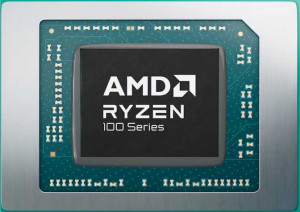
The AMD Ryzen 7 170 is a processor designed for both laptop and desktop platforms, offering a balanced mix of compute and graphics capability in a single package. With 8 cores running at a base frequency of 3.2 GHz, it supports 16 threads through multithreading and reaches a turbo speed of 4.75 GHz, making it a versatile option across a range of workloads. The chip is fabbed on a 6 nm process and carries a TDP of 45W, with a maximum operating temperature of 95°C.

On the memory side, the Ryzen 7 170 supports DDR5 RAM at up to 4800 MHz across two channels, with a maximum capacity of 64 GB and peak bandwidth of 76.8 GB/s. ECC memory is also supported. The integrated Radeon 680M graphics include 768 shading units, 48 TMUs, and 32 ROPs, clocked at 2000 MHz with a turbo of 2200 MHz, and are compatible with DirectX 12 and OpenGL 4.6. Cache configuration includes 512 KB of L1, 4 MB of L2, and 16 MB of L3. The processor supports PCIe 4.0 and a broad set of instruction sets including AVX2, AES, and FMA3.

Pros
  • Supports both laptop and desktop platforms, offering deployment flexibility across different form factors
  • Integrated Radeon 680M graphics with 768 shading units can drive up to 4 displays simultaneously without a discrete GPU
  • DDR5 memory support with a maximum bandwidth of 76.8 GB/s and capacity up to 64 GB
  • ECC memory support adds a layer of data reliability suitable for error-sensitive workloads
  • Broad instruction set coverage including AVX2, FMA3, and AES enables hardware-accelerated encryption and advanced vector operations
  • PCIe 4.0 support allows connection of modern high-bandwidth expansion devices
Cons
  • Turbo clock speed of 4.75 GHz is relatively modest for an 8-core processor in its category
  • The multiplier is locked, removing any possibility of manual frequency tuning
  • L2 cache of just 4 MB across 8 cores leaves only 0.5 MB per core, which may limit throughput in cache-sensitive workloads
  • 45W TDP may restrict sustained performance in thermally constrained laptop chassis
  • Big.LITTLE heterogeneous core architecture is not supported, meaning there is no efficiency-core configuration for lighter background tasks
Who is this for?

This processor is well-suited for users who need a versatile chip that works across both laptop and desktop configurations, particularly those who rely on integrated graphics for light display tasks, as the Radeon 680M can handle up to four simultaneous outputs without requiring a dedicated GPU. The support for DDR5 memory with ECC makes it a reasonable fit for workstation-adjacent tasks where data integrity matters, such as content processing or professional applications. Its broad instruction set — including AES and AVX2 — also makes it practical for users running encryption-heavy or vectorized workloads on a power-conscious 45W platform.

Who is this NOT for?

Users looking to push hardware beyond stock settings will find this chip limiting, as the locked multiplier removes any headroom for manual overclocking. Those requiring demanding GPU workloads — such as 3D rendering, gaming at higher detail levels, or GPU-accelerated compute tasks — will find the integrated graphics insufficient for sustained heavy use. Additionally, systems where thermal headroom is restricted may struggle with this chip, since the 45W TDP without big.LITTLE efficiency cores means there is no low-power fallback for background or idle tasks, which can be a drawback in thermally constrained thin-and-light laptop designs.

General info:

Type Laptop, Desktop
Has integrated graphics
Thermal Design Power (TDP) 45W
semiconductor size 6 nm
CPU temperature 95 °C
PCI Express (PCIe) version 4
Supports 64-bit

The processor is designed for both laptop and desktop platforms and is built on a 6 nm semiconductor process, keeping power consumption in check with a Thermal Design Power of 45W and a maximum operating temperature of 95°C. It includes integrated graphics, supports 64-bit computing, and is compatible with PCIe 4.0 for connecting modern expansion hardware.

Performance:

CPU speed 8 x 3.2 GHz
CPU threads 16 threads
turbo clock speed 4.75GHz
Has an unlocked multiplier
L2 cache 4 MB
L3 cache 16 MB
L1 cache 512 KB
L2 core 0.5 MB/core
L3 core 2 MB/core
Uses big.LITTLE technology
clock multiplier 32

The processor runs 8 cores at a base speed of 3.2 GHz, supporting 16 threads in total, with a turbo clock speed that reaches up to 4.75 GHz under load. The clock multiplier is set at 32, and the chip does not feature an unlocked multiplier or big.LITTLE heterogeneous core architecture. Cache memory is organized across three levels: 512 KB of L1, 4 MB of L2 at 0.5 MB per core, and 16 MB of L3 at 2 MB per core.

Benchmarks:

Integrated graphics:

GPU clock speed 2000 MHz
GPU name Radeon 680M
GPU turbo 2200 MHz
DirectX version DirectX 12
supported displays 4
OpenGL version 4.6
OpenCL version 2.2
texture mapping units (TMUs) 48
render output units (ROPs) 32
shading units 768

The integrated graphics solution is the Radeon 680M, running at a base clock of 2000 MHz with a turbo frequency of 2200 MHz. It is equipped with 768 shading units, 48 texture mapping units, and 32 render output units, and can drive up to 4 displays simultaneously. API support covers DirectX 12, OpenGL 4.6, and OpenCL 2.2, providing a broad range of compatibility for graphics and compute workloads.

Memory:

RAM speed (max) 4800 MHz
maximum memory bandwidth 76.8 GB/s
DDR memory version 5
memory channels 2
maximum memory amount 64GB
Supports ECC memory

The processor supports DDR5 memory across two channels, with a maximum RAM speed of 4800 MHz and a peak memory bandwidth of 76.8 GB/s. It can address up to 64 GB of RAM in total, and ECC memory is supported, which allows for error detection and correction in memory operations.

Features:

instruction sets MMX, F16C, FMA3, AES, AVX, AVX2, SSE 4.1, SSE 4.2
uses multithreading
Has NX bit

The processor supports multithreading and includes the NX bit for hardware-level memory protection. Its instruction set support spans MMX, F16C, FMA3, AES, AVX, AVX2, SSE 4.1, and SSE 4.2, covering a wide range of operations from floating-point and vector processing to hardware-accelerated encryption.
Final Verdict

The AMD Ryzen 7 170 presents a well-rounded specification set for users who need a dual-platform processor with integrated graphics capability and modern memory support. Its DDR5 compatibility with ECC support, combined with the Radeon 680M integrated GPU and a wide instruction set including AVX2 and AES, gives it genuine utility across productivity and workstation-adjacent tasks without requiring additional components. That said, the locked multiplier and the absence of efficiency cores mean it is designed for a specific operational profile rather than maximum flexibility. For users whose workloads align with its 45W envelope and who value platform versatility alongside integrated display output, the Ryzen 7 170 delivers a coherent and technically capable package.

Popular Comparisons

AMD Ryzen 7 170
AMD Ryzen 7 170
VS
AMD Ryzen 5 150
AMD Ryzen 5 150
AMD Ryzen 7 170
AMD Ryzen 7 170
VS
Intel Core Ultra 9 285HX