AMD Ryzen AI 7 Pro 350 specifications and in-depth review

AMD Ryzen AI 7 Pro 350

Manufacturer: AMD

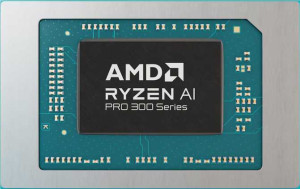
The AMD Ryzen AI 7 Pro 350 is a processor designed for both desktop and laptop platforms, combining a compact 4nm semiconductor process with a thermal design power of 28W. It features an eight-core layout using big.LITTLE technology, splitting its cores across two performance tiers, and supports 16 threads for concurrent workload handling. A turbo clock speed of 5GHz rounds out its core performance profile.

On the memory side, the Ryzen AI 7 Pro 350 supports DDR5 RAM at up to 8000MHz, with dual-channel configuration, a maximum capacity of 256GB, and ECC memory support. The integrated Radeon 860M graphics offer 512 shading units, a boost clock of 3000MHz, and compatibility with DirectX 12, OpenGL 4.6, and OpenCL 2.1, with support for up to four simultaneous displays. Cache is distributed across 16MB of L2 and 8MB of L3, and the chip includes instruction set support for AVX2, AES, FMA3, and related extensions via PCIe 4.0 connectivity.

Pros
  • Supports DDR5 memory at speeds up to 8000MHz with dual-channel configuration and a maximum capacity of 256GB
  • ECC memory support adds data integrity reliability for error-sensitive workloads
  • The Radeon 860M integrated graphics can drive up to four displays simultaneously
  • Turbo clock speed reaches 5GHz across 16 threads using big.LITTLE core architecture
  • Built on a 4nm process with a 28W TDP, keeping power draw low for a laptop and desktop chip
  • Broad instruction set coverage including AES, AVX2, FMA3, and SSE 4.2 supports a wide range of compute tasks
Cons
  • The multiplier is locked, removing any option for manual clock speed tuning
  • L3 cache is limited to 8MB, which is modest relative to the 16MB of L2 cache available
  • Base GPU clock of 600MHz is low, with performance dependent on reaching the 3000MHz turbo speed
  • PCIe 4.0 support may limit bandwidth headroom compared to newer connectivity standards
Who is this for?

This processor is well-suited to users who need a versatile chip that works across both laptop and desktop platforms without sacrificing efficiency. Its 28W TDP combined with a 5GHz turbo clock and 16-thread capability makes it a solid choice for professionals running productivity workloads, content creation tasks, or lightly threaded applications that benefit from responsive single-core speeds. The inclusion of ECC memory support and DDR5 at up to 8000MHz also makes it a reasonable fit for workstation-class laptop builds where data integrity and memory bandwidth matter, such as in engineering, data analysis, or embedded development environments. Users who need multi-display output up to four screens from integrated graphics without a discrete GPU will also find it accommodating.

Who is this NOT for?

Users looking to push clock speeds beyond factory settings will find this chip restrictive, as the locked multiplier eliminates overclocking entirely. The integrated Radeon 860M, while capable for light tasks, is not suited for demanding graphics workloads such as 3D rendering, high-frame-rate gaming, or GPU-accelerated video production, where a discrete graphics solution would be necessary. Additionally, the 8MB L3 cache may create bottlenecks in workloads that are highly cache-sensitive, such as large-scale simulations or database operations, making this chip a poor fit for those specific high-throughput computing scenarios.

General info:

Type Desktop, Laptop
Has integrated graphics
Thermal Design Power (TDP) 28W
semiconductor size 4 nm
CPU temperature 100 °C
PCI Express (PCIe) version 4
Supports 64-bit

The AMD Ryzen AI 7 Pro 350 is designed for both desktop and laptop use, built on a 4nm semiconductor process with a thermal design power of 28W and a maximum operating temperature of 100°C. It includes integrated graphics and fully supports 64-bit computing, while connectivity is handled through PCIe 4.0.

Performance:

CPU speed 4 x 2 & 4 x 2 GHz
CPU threads 16 threads
turbo clock speed 5GHz
Has an unlocked multiplier
L2 cache 16 MB
L3 cache 8 MB
Uses big.LITTLE technology
clock multiplier 20

The processor runs eight cores across two groups using big.LITTLE technology, each clocked at 2GHz, supporting 16 threads in total, with a clock multiplier of 20 and a turbo clock speed of 5GHz. Cache consists of 16MB at the L2 level and 8MB at L3, providing layered memory access for the cores. The multiplier is locked, meaning clock speed adjustments through multiplier tuning are not supported.

Benchmarks:

PassMark result 24010
PassMark result (single) 3941

In PassMark testing, the processor achieves a multi-core score of 24,010, reflecting its overall throughput across all cores and threads, while the single-core result of 3,941 indicates per-core processing capability.

Integrated graphics:

GPU clock speed 600 MHz
GPU name Radeon 860M
GPU turbo 3000 MHz
DirectX version DirectX 12
supported displays 4
OpenGL version 4.6
OpenCL version 2.1
texture mapping units (TMUs) 32
render output units (ROPs) 8
shading units 512

The integrated Radeon 860M has a base clock of 600MHz and a turbo speed of 3000MHz, backed by 512 shading units, 32 texture mapping units, and 8 render output units. It supports up to four displays simultaneously and is compatible with DirectX 12, OpenGL 4.6, and OpenCL 2.1, covering a broad range of graphics and compute workloads.

Memory:

RAM speed (max) 8000 MHz
DDR memory version 5
memory channels 2
maximum memory amount 256GB
Supports ECC memory

The processor supports DDR5 memory at speeds up to 8000MHz across a dual-channel configuration, with a maximum addressable capacity of 256GB. ECC memory is also supported, adding a layer of data integrity for workloads that require it.

Features:

instruction sets MMX, F16C, FMA3, AES, AVX, AVX2, SSE 4.1, SSE 4.2
uses multithreading
Has NX bit

The processor includes multithreading support and carries the NX bit for hardware-level execution protection. Its instruction set support spans MMX, AES, AVX, AVX2, F16C, FMA3, SSE 4.1, and SSE 4.2, covering a broad range of data processing, encryption, and floating-point acceleration capabilities.
Final Verdict

The AMD Ryzen AI 7 Pro 360 brings together a well-rounded set of specifications that position it as a capable processor for professionals operating across both laptop and desktop environments. Its combination of DDR5 support at up to 8000MHz, ECC memory compatibility, and a 5GHz turbo clock across 16 threads gives it a meaningful edge in productivity and workstation-oriented workloads, particularly where memory integrity and responsiveness are priorities. The locked multiplier and modest L3 cache impose real ceilings on its flexibility and cache-sensitive throughput, and the integrated Radeon 860M is best treated as a convenience feature rather than a serious graphics solution. That said, for users who need a thermally efficient, multi-platform chip with solid memory capabilities and broad instruction set coverage, the Ryzen AI 7 Pro 350 represents a focused and capable option within its intended scope.

Popular Comparisons

AMD Ryzen AI 7 Pro 350
VS
AMD Ryzen AI 5 Pro 340
AMD Ryzen AI 7 Pro 350
VS
AMD Ryzen AI 7 H 350
AMD Ryzen AI 7 Pro 350
VS
AMD Ryzen 7 Pro 250
AMD Ryzen 7 Pro 250
AMD Ryzen AI 7 Pro 350
VS
Intel Core Ultra 5 125H
AMD Ryzen AI 7 Pro 350
VS
Intel Core i7-14700T
AMD Ryzen AI 7 Pro 350
VS
Intel Core Ultra 7 255H
AMD Ryzen AI 7 Pro 350
VS
Intel Core Ultra 7 256V
AMD Ryzen AI 7 Pro 350
VS
Intel Core Ultra 7 265H
AMD Ryzen AI 7 Pro 350
VS
Intel Core Ultra 7 268V