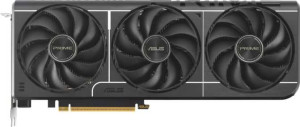
Asus Prime GeForce RTX 5060 specifications and in-depth review

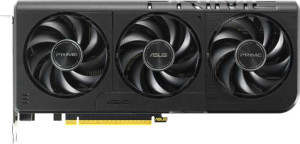
Asus Prime GeForce RTX 5060

Manufacturer: Asus

The Asus Prime GeForce RTX 5060 is a desktop graphics card based on NVIDIA's Blackwell architecture, manufactured on a 5nm process with 21,900 million transistors. It operates at a base clock of 2280 MHz with a boost clock reaching 2497 MHz, and its 19.18 TFLOPS of floating-point performance reflects the compute capacity available to this generation of mid-range GPU. The card measures 268.3mm in length and 120mm in height, drawing 145W under load via its PCIe 5.0 interface.

On the memory side, the RTX 5060 carries 8GB of GDDR7 VRAM across a 128-bit bus, achieving an effective memory speed of 28,000 MHz and a peak bandwidth of 448 GB/s. It supports DirectX 12 Ultimate, OpenGL 4.6, and OpenCL 3, along with ray tracing and DLSS. Display output is handled through one HDMI 2.1b port and three DisplayPort connectors, supporting up to four monitors simultaneously. Intel Resizable BAR is supported, and ECC memory capability is present, while RGB lighting is not included on this model.

Pros
  • Supports ray tracing and DLSS, enabling hardware-accelerated rendering and upscaling features in compatible applications
  • GDDR7 memory delivers an effective speed of 28,000 MHz and up to 448 GB/s of bandwidth across its 128-bit bus
  • Can drive up to four displays simultaneously through a combination of one HDMI 2.1b and three DisplayPort outputs
  • ECC memory support adds a layer of data integrity for workloads that are sensitive to memory errors
  • Built on a 5nm process with PCIe 5.0 connectivity, reflecting a current-generation platform foundation
  • A 145W TDP keeps power draw at a moderate level for a card in this class
Cons
  • The 128-bit memory bus width limits the scalability of memory bandwidth compared to wider bus configurations
  • Only 8GB of VRAM may prove restrictive for memory-intensive workloads at higher resolutions or with large asset sets
  • No USB-C output is available, limiting connectivity options for monitors or devices that rely on that interface
  • XeSS (XMX) is not supported, reducing compatibility with that particular upscaling path
  • RGB lighting is absent, which may matter to users building systems with coordinated lighting setups
  • Air-water cooling is not supported, leaving the card dependent solely on its included air-cooling solution
Who is this for?

This card is well-suited to users running 1080p or 1440p gaming workloads who want access to current-generation features like ray tracing and DLSS without requiring a high-end GPU. Its GDDR7 memory with 448 GB/s of bandwidth handles fast data throughput efficiently, making it a reasonable fit for general content creation or GPU-accelerated compute tasks that benefit from ECC memory support and Double Precision Floating Point capability. The four-display output via HDMI 2.1b and three DisplayPort connectors also makes it practical for multi-monitor desktop setups where driving several screens simultaneously is a priority.

Who is this NOT for?

Users targeting high-resolution workloads at 4K with large texture assets or complex scene data may find the 8GB VRAM ceiling limiting, as memory-intensive pipelines can exhaust that capacity relatively quickly. The 128-bit memory bus, while benefiting from GDDR7 speeds, constrains raw bandwidth scaling for professional GPU compute or AI inference tasks that demand wider memory throughput. Additionally, users who require USB-C display connectivity or need a card compatible with liquid cooling integration will find this model unsuitable, as neither USB-C outputs nor air-water cooling support are available.

Performance:

GPU clock speed 2280 MHz
GPU turbo 2497 MHz
pixel rate 119.9 GPixel/s
floating-point performance 19.18 TFLOPS
texture rate 299.6 GTexels/s
GPU memory speed 1750 MHz
shading units 3840
texture mapping units (TMUs) 120
render output units (ROPs) 48
Has Double Precision Floating Point (DPFP)

The Performance section of the Asus Prime GeForce RTX 5060 centers on a GPU base clock of 2280 MHz that boosts up to 2497 MHz under load, delivering 19.18 TFLOPS of floating-point performance alongside a pixel rate of 119.9 GPixel/s and a texture rate of 299.6 GTexels/s. The GPU is backed by 3840 shading units, 120 texture mapping units, and 48 render output units, forming the core rasterization pipeline. Memory operations are handled at a GPU memory speed of 1750 MHz, and Double Precision Floating Point (DPFP) is supported, extending the card's utility to workloads that require 64-bit precision arithmetic.

Memory:

effective memory speed 28000 MHz
maximum memory bandwidth 448 GB/s
VRAM 8GB
GDDR version GDDR7
memory bus width 128-bit
Supports ECC memory

The Asus Prime GeForce RTX 5060 is equipped with 8GB of GDDR7 VRAM running across a 128-bit memory bus, reaching an effective memory speed of 28,000 MHz and a maximum memory bandwidth of 448 GB/s. ECC memory support is included, which allows the card to detect and correct certain memory errors — a feature relevant to applications that prioritize data integrity alongside graphical workloads.

Features:

DirectX version DirectX 12 Ultimate
OpenGL version 4.6
OpenCL version 3
Supports multi-display technology
supports ray tracing
Supports 3D
supports DLSS
has XeSS (XMX)
AMD SAM / Intel Resizable BAR Intel Resizable BAR
has LHR
has RGB lighting
supported displays 4

The Asus Prime GeForce RTX 5060 supports DirectX 12 Ultimate, OpenGL 4.6, and OpenCL 3, covering a broad range of rendering and compute workloads. Ray tracing and DLSS are both supported, as is stereoscopic 3D, while XeSS (XMX) is not available on this card. Multi-display output is supported across up to four screens, and Intel Resizable BAR is present to help the CPU access GPU memory more efficiently. LHR is not implemented, and the card does not include RGB lighting.

Ports:

has an HDMI output
HDMI ports 1
HDMI version HDMI 2.1b
DisplayPort outputs 3
USB-C ports 0
DVI outputs 0
mini DisplayPort outputs 0

The Asus Prime GeForce RTX 5060 offers a total of four video outputs, consisting of one HDMI 2.1b port and three DisplayPort outputs. There are no USB-C, DVI, or mini DisplayPort connectors on this card.

General info:

GPU architecture Blackwell
Thermal Design Power (TDP) 145W
PCI Express (PCIe) version 5
semiconductor size 5 nm
number of transistors 21900 million
Has air-water cooling
width 268.3 mm
height 120 mm

The Asus Prime GeForce RTX 5060 is built on the Blackwell architecture, fabricated on a 5nm process with 21,900 million transistors, and connects to the motherboard via PCIe 5.0. It carries a Thermal Design Power of 145W and measures 268.3mm in width and 120mm in height, making it a dual-slot form factor card. Air-water cooling is not supported, so the card relies on its bundled cooling solution. No liquid cooling attachment is available for this model.
Final Verdict

The Asus Prime GeForce RTX 5060 is a current-generation graphics card that brings Blackwell architecture, DLSS, and ray tracing support together within a moderate power envelope of 145W. Its GDDR7 memory with 448 GB/s of bandwidth gives it a strong foundation for 1080p and 1440p use cases, and the inclusion of ECC memory support and Double Precision Floating Point capability adds utility beyond pure gaming. That said, the 8GB VRAM capacity and 128-bit bus width mean it is better suited to users with focused, well-defined workloads rather than those pushing the boundaries of high-resolution or memory-intensive tasks. For users seeking a feature-complete, current-generation card for mainstream display setups and everyday GPU workloads, the RTX 5060 delivers a well-rounded and technically current package.

Popular Comparisons

Asus Prime GeForce RTX 5060
VS
Asus Dual GeForce RTX 5060
Asus Prime GeForce RTX 5060
VS
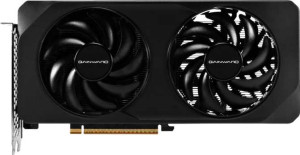
Gainward GeForce RTX 5050 Ghost OC
Asus Prime GeForce RTX 5060
VS
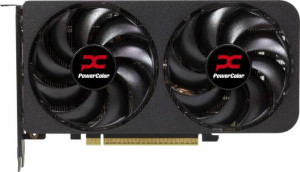
PowerColor Reaper Radeon RX 9060 XT 8GB
Asus Prime GeForce RTX 5060
VS
Asus TUF Gaming GeForce RTX 5060
Asus Prime GeForce RTX 5060
VS
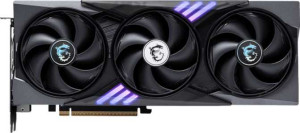
MSI GeForce RTX 5060 Gaming Trio
Asus Prime GeForce RTX 5060
VS
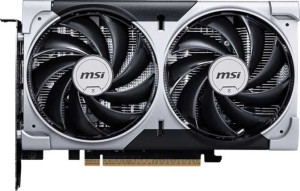
MSI GeForce RTX 5060 Ventus 2X OC
Asus Prime GeForce RTX 5060
VS
Gigabyte GeForce RTX 5060 Gaming OC
Asus Prime GeForce RTX 5060
VS
Gigabyte GeForce RTX 5060 Ti WindForce OC 8GB
Asus Prime GeForce RTX 5060
VS
Asus Prime GeForce RTX 5060 Ti 16GB
Asus Prime GeForce RTX 5060
VS
Intel Arc B580
Intel Arc B580
Asus Prime GeForce RTX 5060
VS
Gigabyte GeForce RTX 5060 WindForce
Asus Prime GeForce RTX 5060
VS
Gainward GeForce RTX 5060 Ghost
Asus Prime GeForce RTX 5060
VS
Galax GeForce RTX 5060 1-Click OC
Asus Prime GeForce RTX 5060
VS
Gigabyte GeForce RTX 5060 OC Low Profile
Asus Prime GeForce RTX 5060
VS
Palit GeForce RTX 5060 Infinity 3