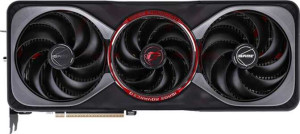
Colorful iGame GeForce RTX 5070 Ti Advanced OC specifications and in-depth review

Colorful iGame GeForce RTX 5070 Ti Advanced OC

Manufacturer: Colorful

The Colorful iGame GeForce RTX 5070 Ti Advanced OC is a graphics card based on NVIDIA's Blackwell architecture, manufactured on a 5 nm process and housing 45,600 million transistors. It operates at a base clock of 2295 MHz with a turbo frequency reaching 2512 MHz, delivering 45.02 TFLOPS of floating-point performance alongside a texture rate of 703.4 GTexels/s and a pixel rate of 241.2 GPixel/s. The card carries RGB lighting and supports up to four simultaneous displays.

On the memory side, the card is equipped with 16GB of GDDR7 VRAM running across a 256-bit bus at an effective speed of 28,000 MHz, yielding a maximum bandwidth of 896 GB/s. It supports DirectX 12 Ultimate, OpenGL 4.6, and OpenCL 3, and includes hardware-level ray tracing and DLSS support. Connectivity is handled through one HDMI 2.1b port and three DisplayPort outputs, with Intel Resizable BAR support and a rated TDP of 310W over a PCIe 5 interface. The card measures 330 mm in length and 140 mm in height, and uses air cooling without a water-cooling option.

Pros
  • Supports up to four simultaneous display outputs through a combination of one HDMI 2.1b port and three DisplayPort connections
  • 16GB of GDDR7 VRAM paired with a 256-bit bus delivers 896 GB/s of memory bandwidth, suited to memory-intensive workloads
  • Hardware ray tracing and DLSS are both supported, expanding rendering options for compatible applications
  • ECC memory support adds a degree of data integrity assurance for compute-oriented use
  • Intel Resizable BAR is included, allowing the CPU broader access to GPU memory during operation
  • RGB lighting is present for users who prioritize visual customization of their build
Cons
  • A 310W TDP places notable demands on the power supply and system cooling infrastructure
  • Water-cooling is not supported, leaving the card dependent entirely on its air-cooling solution
  • Multi-GPU configurations are not supported, limiting scalability to a single-card setup
  • No USB-C, DVI, or mini DisplayPort outputs are available, restricting connectivity to HDMI and full-size DisplayPort only
  • XeSS (XMX) is not supported, narrowing upscaling options to DLSS alone
  • At 330 mm in length, physical fitment may be a concern in smaller or compact cases
Who is this for?

This card is well-suited to users running demanding rendering and compute workloads that can take advantage of its 45.02 TFLOPS of floating-point performance and 896 GB/s of memory bandwidth. The 16GB of GDDR7 VRAM makes it a practical fit for tasks involving large datasets or high-resolution assets, while ECC memory support adds reliability for users engaged in compute-oriented or professionally adjacent workflows. Those who work across up to four displays simultaneously will find the output configuration accommodating, and users who value visual build customization will appreciate the integrated RGB lighting.

Who is this NOT for?

Users working within compact or small-form-factor cases may find the 330 mm card length a limiting factor, as physical fitment could be a genuine obstacle. The 310W TDP requires a well-specified power supply and adequate system airflow, making this card a poor match for systems not already equipped to handle high thermal and power loads — particularly given the absence of a water-cooling option. Additionally, users who rely on XeSS-based upscaling or need USB-C display output will find those capabilities absent, and anyone looking to scale across multiple GPUs in a single system will need to look elsewhere, as multi-GPU support is not available.

Performance:

GPU clock speed 2295 MHz
GPU turbo 2512 MHz
pixel rate 241.2 GPixel/s
floating-point performance 45.02 TFLOPS
texture rate 703.4 GTexels/s
GPU memory speed 1750 MHz
shading units 8960
texture mapping units (TMUs) 280
render output units (ROPs) 96
Has Double Precision Floating Point (DPFP)

The card runs at a base GPU clock of 2295 MHz, with a turbo frequency of 2512 MHz for sustained peak operation. It delivers 45.02 TFLOPS of floating-point performance, supported by a texture rate of 703.4 GTexels/s and a pixel rate of 241.2 GPixel/s. The 8,960 shading units work alongside 280 texture mapping units and 96 render output units to handle rendering workloads, while GPU memory operates at 1750 MHz. Double Precision Floating Point is also supported, broadening the card's suitability for compute-oriented tasks.

Memory:

effective memory speed 28000 MHz
maximum memory bandwidth 896 GB/s
VRAM 16GB
GDDR version GDDR7
memory bus width 256-bit
Supports ECC memory

The card is equipped with 16GB of GDDR7 VRAM running across a 256-bit memory bus, with an effective memory speed of 28,000 MHz and a maximum bandwidth of 896 GB/s. ECC memory is supported, adding a layer of reliability for workloads where data integrity is a consideration.

Features:

DirectX version DirectX 12 Ultimate
OpenGL version 4.6
OpenCL version 3
Supports multi-display technology
supports ray tracing
Supports 3D
supports DLSS
has XeSS (XMX)
AMD SAM / Intel Resizable BAR Intel Resizable BAR
has LHR
multi-GPU 0
has RGB lighting
supported displays 4

The card supports DirectX 12 Ultimate, OpenGL 4.6, and OpenCL 3, covering a broad range of graphics and compute API requirements. Hardware ray tracing and DLSS are both included, while XeSS (XMX) is not supported. Multi-display technology is available with support for up to four simultaneous outputs, and stereoscopic 3D is also supported. Intel Resizable BAR is present to help optimize data transfer between the CPU and GPU. Multi-GPU configurations are not supported, and LHR is absent. The card features RGB lighting, adding a visual element to its physical design.

Ports:

has an HDMI output
HDMI ports 1
HDMI version HDMI 2.1b
DisplayPort outputs 3
USB-C ports 0
DVI outputs 0
mini DisplayPort outputs 0

The card's output configuration consists of one HDMI 2.1b port and three DisplayPort outputs, providing a total of four display connections. DVI, mini DisplayPort, and USB-C outputs are not included in the port layout.

General info:

GPU architecture Blackwell
Thermal Design Power (TDP) 310W
PCI Express (PCIe) version 5
semiconductor size 5 nm
number of transistors 45600 million
Has air-water cooling
width 330 mm
height 140 mm

Built on the Blackwell architecture and manufactured using a 5 nm process, the GPU integrates 45,600 million transistors and connects to the system via a PCIe 5 interface. It carries a rated TDP of 310W and relies solely on air cooling, with no water-cooling option available. The card measures 330 mm in width and 140 mm in height.

Final Verdict

The Colorful iGame GeForce RTX 5070 Ti Advanced OC is a technically substantial graphics card built around NVIDIA's Blackwell architecture, bringing together a strong compute throughput and 16GB of high-bandwidth GDDR7 VRAM in a configuration that addresses the needs of users running demanding rendering, multi-display, or compute-adjacent workloads. Its support for ray tracing, DLSS, ECC memory, and Intel Resizable BAR rounds out a feature set that covers most modern graphics API and workflow requirements. That said, its 310W power draw, reliance on air cooling, and 330 mm physical footprint mean it demands a well-prepared system to operate as intended. For users whose builds meet those requirements, the iGame GeForce RTX 5070 Ti Advanced OC represents a well-specified option within its product category.

Popular Comparisons

Colorful iGame GeForce RTX 5070 Ti Advanced OC
VS
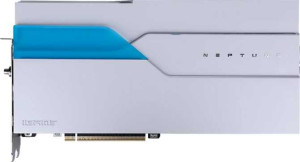
Colorful iGame GeForce RTX 5080 Neptune OC