Fujifilm X-E5 specifications and in-depth review

Fujifilm X-E5

Manufacturer: Fujifilm

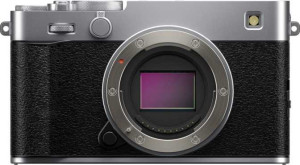
The Fujifilm X-E5 is a compact mirrorless camera built around an APS-C format sensor and driven by the X-Processor 5, offering a thoughtful balance of imaging capability and portability. Its body measures 124.9 × 72.9 × 39.1 mm and weighs 445 g, making it a manageable option for everyday use. The camera features a 3″ flip-out touchscreen alongside a 2360k-dot electronic viewfinder with 100% coverage, giving shooters flexible framing options in a range of situations.

At the core of the X-E5 sits a 40.2 MP back-illuminated CMOS sensor with 425 phase-detection autofocus points, AF tracking, and a CIPA-rated 7-stop in-body image stabilization system that can be combined with compatible lenses. Continuous shooting reaches 8 fps, and the electronic shutter extends to 1/180,000 s. On the video side, the camera records at 3510 × 30 fps with a 200 Mbps bitrate, phase-detection AF during recording, and both a 3.5 mm microphone input and stereo microphone built in. Connectivity includes Wi-Fi 5, Bluetooth 4.2, USB Type-C, and HDMI output, while the 1260 mAh removable battery is rated for approximately 400 shots per charge.

Pros
  • The 40.2 MP back-illuminated APS-C sensor combined with a 7-stop CIPA-rated in-body stabilization system that can be combined with lens stabilization gives a strong foundation for sharp handheld shooting
  • Phase-detection autofocus with 425 points, AF tracking, and touch AF provides responsive and flexible focusing across both stills and video
  • The flip-out 3-inch touchscreen alongside a high-resolution 2360k-dot EVF with 100% coverage offers genuine versatility in how the camera is framed and operated
  • Video recording at 3510 pixels wide with a 200 Mbps bitrate, phase-detection continuous AF, 24p cinema mode, slow-motion support, and a 3.5 mm microphone input makes for a well-rounded video feature set
  • RAW shooting, full manual control over shutter speed, ISO, exposure, and white balance, plus in-camera panorama and HDR modes give experienced users broad creative control
  • Wi-Fi 5, Bluetooth 4.2, USB Type-C, HDMI output, and remote smartphone support cover a wide range of connectivity and transfer needs
Cons
  • The body is not weather-sealed, leaving it vulnerable to moisture and dust in outdoor or unpredictable conditions
  • Battery capacity of 1260 mAh with a CIPA rating of 400 shots is relatively modest for extended shooting sessions
  • Only a single memory card slot means there is no redundancy or simultaneous backup while shooting
  • No built-in GPS makes geotagging images directly in-camera impossible
  • No NFC support limits the speed and convenience of wireless pairing with compatible devices
  • The absence of a stacked CMOS sensor may restrict the maximum electronic shutter speeds and rolling shutter performance compared to cameras that include one
Who is this for?

The X-E5 is well suited to photographers who prioritize resolution and control in a compact body, particularly those working in portraiture, landscape, or street photography where the 40.2 MP sensor and 7-stop in-body stabilization can be used to their full advantage. The flip-out touchscreen, high-resolution EVF, and comprehensive manual controls also make it a practical choice for hybrid shooters who record video regularly, thanks to the 200 Mbps bitrate, phase-detection continuous AF, 24p cinema mode, and built-in stereo microphone with external input support. Users comfortable working within the Fujifilm X lens ecosystem will find the single card slot and connectivity options — USB Type-C, HDMI, Wi-Fi 5, and Bluetooth — adequate for a versatile day-to-day shooting tool.

Who is this NOT for?

The X-E5 is not a strong fit for photographers who frequently shoot in rain, dusty environments, or other harsh outdoor conditions, as the body carries no weather sealing. Those who rely on dual card slots for in-camera redundancy — such as working event or wedding photographers — will find the single slot a meaningful limitation. The 400-shot CIPA battery rating also makes it a less practical choice for long shooting days or travel situations where charging opportunities are limited, and the absence of GPS rules it out for anyone who depends on automatic geotagging without a separate device.

Design:

Type Mirrorless
viewfinder Electronic viewfinder (EVF)
is weather-sealed (splashproof)
screen resolution 1040k dots
EVF resolution 2360k dots
Has a flip-out screen
viewfinder coverage 100%
screen size 3"
weight 445 g
has a touch screen
Has a hot shoe
volume 356.013711 cm³
is a system camera
has a flash
lowest potential operating temperature 0 °C
maximum operating temperature 40 °C
Has a tilting viewfinder
width 124.9 mm
height 72.9 mm
thickness 39.1 mm

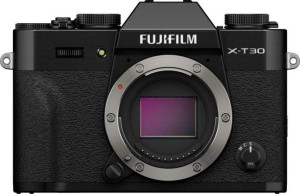
The Fujifilm X-E5 is a mirrorless system camera with a compact body measuring 124.9 × 72.9 × 39.1 mm and weighing 445 g. It features a 2360k-dot electronic viewfinder with 100% coverage and no tilting mechanism, paired with a 3″ touchscreen rated at 1040k dots that flips out for flexible shooting angles. The camera includes a hot shoe for external flash accessories but has no built-in flash. As a system camera, it accepts interchangeable lenses via the Fujifilm X mount. Operating temperatures range from 0 °C to 40 °C, and the body is not weather-sealed, so it offers no splash or dust protection.

Optics:

sensor size APS-C
lens mount Fujifilm X
focus points 425
megapixels (main camera) 40.2 MP
maximum ISO 12800 ISO
maximum expanded ISO 51200 ISO
has sensor shift stabilization
continuous shooting (mechanical) 8 fps
has AF tracking
Has phase-detection autofocus for photos
fastest shutter speed 0.00025 s
has manual focus
has touch autofocus
has manual shutter speed
has a built-in HDR mode
has a BSI sensor
has manual exposure
has a two-stage shutter
has a serial shot mode
has a CMOS sensor
has manual ISO
flash sync speed 0.00555556 s
has manual white balance
can create panoramas in-camera
exposure time 30 s
Maximum electronic shutter speed 5.56E-6 s
has a stacked CMOS sensor
power-on delay 0.5 s
image stabilization rating (CIPA) 7 stops
can combine image stabilization

The X-E5 uses an APS-C back-illuminated CMOS sensor — not a stacked design — resolving 40.2 MP through the Fujifilm X lens mount. Native ISO reaches 12800, expandable to 51200, and the sensor benefits from shift-based image stabilization rated at 7 stops (CIPA), which can also be combined with compatible lens stabilization. Autofocus relies on 425 phase-detection points and supports AF tracking, touch AF, and continuous AF, with a power-on delay of 0.5 s. The mechanical shutter tops out at 1/4000 s, while the electronic shutter reaches 1/180,000 s; flash sync is set at 1/180 s. Continuous shooting runs at 8 fps in burst mode, and maximum exposure time extends to 30 s. Manual control is available for focus, shutter speed, ISO, exposure, and white balance, and the camera also supports in-camera HDR and panorama creation.

Videography:

video recording (main camera) 3510 x 30 fps
Has phase-detection autofocus for videos
has continuous autofocus when recording movies
has a microphone input
has a socket for a 3.5 mm audio jack
has a stereo microphone
movie bitrate 200 Mbps
number of microphones 2
has a 24p cinema mode
supports slow-motion video recording

The X-E5 records video at a maximum resolution of 3510 × 30 fps with a 200 Mbps bitrate, and includes a 24p cinema mode as well as slow-motion video recording. Autofocus during video capture is handled by phase-detection with continuous AF active throughout recording. For audio, the camera has a built-in dual stereo microphone array alongside a dedicated 3.5 mm microphone input, giving users the option to connect an external microphone when needed.

Battery:

Battery life (CIPA) 400 shots
has a removable battery
has a rechargeable battery
has a battery level indicator
battery power 1260 mAh

The X-E5 is powered by a removable, rechargeable 1260 mAh battery rated at approximately 400 shots per charge according to CIPA standards. A battery level indicator is built in, allowing users to monitor remaining power directly through the camera interface.

Features:

processor X-Processor 5
supports Wi-Fi
Has Bluetooth
Has dual card slots
has pixel shift shot
shoots raw
Wi-Fi version Wi-Fi 5 (802.11ac), Wi-Fi 4 (802.11n)
supports a remote smartphone
has an HDMI output
has GPS
has an advanced hot shoe
has NFC
has an external memory slot
Has USB Type-C
Bluetooth version 4.2

The X-E5 runs on the X-Processor 5 and supports RAW file capture alongside external memory via a single card slot — dual card slots are not available. Wireless connectivity covers Wi-Fi 5 (802.11ac) and Wi-Fi 4 (802.11n) as well as Bluetooth 4.2, enabling remote smartphone control, though NFC and GPS are absent. Physical connections include a USB Type-C port and an HDMI output, while the hot shoe present on the body is a standard type rather than an advanced variant. Pixel shift shooting is not supported.
Final Verdict

The Fujifilm X-E5 presents a well-considered specification set for photographers and hybrid shooters who want meaningful resolution and control in a compact mirrorless body. Its 40.2 MP back-illuminated sensor paired with 7-stop in-body stabilization forms a capable foundation for both detailed stills and video work, and the addition of a flip-out touchscreen, 2360k-dot EVF, and 200 Mbps video recording with continuous phase-detection AF rounds out a versatile feature set. The trade-offs — a single card slot, no weather sealing, and a modest battery rating — mean it asks users to work within certain practical constraints. For those who can accommodate those limitations and are already invested or willing to invest in the Fujifilm X lens ecosystem, the X-E5 stands as a technically substantial and thoughtfully equipped mirrorless camera.

Popular Comparisons

Fujifilm X-E5
Fujifilm X-E5
VS
Fujifilm X-T30 III
Fujifilm X-T30 III
Fujifilm X-E5
Fujifilm X-E5
VS
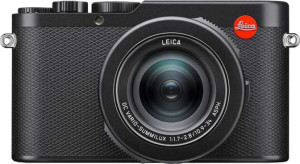
Leica D-Lux 8
Leica D-Lux 8
Fujifilm X-E5
Fujifilm X-E5
VS
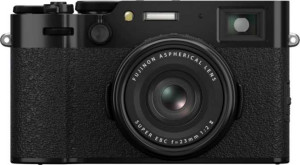
Fujifilm X100VI
Fujifilm X100VI
Fujifilm X-E5
Fujifilm X-E5
VS
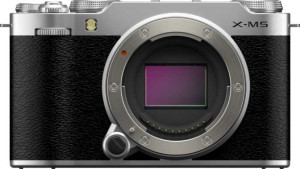
Fujifilm X-M5
Fujifilm X-M5
Fujifilm X-E5
Fujifilm X-E5
VS
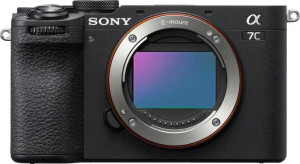
Sony Alpha 7C II
Sony Alpha 7C II
Fujifilm X-E5
Fujifilm X-E5
VS
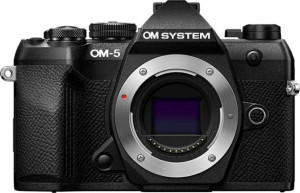
OM System OM-5 Mark II
Fujifilm X-E5
Fujifilm X-E5
VS
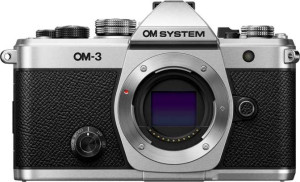
OM System OM-3
OM System OM-3
Fujifilm X-E5
Fujifilm X-E5
VS
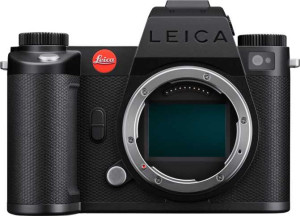
Leica SL3-S
Leica SL3-S