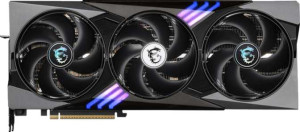
Gigabyte Aorus GeForce RTX 5090 Master specifications and in-depth review

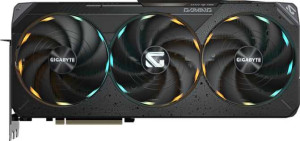
Gigabyte Aorus GeForce RTX 5090 Master

Manufacturer: Gigabyte

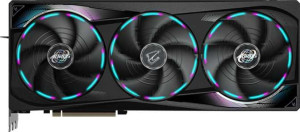
The Gigabyte Aorus GeForce RTX 5090 Master is a flagship-tier graphics card from Gigabyte's Aorus lineup, built on NVIDIA's Blackwell architecture using a 5nm manufacturing process. With 115.5 TFLOPS of floating-point performance and 21,760 shading units, this card is positioned at the top end of the RTX 50 series product stack. It supports ray tracing, DLSS, DirectX 12 Ultimate, and includes RGB lighting, making it a fully featured option for demanding rendering workloads.

On the memory side, the card carries 32GB of GDDR7 VRAM across a 512-bit bus, delivering a maximum memory bandwidth of 1,790 GB/s at an effective speed of 28,000 MHz. The GPU base clock sits at 2,017 MHz with a turbo of 2,655 MHz, while the pixel rate reaches 467.3 GPixel/s and the texture rate 1,805 GTexels/s. Connectivity includes one HDMI 2.1b port and three DisplayPort outputs, supporting up to four displays simultaneously. The card measures 360mm in length and 150mm in height, carries a 4-year warranty, and connects via PCIe 5.0.

Pros
  • 32GB of GDDR7 VRAM across a 512-bit bus delivers 1,790 GB/s of memory bandwidth, which is well-suited for memory-intensive rendering and compute workloads
  • Support for ray tracing and DLSS broadens compatibility with modern rendering pipelines and upscaling workflows
  • ECC memory support adds a layer of data integrity protection useful in error-sensitive compute tasks
  • Four simultaneous display outputs via one HDMI 2.1b port and three DisplayPort connectors offer flexible multi-monitor configurations
  • The 4-year warranty period is notably longer than what many graphics cards in this category offer
  • Double Precision Floating Point (DPFP) support extends usability to professional and scientific compute applications
Cons
  • A 575W TDP places substantial demands on system power delivery, requiring a high-capacity power supply
  • The 360mm card length may create fitment challenges in smaller or mid-tower chassis
  • No USB-C video output is available, limiting compatibility with certain modern displays and portable monitors
  • Air-water hybrid cooling is absent, meaning thermal management relies entirely on the air cooler solution provided
Who is this for?

This card is well-matched to users running demanding rendering, 3D visualization, or compute-intensive workloads that can take advantage of 32GB of GDDR7 VRAM, Double Precision Floating Point support, and ECC memory. The combination of ray tracing, DLSS, and DirectX 12 Ultimate also makes it a strong fit for those working with cutting-edge real-time graphics pipelines. Users who need to drive up to four displays simultaneously and require Intel Resizable BAR support for optimized CPU-to-GPU data transfers will find the feature set well-rounded for both creative and technical environments.

Who is this NOT for?

The 575W TDP makes this card a poor fit for users with constrained power delivery setups or builds that lack a high-capacity power supply, as the system requirements will be substantial. Its 360mm length also rules it out for compact or mid-tower cases where physical clearance is limited. Additionally, users who rely on USB-C video output for connecting modern portable displays or certain professional monitors will find no such port available on this card, which could limit display compatibility in specific setups.

Performance:

GPU clock speed 2017 MHz
GPU turbo 2655 MHz
pixel rate 467.3 GPixel/s
floating-point performance 115.5 TFLOPS
texture rate 1805 GTexels/s
GPU memory speed 1750 MHz
shading units 21760
texture mapping units (TMUs) 680
render output units (ROPs) 176
Has Double Precision Floating Point (DPFP)

The Performance section of the Gigabyte Aorus GeForce RTX 5090 Master centers on a GPU base clock of 2,017 MHz that boosts up to 2,655 MHz under load, contributing to a floating-point performance rating of 115.5 TFLOPS. The card houses 21,760 shading units alongside 680 texture mapping units and 176 render output units, producing a texture rate of 1,805 GTexels/s and a pixel rate of 467.3 GPixel/s. GPU memory operates at 1,750 MHz, and the card includes support for Double Precision Floating Point (DPFP), which broadens its suitability for compute-oriented tasks beyond standard graphics rendering.

Memory:

effective memory speed 28000 MHz
maximum memory bandwidth 1790 GB/s
VRAM 32GB
GDDR version GDDR7
memory bus width 512-bit
Supports ECC memory

The card is equipped with 32GB of GDDR7 VRAM running at an effective speed of 28,000 MHz across a 512-bit memory bus, yielding a maximum memory bandwidth of 1,790 GB/s. ECC memory support is included, which helps maintain data integrity in error-sensitive workloads.

Features:

DirectX version DirectX 12 Ultimate
OpenGL version 4.6
OpenCL version 3
Supports multi-display technology
supports ray tracing
Supports 3D
supports DLSS
has XeSS (XMX)
AMD SAM / Intel Resizable BAR Intel Resizable BAR
has LHR
has RGB lighting
supported displays 4

The Gigabyte Aorus GeForce RTX 5090 Master supports DirectX 12 Ultimate, OpenGL 4.6, and OpenCL 3, covering a broad range of graphics and compute APIs. Ray tracing and DLSS are both supported, along with stereoscopic 3D and multi-display technology spanning up to four screens simultaneously. Intel Resizable BAR is included, while XeSS (XMX) and LHR are not present on this card. RGB lighting is built in, rounding out the feature set on the hardware side.

Ports:

has an HDMI output
HDMI ports 1
HDMI version HDMI 2.1b
DisplayPort outputs 3
USB-C ports 0
DVI outputs 0
mini DisplayPort outputs 0

The card's output configuration consists of one HDMI 2.1b port and three DisplayPort outputs, totaling four video outputs. There are no USB-C, DVI, or mini DisplayPort connectors present on this model.

General info:

GPU architecture Blackwell
Thermal Design Power (TDP) 575W
PCI Express (PCIe) version 5
semiconductor size 5 nm
number of transistors 92200 million
warranty period 4 years
Has air-water cooling
width 360 mm
height 150 mm

Built on the Blackwell architecture using a 5nm manufacturing process, the card integrates 92,200 million transistors and connects via PCIe 5.0. It carries a Thermal Design Power (TDP) of 575W and relies on air cooling, as water cooling is not included. The card measures 360mm in width and 150mm in height, does not feature air-water cooling, and comes backed by a 4-year warranty.
Final Verdict

The Gigabyte Aorus GeForce RTX 5090 Master is a specification-dense graphics card built around NVIDIA's Blackwell architecture, and its technical profile leaves little doubt about the workloads it was designed for. With 32GB of GDDR7 VRAM delivering 1,790 GB/s of memory bandwidth, alongside DPFP support, ECC memory, ray tracing, and DLSS, it covers both high-end graphics rendering and compute-oriented use cases within a single card. The 575W TDP and 360mm length do impose real infrastructure requirements, and the absence of USB-C video output is a minor gap for certain display configurations — but for users whose systems can accommodate it, the Aorus RTX 5090 Master represents a thoroughly capable and feature-complete option at the top of the graphics card segment.

Popular Comparisons

Gigabyte Aorus GeForce RTX 5090 Master
VS
Gainward GeForce RTX 5090 Phantom GS
Gigabyte Aorus GeForce RTX 5090 Master
VS
Asus ROG Astral GeForce RTX 5090 OC Edition
Gigabyte Aorus GeForce RTX 5090 Master
VS
Asus TUF Gaming GeForce RTX 5090
Gigabyte Aorus GeForce RTX 5090 Master
VS
Asus ROG Astral GeForce RTX 5090
Gigabyte Aorus GeForce RTX 5090 Master
VS
Asus ROG Astral LC GeForce RTX 5090 OC Edition
Gigabyte Aorus GeForce RTX 5090 Master
VS
Asus ROG Astral LC GeForce RTX 5090
Gigabyte Aorus GeForce RTX 5090 Master
VS
Asus TUF Gaming GeForce RTX 5090 OC Edition
Gigabyte Aorus GeForce RTX 5090 Master
VS
Nvidia RTX Pro 6000 Blackwell Server Edition
Gigabyte Aorus GeForce RTX 5090 Master
VS
MSI GeForce RTX 5090 Gaming Trio
Gigabyte Aorus GeForce RTX 5090 Master
VS
Zotac Gaming GeForce RTX 5090 Solid
Gigabyte Aorus GeForce RTX 5090 Master
VS
Gigabyte GeForce RTX 5090 Gaming OC
Gigabyte Aorus GeForce RTX 5090 Master
VS
Gigabyte GeForce RTX 5090 WindForce OC
Gigabyte Aorus GeForce RTX 5090 Master
VS
MSI GeForce RTX 5090 Suprim SOC
Gigabyte Aorus GeForce RTX 5090 Master
VS
MSI GeForce RTX 5090 Vanguard SOC
Gigabyte Aorus GeForce RTX 5090 Master
VS
MSI GeForce RTX 5090 Gaming Trio OC