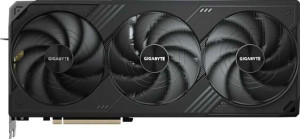
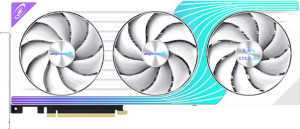
Gigabyte GeForce RTX 5090 WindForce specifications and in-depth review

Gigabyte GeForce RTX 5090 WindForce

Manufacturer: Gigabyte

The Gigabyte GeForce RTX 5090 WindForce is a high-specification graphics card based on NVIDIA's Blackwell architecture, manufactured on a 5 nm process with 92,200 million transistors. It carries a base GPU clock of 2017 MHz and a boost frequency of 2407 MHz, with 104.8 TFLOPS of floating-point performance underpinning its computational throughput. The card draws up to 575W TDP and fits into a PCIe 5.0 slot, measuring 342 mm in length and 150 mm in height.

On the memory side, the RTX 5090 WindForce is equipped with 32GB of GDDR7 VRAM across a 512-bit bus, reaching an effective speed of 28,000 MHz and a peak bandwidth of 1,790 GB/s, with ECC support included. Its 21,760 shading units are complemented by 680 texture mapping units and 176 render output units, yielding a texture rate of 1,637 GTexels/s and a pixel rate of 423.6 GPixels/s. Display output consists of one HDMI 2.1b port and three DisplayPort connectors, supporting up to four simultaneous displays, while feature support covers DirectX 12 Ultimate, OpenGL 4.6, OpenCL 3, ray tracing, DLSS, and Intel Resizable BAR. The card ships with a four-year warranty.

Pros
  • A 512-bit memory bus paired with 32GB of GDDR7 VRAM delivers substantial memory capacity and bandwidth headroom for demanding workloads
  • Support for up to four simultaneous displays provides flexible multi-monitor setup options
  • Ray tracing and DLSS are both supported, expanding compatibility with modern rendering features
  • ECC memory support adds data integrity reliability for compute-oriented tasks
  • The four-year warranty period is longer than what is commonly offered in this product category
  • Intel Resizable BAR support allows the CPU to access the full GPU frame buffer, which can improve data transfer efficiency
Cons
  • A TDP of 575W places significant demands on system power delivery and cooling infrastructure
  • The card does not include USB-C outputs, limiting connectivity options for certain modern display types
  • No liquid cooling solution is included, which may be a consideration given the high thermal output
  • The physical dimensions of 342 mm in length may present installation challenges in smaller or mid-tower cases
  • No RGB lighting is present for users who prioritize visual customization within their build
Who is this for?

This card is well-suited to users who run compute-intensive workloads alongside graphics-heavy tasks, given its DPFP support, ECC memory, and 104.8 TFLOPS of floating-point performance. Content creators and professionals working with large datasets or high-resolution assets will benefit from the 32GB of GDDR7 VRAM and 1,790 GB/s of memory bandwidth, which provide ample headroom for memory-demanding applications. The support for up to four simultaneous displays also makes it a practical fit for multi-monitor productivity environments where screen real estate is a priority.

Who is this NOT for?

The card's 575W TDP makes it a poor fit for users with modest or mid-range power supplies, as the system will require robust power delivery and adequate case airflow to maintain stable operation — the absence of a liquid cooling solution places the full thermal management burden on air cooling alone. Its physical length of 342 mm may also create installation challenges in compact or smaller form-factor cases, making it impractical for users working within space-constrained builds. Additionally, users who require USB-C display connectivity or rely on DVI outputs for legacy monitors will find this card's port selection insufficient for their setup.

Performance:

GPU clock speed 2017 MHz
GPU turbo 2407 MHz
pixel rate 423.6 GPixel/s
floating-point performance 104.8 TFLOPS
texture rate 1637 GTexels/s
GPU memory speed 1750 MHz
shading units 21760
texture mapping units (TMUs) 680
render output units (ROPs) 176
Has Double Precision Floating Point (DPFP)

The Performance section of the Gigabyte GeForce RTX 5090 WindForce covers a GPU base clock of 2017 MHz that boosts up to 2407 MHz under load, with a GPU memory speed of 1750 MHz. The card delivers 104.8 TFLOPS of floating-point performance alongside a texture rate of 1637 GTexels/s and a pixel rate of 423.6 GPixel/s, supported by 680 texture mapping units and 176 render output units. With 21,760 shading units driving its workload capacity and Double Precision Floating Point (DPFP) support included, the card is equipped to handle computationally intensive tasks alongside its graphics workloads.

Memory:

effective memory speed 28000 MHz
maximum memory bandwidth 1790 GB/s
VRAM 32GB
GDDR version GDDR7
memory bus width 512-bit
Supports ECC memory

The Gigabyte GeForce RTX 5090 WindForce is equipped with 32GB of GDDR7 VRAM running across a 512-bit memory bus, reaching an effective memory speed of 28,000 MHz and a maximum bandwidth of 1,790 GB/s. ECC memory support is included, adding a layer of reliability for workloads where data integrity is a concern.

Features:

DirectX version DirectX 12 Ultimate
OpenGL version 4.6
OpenCL version 3
Supports multi-display technology
supports ray tracing
Supports 3D
supports DLSS
has XeSS (XMX)
AMD SAM / Intel Resizable BAR Intel Resizable BAR
has LHR
has RGB lighting
supported displays 4

The Gigabyte GeForce RTX 5090 WindForce supports DirectX 12 Ultimate, OpenGL 4.6, and OpenCL 3, covering a broad range of graphics and compute APIs. Ray tracing and DLSS are both supported, alongside stereoscopic 3D and multi-display technology spanning up to four displays simultaneously. Intel Resizable BAR is included for improved CPU-to-GPU data access, while XeSS (XMX) and LHR are not present on this card. RGB lighting is absent, and the card carries no hash rate limiter.

Ports:

has an HDMI output
HDMI ports 1
HDMI version HDMI 2.1b
DisplayPort outputs 3
USB-C ports 0
DVI outputs 0
mini DisplayPort outputs 0

The Gigabyte GeForce RTX 5090 WindForce offers a total of four video outputs, consisting of three DisplayPort connectors and one HDMI 2.1b port. There are no DVI, mini DisplayPort, or USB-C outputs on this card.

General info:

GPU architecture Blackwell
Thermal Design Power (TDP) 575W
PCI Express (PCIe) version 5
semiconductor size 5 nm
number of transistors 92200 million
warranty period 4 years
Has air-water cooling
width 342 mm
height 150 mm

The Gigabyte GeForce RTX 5090 WindForce is built on the Blackwell architecture, fabricated using a 5 nm process and integrating 92,200 million transistors. It connects via a PCIe 5.0 interface and carries a Thermal Design Power (TDP) of 575W, with cooling handled by an air-based solution rather than a liquid cooling system. The card measures 342 mm in width and 150 mm in height, and it comes backed by a four-year warranty.

Final Verdict

The Gigabyte GeForce RTX 5090 WindForce is a specification-dense graphics card built around the Blackwell architecture, and its technical profile leaves little ambiguity about the audience it targets. With 32GB of GDDR7 VRAM across a 512-bit bus delivering nearly 1,800 GB/s of bandwidth, alongside ECC memory support, DPFP capability, and a substantial floating-point throughput, it is clearly oriented toward users who push both graphics and compute workloads simultaneously. Its demanding power draw and considerable physical footprint do require thoughtful system planning, but for those operating within an appropriately equipped setup, the RTX 5090 WindForce represents a thoroughly specified card with a broad feature set and a reassuring four-year warranty backing it.

Popular Comparisons

Gigabyte GeForce RTX 5090 WindForce
VS
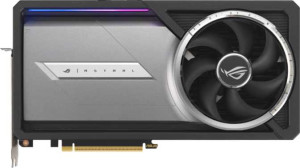
Asus ROG Astral LC GeForce RTX 5090
Gigabyte GeForce RTX 5090 WindForce
VS
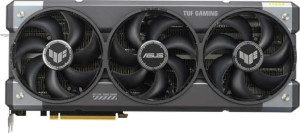
Asus TUF Gaming GeForce RTX 5090
Gigabyte GeForce RTX 5090 WindForce
VS
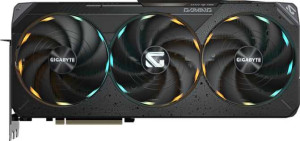
Gigabyte GeForce RTX 5090 Gaming OC
Gigabyte GeForce RTX 5090 WindForce
VS
Manli Stellar GeForce RTX 5090 OC
Gigabyte GeForce RTX 5090 WindForce
VS
Nvidia GeForce RTX 5090
Gigabyte GeForce RTX 5090 WindForce
VS
Palit GeForce RTX 5090 GameRock OC
Gigabyte GeForce RTX 5090 WindForce
VS
MSI GeForce RTX 5070 Vanguard SOC