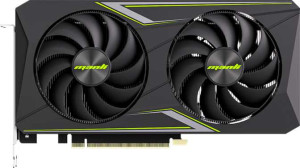
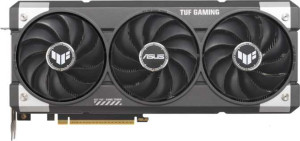
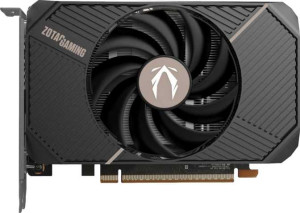
The Performance section of the Manli Nebula GeForce RTX 5060 Ti reveals a GPU running at a base clock of 2407 MHz with a turbo frequency of 2572 MHz, delivering 23.7 TFLOPS of floating-point performance alongside a texture rate of 370.4 GTexels/s and a pixel rate of 123.5 GPixel/s. The card is equipped with 4608 shading units, 144 texture mapping units, and 48 render output units, while the GPU memory operates at 1750 MHz. Double Precision Floating Point (DPFP) is supported, broadening its suitability for compute-oriented workloads.
The Manli Nebula GeForce RTX 5060 Ti is equipped with 16GB of GDDR7 VRAM running at an effective speed of 28000 MHz across a 128-bit memory bus, yielding a maximum memory bandwidth of 448 GB/s. ECC memory support is also present, adding a layer of data integrity for workloads where memory accuracy is a consideration.
The Manli Nebula GeForce RTX 5060 Ti supports DirectX 12 Ultimate, OpenGL 4.6, and OpenCL 3, covering a broad range of graphics and compute APIs. Ray tracing and DLSS are both supported, while stereoscopic 3D and multi-display technology are also present, with the card capable of driving up to four displays simultaneously. Intel Resizable BAR is included, whereas XeSS (XMX) and LHR are not supported. The card does not feature RGB lighting.
The Manli Nebula GeForce RTX 5060 Ti offers a total of four video outputs: one HDMI 2.1b port and three DisplayPort outputs. There are no USB-C, DVI, or mini DisplayPort connections present on this card.
The Manli Nebula GeForce RTX 5060 Ti is built on the Blackwell architecture, fabricated using a 5 nm process node and integrating approximately 21,900 million transistors. It connects via PCIe 5 and carries a TDP of 180W, with dimensions of 239 mm in width and 127 mm in height. The card does not include air-water cooling.