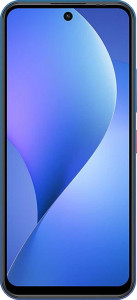
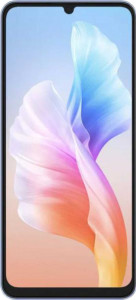
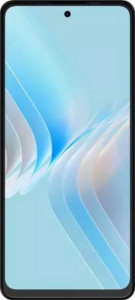
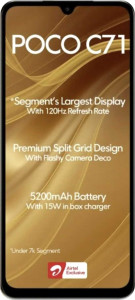
Design:
| water resistance |
None |
| weight |
200 g |
| thickness |
8.6 mm |
| width |
77.5 mm |
| height |
170.8 mm |
| volume |
113.8382 cm³ |
| has a rugged build |
✕ |
| can be folded |
✕ |
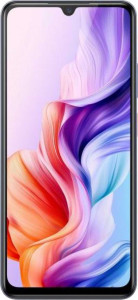
The Meizu Mblu 22 Pro has a 170.8 × 77.5 × 8.6 mm footprint and weighs 200 g, giving it a moderately sized and relatively slim profile with a total volume of 113.84 cm³. It is neither a rugged nor a folding device, and it carries no water resistance rating.
Display:
| Display type |
LCD, IPS |
| screen size |
6.79" |
| pixel density |
264 ppi |
| resolution |
720 x 1640 px |
| refresh rate |
120Hz |
| has branded damage-resistant glass |
✕ |
| supports HDR10 |
✕ |
| supports HDR10+ |
✕ |
| Always-On Display |
✕ |
| supports Dolby Vision |
✕ |
| Has a secondary screen |
✕ |
| has a touch screen |
✓ |
The display is a touch-enabled 6.79″ IPS LCD panel with a resolution of 720 x 1640 px and a pixel density of 264 ppi, paired with a 120Hz refresh rate for smoother scrolling and on-screen motion. It does not include branded damage-resistant glass, and there is no support for HDR10, HDR10+, Dolby Vision, or an Always-On Display mode, nor does the device feature a secondary screen.
Performance:
| internal storage |
256GB |
| RAM |
8GB |
| Chipset (SoC) name |
MediaTek Helio G81 Ultra |
| GPU name |
Mali G52 MP2 |
| CPU speed |
2 x 2 & 6 x 1.8 GHz |
| Geekbench 6 result (multi) |
1391 |
| Geekbench 6 result (single) |
420 |
| Geekbench 5 result (multi) |
1300 |
| Geekbench 5 result (single) |
350 |
| Has integrated LTE |
✓ |
| RAM speed |
1800 MHz |
| semiconductor size |
12 nm |
| Supports 64-bit |
✓ |
| DirectX version |
DirectX 12 |
| Has integrated graphics |
✓ |
| OpenGL version |
3.2 |
| OpenGL ES version |
3.2 |
| Uses big.LITTLE technology |
✓ |
| CPU threads |
8 threads |
| maximum amount of external memory supported |
256GB |
| Has TrustZone |
✓ |
| maximum memory bandwidth |
13.41 GB/s |
| OpenCL version |
2 |
| memory channels |
2 |
| L2 cache |
0.3 MB |
| eMMC version |
5.1 |
| maximum memory amount |
8GB |
| GPU execution units |
2 |
| GPU turbo |
950 MHz |
| number of transistors |
5500 million |
| Thermal Design Power (TDP) |
5W |
| DDR memory version |
4 |
| shading units |
32 |
| turbo clock speed |
2GHz |
| L3 cache |
1 MB |
The device is powered by the MediaTek Helio G81 Ultra, a 12 nm octa-core SoC running at 2 x 2 GHz and 6 x 1.8 GHz with a turbo ceiling of 2 GHz, built around big.LITTLE technology and an 8-thread CPU with a 5W TDP and 5,500 million transistors. It comes with 8 GB of DDR4 RAM at 1800 MHz across two memory channels, offering a maximum bandwidth of 13.41 GB/s, alongside 256 GB of eMMC 5.1 internal storage expandable by up to another 256 GB. Graphics are handled by the integrated Mali G52 MP2 GPU featuring 2 execution units, 32 shading units, and a turbo clock of 950 MHz, with support for DirectX 12, OpenGL 3.2, OpenGL ES 3.2, and OpenCL 2.0. The SoC also integrates LTE, supports 64-bit processing and ARM TrustZone, and pairs a 0.3 MB L2 cache with a 1 MB L3 cache. Geekbench 6 scores stand at 420 single-core and 1391 multi-core, while Geekbench 5 results are 350 single-core and 1300 multi-core.
Cameras:
| megapixels (main camera) |
50 & 2 MP |
| wide aperture (main camera) |
2.4 & 1.8f |
| Has a dual-lens (or multi-lens) main camera |
✓ |
| megapixels (front camera) |
8MP |
| has built-in optical image stabilization |
✕ |
| video recording (main camera) |
1080 x 30 fps |
| Has a dual-tone LED flash |
✕ |
| number of flash LEDs |
1 |
| has a BSI sensor |
✕ |
| has a CMOS sensor |
✓ |
| has continuous autofocus when recording movies |
✓ |
| Has phase-detection autofocus for photos |
✓ |
| supports slow-motion video recording |
✓ |
| has a built-in HDR mode |
✓ |
| has manual exposure |
✓ |
| has a flash |
✓ |
| optical zoom |
0x |
| has manual ISO |
✓ |
| has a serial shot mode |
✓ |
| has manual focus |
✓ |
| has a front camera |
✓ |
| Has laser autofocus |
✕ |
| Shoots 360° panorama |
✕ |
| has manual white balance |
✓ |
| shoots raw |
✕ |
| has touch autofocus |
✓ |
| has manual shutter speed |
✕ |
| can create panoramas in-camera |
✓ |
| wide aperture (front camera) |
2f |
| Has timelapse function |
✓ |
| Has a front-facing LED flash |
✕ |
| has a dual-lens (or multi-lens) front camera |
✕ |
| supports HDR10 recording |
✕ |
| supports Dolby Vision recording |
✕ |
| has a front-facing camera under the display |
✕ |
| Has a RGB LED flash |
✕ |
| has 3D photo/video recording capabilities |
✕ |
The rear camera system uses a dual-lens CMOS setup at 50 MP (f/2.4) and 2 MP (f/1.8), capable of recording video at 1080p and 30 fps with continuous autofocus during recording, though optical image stabilization and optical zoom are not available. Autofocus options include phase-detection and touch AF, while the manual controls on offer cover exposure, ISO, focus, and white balance — though manual shutter speed is absent; RAW capture is likewise not supported. The camera also supports HDR mode, burst shooting, slow-motion video, panoramas, and timelapse, with a single LED flash on the back but no dual-tone or RGB flash. The 8 MP front camera has an f/2.0 aperture and is a single-lens unit positioned conventionally — not under the display — with no dedicated front flash, and video recording from the front does not support HDR10 or Dolby Vision.
Operating system:
| Android version |
Android 15 |
| has clipboard warnings |
✓ |
| has location privacy options |
✓ |
| has camera/microphone privacy options |
✓ |
| has Mail Privacy Protection |
✕ |
| has theme customization |
✓ |
| can block app tracking |
✓ |
| blocks cross-site tracking |
✕ |
| has on-device machine learning |
✓ |
| has notification permissions |
✓ |
| has media picker |
✓ |
| Can play games while they download |
✓ |
| has dark mode |
✓ |
| has Wi-Fi password sharing |
✕ |
| has battery health check |
✓ |
| has an extra dim mode |
✓ |
| has focus modes |
✕ |
| has dynamic theming |
✓ |
| can offload apps |
✓ |
| Has customizable notifications |
✓ |
| has Live Text |
✓ |
| has full-page screenshots |
✓ |
| supports split screen |
✓ |
| gets direct OS updates |
✕ |
| has PiP |
✓ |
| Can be used as a PC |
✕ |
| Has sharing intents |
✓ |
| has a child lock |
✓ |
| Supports widgets |
✓ |
| Is free and open source |
✓ |
| Has offline voice recognition |
✓ |
| has voice commands |
✓ |
| Tracks the current position of a mobile device |
✓ |
| is a multi-user system |
✓ |
| has Quick Start |
✕ |
The device runs Android 15 as a free and open-source, multi-user operating system with a broad set of privacy controls, including clipboard warnings, location privacy options, camera and microphone access management, and the ability to block app tracking — though cross-site tracking blocking and Mail Privacy Protection are not included. Customization options span dark mode, dynamic theming, theme customization, widgets, and customizable notifications, while productivity is supported through split-screen multitasking, Picture-in-Picture, full-page screenshots, a media picker, sharing intents, app offloading, and the ability to play games during downloads. On-device machine learning is present, alongside offline voice recognition, voice commands, Live Text, phone tracking, a battery health check, an extra dim mode, and a child lock; focus modes, Wi-Fi password sharing, Quick Start, and the ability to function as a PC are not available. OS updates are not delivered directly from the vendor.
Battery:
| battery power |
5000 mAh |
| has wireless charging |
✕ |
| Supports fast charging |
✓ |
| charging speed |
18W |
| has a removable battery |
✕ |
| has a battery level indicator |
✓ |
| has a rechargeable battery |
✓ |
The Mblu 22 Pro houses a 5000 mAh rechargeable battery with a built-in level indicator, and it supports 18W fast charging for reasonably quick top-ups. Wireless charging is not available, and the battery is non-removable.
Audio:
| has a socket for a 3.5 mm audio jack |
✓ |
| has stereo speakers |
✓ |
| has aptX |
✕ |
| has LDAC |
✕ |
| has aptX HD |
✕ |
| has aptX Adaptive |
✕ |
| has aptX Lossless |
✕ |
| Has a radio |
✕ |
On the audio side, the device includes a 3.5 mm headphone jack and stereo speakers, covering the basics for both wired listening and built-in playback. There is no radio, and none of the advanced Bluetooth audio codecs — aptX, aptX HD, aptX Adaptive, aptX Lossless, or LDAC — are supported.
Connectivity & Features:
| has 5G support |
✕ |
| Wi-Fi version |
Wi-Fi 4 (802.11n) |
| SIM cards |
2 SIM |
| Bluetooth version |
5 |
| has an external memory slot |
✓ |
| Has USB Type-C |
✓ |
| USB version |
2 |
| has NFC |
✓ |
| download speed |
300 MBits/s |
| upload speed |
100 MBits/s |
| Has a fingerprint scanner |
✓ |
| has emergency SOS via satellite |
✕ |
| has crash detection |
✕ |
| is DLNA-certified |
✕ |
| has a gyroscope |
✕ |
| supports ANT+ |
✕ |
| Has a heart rate monitor |
✕ |
| has GPS |
✓ |
| has a compass |
✕ |
| supports Wi-Fi |
✓ |
| Has an infrared sensor |
✕ |
| has an accelerometer |
✓ |
| has a cellular module |
✓ |
| Has a barometer |
✕ |
| has an HDMI output |
✕ |
| Uses 3D facial recognition |
✕ |
| Has an iris scanner |
✕ |
| Stylus included |
✕ |
| supports Galileo |
✓ |
| Has motion tracking |
✕ |
| Has optical tracking |
✕ |
| Has a built-in projector |
✕ |
The device supports Wi-Fi 4 (802.11n), Bluetooth 5.0, and NFC, and accommodates two SIM cards alongside an external memory slot for expanded storage. Wired connectivity is handled via a USB Type-C port running USB 2.0, while cellular speeds reach up to 300 Mbit/s download and 100 Mbit/s upload, though 5G is not supported. Location is covered by GPS and Galileo, and an accelerometer and fingerprint scanner are also on board; however, the device lacks a gyroscope, compass, barometer, heart rate monitor, infrared sensor, and accelerometer-based motion or optical tracking. Features such as 3D facial recognition, an iris scanner, ANT+, DLNA, HDMI output, satellite SOS, crash detection, and a built-in projector are all absent, and no stylus is included.
Miscellaneous:
| has a video light |
✓ |
| Has sapphire glass display |
✕ |
| Has a curved display |
✕ |
| Has an e-paper display |
✕ |
The device includes a video light for illumination during video recording, while the display is flat and uses neither sapphire glass nor an e-paper panel.