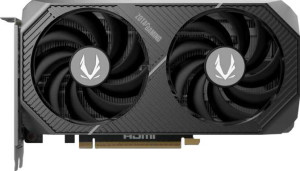
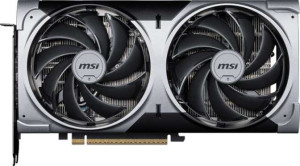
MSI GeForce RTX 5060 Ti Inspire 2X 16GB specifications and in-depth review

MSI GeForce RTX 5060 Ti Inspire 2X 16GB

Manufacturer: MSI

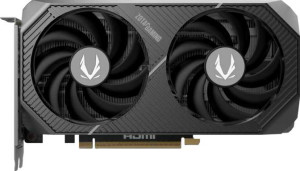
The MSI GeForce RTX 5060 Ti Inspire 2X is a graphics card from MSI based on NVIDIA's Blackwell architecture, manufactured on a 5 nm process with 21,900 million transistors. It operates at a base clock of 2407 MHz and reaches a turbo frequency of 2572 MHz, while fitting within a 180W TDP envelope and measuring 204 mm × 117 mm in physical dimensions.

On the memory side, the card carries 16GB of GDDR7 across a 128-bit bus, reaching an effective speed of 28,000 MHz and a maximum bandwidth of 448 GB/s, with ECC support included. It delivers 23.7 TFLOPS of floating-point performance alongside a texture rate of 370.4 GTexels/s and a pixel rate of 123.5 GPixels/s, backed by 4608 shading units, 144 TMUs, and 48 ROPs. Feature support extends to DirectX 12 Ultimate, OpenGL 4.6, OpenCL 3, ray tracing, DLSS, and Intel Resizable BAR, with connectivity provided through one HDMI 2.1b port and three DisplayPort outputs for up to four simultaneous displays.

Pros
  • Equipped with 16GB of GDDR7 VRAM, offering substantial frame buffer capacity for memory-intensive workloads
  • Effective memory speed of 28,000 MHz paired with 448 GB/s bandwidth ensures fast data throughput
  • Supports ray tracing and DLSS, enabling more realistic lighting and upscaling capabilities in compatible applications
  • Can drive up to four displays simultaneously through a combination of one HDMI 2.1b and three DisplayPort outputs
  • ECC memory support adds data integrity protection useful for compute-oriented tasks
  • Compact dimensions of 204 mm x 117 mm make it suitable for smaller form factor builds
Cons
  • 128-bit memory bus width is relatively narrow for a card with this VRAM capacity, which may limit bandwidth scaling
  • No USB-C display output, which reduces flexibility for users with USB-C monitors
  • Does not include liquid cooling support, limiting thermal management options for users in confined or high-ambient-temperature environments
  • Lacks RGB lighting, which may be a drawback for users building visually themed systems
Who is this for?

This card is well-suited for users who run ray tracing and DLSS-enabled titles, as both features are supported and can meaningfully improve visual fidelity and frame delivery in compatible games. The 16GB of GDDR7 VRAM also makes it a reasonable fit for content creators and compute workloads that benefit from a large frame buffer and ECC memory support. Additionally, its compact 204 mm × 117 mm footprint and 180W TDP make it a practical choice for smaller form factor builds where physical space and power delivery are constrained.

Who is this NOT for?

Users who require high-bandwidth multi-GPU or professional rendering pipelines may find the 128-bit memory bus a limiting factor, as it constrains the maximum data throughput regardless of GDDR7 speeds. The absence of USB-C display output and liquid cooling support makes it less appealing for users with USB-C monitor setups or thermally demanding environments where active liquid cooling would be preferable. Those seeking a visually distinctive build with RGB lighting integration will also find this card unsuitable, as no such feature is present.

Performance:

GPU clock speed 2407 MHz
GPU turbo 2572 MHz
pixel rate 123.5 GPixel/s
floating-point performance 23.7 TFLOPS
texture rate 370.4 GTexels/s
GPU memory speed 1750 MHz
shading units 4608
texture mapping units (TMUs) 144
render output units (ROPs) 48
Has Double Precision Floating Point (DPFP)

The GPU runs at a base clock of 2407 MHz, boosting up to 2572 MHz under load, while the memory operates at 1750 MHz. Rendering throughput is handled by 4608 shading units, 144 texture mapping units, and 48 render output units, yielding a texture rate of 370.4 GTexels/s and a pixel rate of 123.5 GPixels/s. Overall compute performance reaches 23.7 TFLOPS of floating-point output, and the card also supports Double Precision Floating Point (DPFP) for workloads that require it.

Memory:

effective memory speed 28000 MHz
maximum memory bandwidth 448 GB/s
VRAM 16GB
GDDR version GDDR7
memory bus width 128-bit
Supports ECC memory

The card is equipped with 16GB of GDDR7 VRAM running at an effective speed of 28,000 MHz across a 128-bit memory bus, delivering a maximum bandwidth of 448 GB/s. ECC memory support is also included, adding a layer of data integrity for workloads that benefit from error correction.

Features:

DirectX version DirectX 12 Ultimate
OpenGL version 4.6
OpenCL version 3
Supports multi-display technology
supports ray tracing
Supports 3D
supports DLSS
has XeSS (XMX)
AMD SAM / Intel Resizable BAR Intel Resizable BAR
has LHR
has RGB lighting
supported displays 4

The card supports DirectX 12 Ultimate, OpenGL 4.6, and OpenCL 3, covering a broad range of graphics and compute workloads. Ray tracing and DLSS are both supported, alongside stereoscopic 3D and multi-display output for up to four screens simultaneously. Intel Resizable BAR is included for improved CPU-to-GPU data transfers, while XeSS (XMX) and LHR are not present. The card does not feature RGB lighting.

Ports:

has an HDMI output
HDMI ports 1
HDMI version HDMI 2.1b
DisplayPort outputs 3
USB-C ports 0
DVI outputs 0
mini DisplayPort outputs 0

The card's display outputs consist of one HDMI 2.1b port and three DisplayPort outputs, with no USB-C, DVI, or mini DisplayPort connections present.

General info:

GPU architecture Blackwell
Thermal Design Power (TDP) 180W
PCI Express (PCIe) version 5
semiconductor size 5 nm
number of transistors 21900 million
Has air-water cooling
width 204 mm
height 117 mm

Built on the Blackwell architecture using a 5 nm manufacturing process, the GPU integrates 21,900 million transistors and connects via PCIe 5. It carries a thermal design power of 180W and relies on air cooling, with no liquid cooling option included. The card measures 204 mm in width and 117 mm in height, giving a clear indication of its physical footprint.
Final Verdict

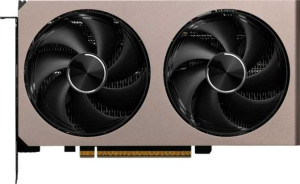
The MSI GeForce RTX 5060 Ti Inspire 2X 16GB presents a well-rounded specification set for its category, anchored by 16GB of GDDR7 VRAM alongside ray tracing and DLSS support that give it genuine relevance for modern gaming and light compute workloads. Its compact dimensions and 180W TDP make it accessible to a wider range of system builds, though users with more demanding bandwidth requirements or specific connectivity needs should weigh the 128-bit bus width and lack of USB-C output carefully. On balance, the MSI GeForce RTX 5060 Ti Inspire 2X is a focused, capable card that performs best when matched to use cases aligned with its architectural strengths rather than pushed beyond the boundaries its design clearly defines.

Popular Comparisons

MSI GeForce RTX 5060 Ti Inspire 2X 16GB
VS
Zotac Gaming GeForce RTX 5060 Ti Twin Edge 8GB
MSI GeForce RTX 5060 Ti Inspire 2X 16GB
VS
Zotac Gaming GeForce RTX 5060 Ti Twin Edge 16GB
MSI GeForce RTX 5060 Ti Inspire 2X 16GB
VS
MSI GeForce RTX 5070 Ventus 2X OC
MSI GeForce RTX 5060 Ti Inspire 2X 16GB
VS
Nvidia GeForce RTX 5060 Ti 16GB