Design:
| water resistance |
Water resistant |
| weight |
205 g |
| thickness |
8.5 mm |
| width |
77.5 mm |
| height |
163.9 mm |
| volume |
107.969125 cm³ |
| Ingress Protection (IP) rating |
IP64 |
| has a rugged build |
✕ |
| can be folded |
✕ |
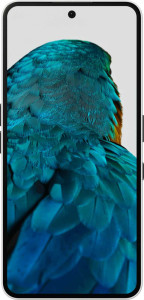
The Nothing Phone (4a) has a conventional, non-folding form factor measuring 163.9 × 77.5 mm with a thickness of 8.5 mm and a total volume of roughly 107.97 cm³. It weighs 205 g and carries an IP64 rating, meaning it is protected against dust ingress and can withstand water splashing from any direction, though it is not rated for submersion. The build is not classified as rugged, so it lacks the reinforced construction found on purpose-built outdoor devices.
Display:
| Display type |
OLED/AMOLED |
| screen size |
6.78" |
| pixel density |
453 ppi |
| resolution |
1260 x 2800 px |
| refresh rate |
120Hz |
| touch sampling rate |
2500Hz |
| brightness (typical) |
800 nits |
| has branded damage-resistant glass |
✕ |
| supports HDR10 |
✓ |
| supports HDR10+ |
✓ |
| Always-On Display |
✓ |
| supports Dolby Vision |
✕ |
| contrast ratio |
1000000:1 |
| Has a secondary screen |
✕ |
| has a touch screen |
✓ |
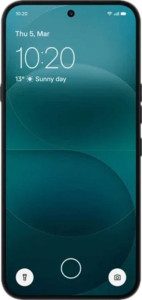
The Nothing Phone (4a) features a 6.78″ OLED/AMOLED touchscreen with a resolution of 1260 x 2800 px and a pixel density of 453 ppi, delivering a sharp and detailed image. The panel refreshes at 120Hz and supports a touch sampling rate of 2500Hz, while typical brightness sits at 800 nits alongside a contrast ratio of 1,000,000:1 — figures that are characteristic of OLED technology. It supports both HDR10 and HDR10+ content but does not support Dolby Vision, and the Always-On Display feature is available for at-a-glance information without fully waking the screen. The display does not use branded damage-resistant glass and there is no secondary screen on the device.
Performance:
| internal storage |
256GB |
| RAM |
12GB |
| Chipset (SoC) name |
Qualcomm Snapdragon 7s Gen 4 |
| GPU name |
Adreno 710 |
| CPU speed |
1 x 2.7 & 3 x 2.4 & 4 x 1.8 GHz |
| GPU clock speed |
1050 MHz |
| Has integrated LTE |
✓ |
| RAM speed |
3200 MHz |
| semiconductor size |
4 nm |
| Supports 64-bit |
✓ |
| DirectX version |
DirectX 12 |
| Has integrated graphics |
✓ |
| OpenGL version |
3.2 |
| OpenGL ES version |
3.2 |
| Uses big.LITTLE technology |
✓ |
| CPU threads |
8 threads |
| Uses HMP |
✓ |
| Has TrustZone |
✓ |
| maximum memory bandwidth |
25.6 GB/s |
| OpenCL version |
2 |
| maximum memory amount |
16GB |
| uses multithreading |
✓ |
| Thermal Design Power (TDP) |
5W |
| DDR memory version |
5 |
| shading units |
128 |
| turbo clock speed |
2.4GHz |
The Nothing Phone (4a) is driven by the Qualcomm Snapdragon 7s Gen 4, a 4 nm octa-core SoC configured with one core at 2.7 GHz, three at 2.4 GHz, and four efficiency cores at 1.8 GHz, with a turbo clock of 2.4 GHz across 8 threads using big.LITTLE and HMP scheduling. It is paired with 12GB of LPDDR5 RAM running at 3200 MHz — with a maximum supported memory amount of 16GB — and 256GB of internal storage, while memory bandwidth reaches up to 25.6 GB/s. Graphics are handled by the integrated Adreno 710 GPU clocked at 1050 MHz, supporting DirectX 12, OpenGL 3.2, OpenGL ES 3.2, and OpenCL 2.0 with 128 shading units. The chipset includes integrated LTE, TrustZone security, and multithreading support, and operates within a thermal design power of 5W.
Cameras:
| megapixels (main camera) |
50 & 50 & 8 MP |
| wide aperture (main camera) |
1.9 & 2.9 & 2f |
| Has a dual-lens (or multi-lens) main camera |
✓ |
| megapixels (front camera) |
32MP |
| has built-in optical image stabilization |
✓ |
| video recording (main camera) |
2160 x 30 fps |
| Has a dual-tone LED flash |
✕ |
| number of flash LEDs |
1 |
| has a BSI sensor |
✕ |
| has a CMOS sensor |
✓ |
| has continuous autofocus when recording movies |
✓ |
| Has phase-detection autofocus for photos |
✓ |
| supports slow-motion video recording |
✓ |
| has a built-in HDR mode |
✓ |
| has manual exposure |
✓ |
| has a flash |
✓ |
| optical zoom |
3.5x |
| has manual ISO |
✓ |
| has a serial shot mode |
✓ |
| has manual focus |
✓ |
| pixel size (main camera) |
1 & 0.64 & 1.12 µm |
| has a front camera |
✓ |
| Has laser autofocus |
✕ |
| Shoots 360° panorama |
✕ |
| has manual white balance |
✓ |
| shoots raw |
✕ |
| has touch autofocus |
✓ |
| has manual shutter speed |
✕ |
| can create panoramas in-camera |
✓ |
| wide aperture (front camera) |
2.2f |
| Has timelapse function |
✓ |
| Has a front-facing LED flash |
✕ |
| has a dual-lens (or multi-lens) front camera |
✕ |
| supports HDR10 recording |
✕ |
| supports Dolby Vision recording |
✕ |
| has a front-facing camera under the display |
✕ |
| Has a RGB LED flash |
✕ |
| has 3D photo/video recording capabilities |
✕ |
The Nothing Phone (4a) carries a triple-lens rear camera system with sensors rated at 50 MP (f/1.9, 1 µm pixels), 50 MP (f/2.9, 0.64 µm pixels), and 8 MP (f/2.0, 1.12 µm pixels), supported by optical image stabilization and 3.5x optical zoom. Autofocus is handled via phase-detection and touch AF, with continuous autofocus available during video recording, though laser autofocus is absent. The rear setup uses a CMOS sensor without back-illuminated technology, and a single LED flash is present — there is no dual-tone or RGB flash. Video capture reaches up to 2160p at 30 fps, with slow-motion recording and timelapse also supported, but HDR10 and Dolby Vision recording are not available. Manual controls cover exposure, ISO, focus, and white balance, while burst mode and in-camera panoramas are included; shooting in RAW format and manual shutter speed control are not supported. On the front, a single 32 MP camera with an f/2.2 aperture handles selfies, without a front flash, secondary lens, or under-display placement.
Operating system:
| Android version |
Android 16 |
| has clipboard warnings |
✓ |
| has location privacy options |
✓ |
| has camera/microphone privacy options |
✓ |
| has Mail Privacy Protection |
✕ |
| has theme customization |
✓ |
| can block app tracking |
✓ |
| blocks cross-site tracking |
✕ |
| has on-device machine learning |
✓ |
| has notification permissions |
✓ |
| has media picker |
✓ |
| Can play games while they download |
✓ |
| has dark mode |
✓ |
| has Wi-Fi password sharing |
✕ |
| has battery health check |
✓ |
| has an extra dim mode |
✓ |
| has focus modes |
✕ |
| has dynamic theming |
✓ |
| can offload apps |
✓ |
| Has customizable notifications |
✓ |
| has Live Text |
✓ |
| has full-page screenshots |
✓ |
| supports split screen |
✓ |
| gets direct OS updates |
✕ |
| has PiP |
✓ |
| Can be used as a PC |
✕ |
| Has sharing intents |
✓ |
| has a child lock |
✓ |
| Supports widgets |
✓ |
| Is free and open source |
✓ |
| Has offline voice recognition |
✓ |
| has voice commands |
✓ |
| Tracks the current position of a mobile device |
✓ |
| is a multi-user system |
✓ |
| has Quick Start |
✕ |
The Nothing Phone (4a) runs Android 16, an open-source platform that supports multi-user profiles, split-screen multitasking, Picture-in-Picture, widgets, and the ability to play games while they are still downloading. Privacy tooling covers location controls, camera and microphone access management, clipboard warnings, and app tracking prevention, though cross-site tracking blocking and Mail Privacy Protection are not included. Personalization options extend to dynamic theming, theme customization, dark mode, and an extra dim mode, while notification permissions and customizable notifications give users granular control over alerts. The OS also includes Live Text, full-page screenshots, a media picker, battery health check, offline voice recognition, voice commands, device tracking, and the ability to offload apps to free up storage. OS updates are not delivered directly from the vendor, Wi-Fi password sharing and focus modes are absent, and the device cannot function as a PC.
Battery:
| battery power |
5080 mAh |
| has wireless charging |
✕ |
| Supports fast charging |
✓ |
| charging speed |
50W |
| comes with a charger |
✕ |
| has a removable battery |
✕ |
| has a battery level indicator |
✓ |
| has a rechargeable battery |
✓ |
The Nothing Phone (4a) is equipped with a 5080 mAh rechargeable, non-removable battery that supports 50W wired fast charging, allowing for reasonably quick top-ups. A battery level indicator is present, keeping users informed of remaining charge at a glance. Wireless charging is not supported, and a charger is not included in the box.
Audio:
| has a socket for a 3.5 mm audio jack |
✕ |
| has stereo speakers |
✓ |
| has aptX |
✕ |
| has LDAC |
✕ |
| has aptX HD |
✕ |
| has aptX Adaptive |
✕ |
| has aptX Lossless |
✕ |
| Has a radio |
✕ |
| number of microphones |
2 |
The Nothing Phone (4a) features stereo speakers and a dual-microphone setup, but omits a 3.5 mm headphone jack, so wired audio requires an adapter or USB-C headphones. On the wireless audio side, none of the higher-quality Bluetooth codecs — aptX, aptX HD, aptX Adaptive, aptX Lossless, or LDAC — are supported. There is also no built-in radio tuner.
Connectivity & Features:
| release date |
March 2026 |
| has 5G support |
✓ |
| Wi-Fi version |
Wi-Fi 4 (802.11n), Wi-Fi 5 (802.11ac), Wi-Fi 6 (802.11ax) |
| SIM cards |
2 SIM |
| Bluetooth version |
5.4 |
| has an external memory slot |
✕ |
| Has USB Type-C |
✓ |
| USB version |
2 |
| has NFC |
✓ |
| download speed |
2900 MBits/s |
| Has a fingerprint scanner |
✓ |
| has emergency SOS via satellite |
✕ |
| has crash detection |
✕ |
| is DLNA-certified |
✕ |
| has a gyroscope |
✓ |
| supports ANT+ |
✕ |
| Has a heart rate monitor |
✕ |
| has GPS |
✓ |
| has a compass |
✓ |
| supports Wi-Fi |
✓ |
| Has an infrared sensor |
✕ |
| has an accelerometer |
✓ |
| has a cellular module |
✓ |
| Has a barometer |
✕ |
| has an HDMI output |
✕ |
| Uses 3D facial recognition |
✕ |
| Has an iris scanner |
✕ |
| Stylus included |
✕ |
| supports Galileo |
✓ |
| Has motion tracking |
✕ |
| Has optical tracking |
✕ |
| Has a built-in projector |
✕ |
The Nothing Phone (4a) supports 5G connectivity alongside dual-SIM operation and reaches download speeds of up to 2900 Mbits/s. Wi-Fi covers the 802.11n (Wi-Fi 4), 802.11ac (Wi-Fi 5), and 802.11ax (Wi-Fi 6) standards, and Bluetooth 5.4 is on board together with NFC for short-range communication. The USB Type-C port operates at USB 2.0 speeds, and there is no external memory slot or HDMI output. For navigation and positioning, the device includes GPS with Galileo support, a compass, a gyroscope, and an accelerometer, though a barometer is absent. Biometric authentication is handled by a fingerprint scanner, while 3D facial recognition and an iris scanner are not available. Safety-oriented features such as emergency SOS via satellite and crash detection are not present, and the device does not include an infrared sensor, ANT+ support, a heart rate monitor, a built-in projector, or a stylus.
Miscellaneous:
| has a video light |
✓ |
| Has sapphire glass display |
✕ |
| Has a curved display |
✕ |
| Has an e-paper display |
✕ |
The Nothing Phone (4a) includes a video light, which can be used to illuminate subjects during video recording. The display is flat rather than curved, does not use sapphire glass, and is not an e-paper panel.