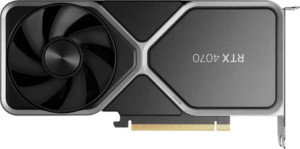
Nvidia RTX Pro 500 Blackwell specifications and in-depth review

Nvidia RTX Pro 500 Blackwell

Manufacturer: Nvidia

The Nvidia RTX Pro 500 Blackwell is a graphics card based on Nvidia's Blackwell architecture, fabricated on a 5 nm process node. It targets workloads that demand capable GPU compute within a compact power envelope, operating at a 35W thermal design power. The card supports ray tracing, DirectX 12 Ultimate, and multi-display configurations, making it a well-rounded option across a range of rendering and professional use cases.

On the memory side, the RTX Pro 500 Blackwell ships with 6GB of GDDR7 VRAM across a 96-bit bus, reaching an effective memory speed of 28000 MHz and a maximum bandwidth of 336 GB/s. The GPU itself runs at a base clock of 2235 MHz with a turbo frequency of 2520 MHz, delivering 9.032 TFLOPS of floating-point performance. It includes 1792 shading units, 56 texture mapping units, and 24 render output units, alongside support for ECC memory, OpenCL 3.0, OpenGL 4.6, and PCIe 5.0 connectivity.

Pros
  • Supports ECC memory, which helps maintain data integrity in compute-sensitive workloads
  • GDDR7 memory delivers an effective speed of 28000 MHz with up to 336 GB/s of bandwidth
  • Ray tracing support is included, enabling hardware-accelerated rendering pipelines
  • Double Precision Floating Point (DPFP) is supported, broadening suitability for technical compute tasks
  • A 35W TDP makes the card viable for compact or thermally constrained system builds
  • PCIe 5.0 connectivity ensures compatibility with current-generation platform bandwidth
Cons
  • The 96-bit memory bus width is relatively narrow, which may limit memory throughput headroom
  • 6GB of VRAM could prove restrictive for memory-intensive workloads or high-resolution asset handling
  • XeSS (XMX) is not supported, ruling out that upscaling technology
  • Air-water cooling is not included, so users must rely entirely on third-party or case cooling solutions
  • With only 24 ROPs, fill rate capacity may become a bottleneck in demanding rendering scenarios
Who is this for?

This card is well-suited for users working within compact or thermally constrained builds, given its 35W TDP, which allows it to fit into small form factor systems without demanding elaborate cooling solutions. Professionals involved in compute-oriented tasks such as scientific or technical workloads will appreciate the inclusion of Double Precision Floating Point support and ECC memory, both of which contribute to numerical accuracy and data reliability. The combination of GDDR7 memory, ray tracing support, and DirectX 12 Ultimate also makes it a reasonable fit for light to moderate creative and visualization workflows where hardware-accelerated rendering is beneficial.

Who is this NOT for?

Users looking to drive memory-intensive applications or high-resolution assets may find the 6GB VRAM ceiling and 96-bit bus width limiting, as both can become bottlenecks when handling large textures or complex scene data. Enthusiast gamers or content creators requiring sustained throughput across demanding workloads may be underserved by the card's 24 ROPs and 1792 shading units, which constrain fill rate and overall rendering throughput. Similarly, those seeking platform-agnostic upscaling options will note the absence of XeSS support, and anyone requiring integrated air-water cooling will need to source a compatible thermal solution independently.

Performance:

GPU clock speed 2235 MHz
GPU turbo 2520 MHz
pixel rate 60.48 GPixel/s
floating-point performance 9.032 TFLOPS
texture rate 141.1 GTexels/s
GPU memory speed 1750 MHz
shading units 1792
texture mapping units (TMUs) 56
render output units (ROPs) 24
Has Double Precision Floating Point (DPFP)

The Performance section of the Nvidia RTX Pro 500 Blackwell reveals a GPU running at a base clock of 2235 MHz, boosting up to a turbo frequency of 2520 MHz. It delivers 9.032 TFLOPS of floating-point performance, complemented by a texture rate of 141.1 GTexels/s and a pixel rate of 60.48 GPixel/s. The card is equipped with 1792 shading units, 56 texture mapping units (TMUs), and 24 render output units (ROPs), while GPU memory operates at 1750 MHz. Double Precision Floating Point (DPFP) is supported, broadening its suitability for compute-oriented tasks.

Memory:

effective memory speed 28000 MHz
maximum memory bandwidth 336 GB/s
VRAM 6GB
GDDR version GDDR7
memory bus width 96-bit
Supports ECC memory

The Nvidia RTX Pro 500 Blackwell is equipped with 6GB of GDDR7 VRAM running across a 96-bit memory bus, reaching an effective memory speed of 28000 MHz and a maximum memory bandwidth of 336 GB/s. ECC memory support is included, which helps maintain data integrity during sustained compute workloads.

Features:

DirectX version DirectX 12 Ultimate
OpenGL version 4.6
OpenCL version 3
Supports multi-display technology
supports ray tracing
Supports 3D
has XeSS (XMX)
AMD SAM / Intel Resizable BAR Intel Resizable BAR
has LHR

The Nvidia RTX Pro 500 Blackwell supports DirectX 12 Ultimate, OpenGL 4.6, and OpenCL 3, covering a broad range of graphics and compute APIs. Ray tracing and stereoscopic 3D are both supported, as is multi-display technology for setups requiring more than one output. The card includes Intel Resizable BAR support, which allows the processor to access the full GPU framebuffer for potentially smoother data transfers. It does not feature XeSS (XMX) or LHR (Lite Hash Rate) functionality.

Ports:

General info:

GPU architecture Blackwell
Thermal Design Power (TDP) 35W
PCI Express (PCIe) version 5
semiconductor size 5 nm
number of transistors 16900 million
Has air-water cooling

The Nvidia RTX Pro 500 Blackwell is built on the Blackwell GPU architecture, manufactured using a 5 nm semiconductor process and integrating 16,900 million transistors. It connects via PCIe 5.0 and operates within a 35W thermal design power (TDP), reflecting a notably restrained power envelope. Air-water cooling is not included with this card.

Final Verdict

The Nvidia RTX Pro 500 Blackwell occupies a well-defined niche as a compact, compute-aware graphics card that prioritizes efficiency and reliability over raw throughput. Its 35W thermal design power paired with GDDR7 memory and ECC support makes it a considered choice for professionals who need accurate, stable compute performance within space- or power-constrained environments. While the 6GB VRAM capacity and 96-bit bus width do place a natural ceiling on its scalability for the most demanding workloads, the card's feature set — including ray tracing, DirectX 12 Ultimate, Double Precision Floating Point, and PCIe 5.0 connectivity — reflects a thoughtfully assembled specification profile for its intended use. For users whose priorities align with those characteristics, the RTX Pro 500 Blackwell delivers a coherent and purposeful package.

Popular Comparisons

Nvidia RTX Pro 500 Blackwell
VS
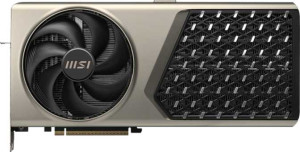
MSI GeForce RTX 5070 Ti Expert OC
Nvidia RTX Pro 500 Blackwell
VS
Nvidia GeForce RTX 5070 Laptop
Nvidia RTX Pro 500 Blackwell
VS
Nvidia RTX 500 Ada Generation Laptop
Nvidia RTX Pro 500 Blackwell
VS
Nvidia GeForce RTX 4070 GDDR6