Xiaomi Redmi K Pad specifications and in-depth review

Xiaomi Redmi K Pad

Manufacturer: Xiaomi

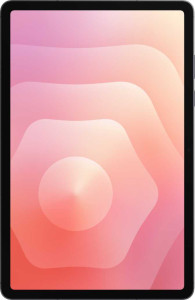
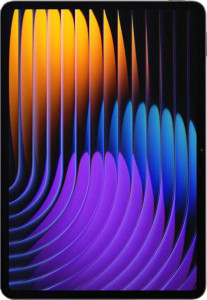
The Xiaomi Redmi K Pad is a compact Android 15 tablet built around an 8.8″ IPS LCD screen with a resolution of 3008 x 1880 pixels, delivering a pixel density of 403 ppi. The display supports a 165Hz refresh rate, along with HDR10, Dolby Vision, anti-reflection coating, and a peak brightness of 700 nits, making it a capable panel for media consumption and everyday use.

Under the hood, the Redmi K Pad runs on the MediaTek Dimensity 9400 Plus chipset built on a 3nm process, paired with up to 16GB of LPDDR5 RAM and 1024GB of internal storage. The Immortalis G925 GPU clocks at 1300 MHz, and Geekbench 6 results stand at 8969 multi-core and 2874 single-core. Connectivity includes Wi-Fi 7, Bluetooth 5.4, and USB 3.2 Type-C, while the 7500 mAh battery supports fast charging. Four microphones, stereo speakers with LDAC support, and a fingerprint scanner round out the feature set.

Pros
  • The 165Hz refresh rate on an 8.8″ IPS LCD panel makes scrolling and on-screen motion noticeably smooth for a tablet of this size
  • A 7500 mAh battery paired with fast charging support offers extended usage without long downtime
  • The MediaTek Dimensity 9400 Plus chipset on a 3nm process, combined with 16GB of RAM and up to 1024GB of internal storage, provides substantial headroom for demanding tasks
  • Wi-Fi 7 support enables high-speed wireless connectivity, with a listed maximum download speed of 7300 MBits/s
  • Four microphones, stereo speakers, and LDAC support make the tablet well-suited for calls, media playback, and high-quality Bluetooth audio
  • At 6.5mm thick and 326g, the tablet is slim and relatively light for its storage and performance configuration
Cons
  • No cellular module or GPS means the tablet is limited to Wi-Fi-only use and cannot determine location independently
  • The absence of a 3.5mm headphone jack restricts wired audio to USB-C adapters
  • Wireless charging is not supported, so the device relies entirely on wired charging
  • No NFC is present, ruling out contactless payment or quick device pairing via that standard
  • The rear camera lacks optical image stabilization and a back-illuminated sensor, which limits its capability in challenging shooting conditions
  • There is no external memory slot, so users are locked into the built-in storage with no option to expand it
Who is this for?

This tablet is a strong fit for users who consume a lot of media and want a smooth visual experience, given the 165Hz IPS LCD display with Dolby Vision, HDR10, and 700 nits of brightness on a compact 8.8″ form factor. The Dimensity 9400 Plus chipset with 16GB of RAM and 1024GB of storage makes it equally capable for users who run demanding applications, multitask across split-screen sessions, or need reliable on-device performance over extended sessions. It also suits those who prioritize wireless audio quality, thanks to LDAC support, stereo speakers, and four microphones, making it practical for video calls, content creation, and media playback in a portable setup.

Who is this NOT for?

Users who need mobile connectivity on the go will find this tablet limiting, as there is no cellular module, no 5G support, and no GPS, meaning it is entirely dependent on Wi-Fi for internet access and cannot determine location independently. It is also a poor fit for those who frequently shoot photos or video in varied conditions, since the rear camera lacks both optical image stabilization and a back-illuminated sensor, which reduces reliability in anything other than well-lit environments. Additionally, users who rely on wired headphones or expandable storage will face friction, as there is no 3.5mm audio jack and no external memory slot available.

Design:

weight 326 g
thickness 6.5 mm
width 205.1 mm
height 132 mm
volume 175.9758 cm³
Stylus included
Has a detachable keyboard
Has a backlit keyboard
water resistance None
Has tilt sensitivity

The Xiaomi Redmi K Pad has a slim 6.5 mm profile and weighs 326 g, with physical dimensions of 205.1 mm wide and 132 mm tall, giving it a total volume of 175.9758 cm³. The tablet does not include a stylus, a detachable keyboard, or a backlit keyboard, and it offers no water resistance rating. Tilt sensitivity is also absent, making the accessory ecosystem on this model relatively minimal.

Display:

screen size 8.8"
resolution 3008 x 1880 px
pixel density 403 ppi
Display type LCD, IPS
refresh rate 165Hz
has branded damage-resistant glass
has anti-reflection coating
supports HDR10
brightness (typical) 700 nits
has a touch screen
Has sapphire glass display
supports HDR10+
supports Dolby Vision
Has an e-paper display

The Xiaomi Redmi K Pad features an 8.8″ IPS LCD touchscreen with a resolution of 3008 x 1880 px and a pixel density of 403 ppi. The panel runs at a 165Hz refresh rate and reaches a typical brightness of 700 nits, while support for HDR10 and Dolby Vision broadens its color and contrast range for compatible content. It is protected by branded damage-resistant glass and includes an anti-reflection coating, though sapphire glass is not present. HDR10+ is not supported.

Performance:

internal storage 1024GB
RAM 16GB
Chipset (SoC) name MediaTek Dimensity 9400 Plus
GPU name Immortalis G925
CPU speed 1 x 3.73 & 4 x 3.3 & 3 x 2.4 GHz
Geekbench 6 result (multi) 8969
Geekbench 6 result (single) 2874
has an external memory slot
semiconductor size 3 nm
Supports 64-bit
Has integrated LTE
Uses big.LITTLE technology
Has integrated graphics
GPU clock speed 1300 MHz
CPU threads 8 threads
Supports ECC memory
RAM speed 10667 MHz
maximum memory amount 24GB
Android version Android 15
Uses HMP
L3 cache 12 MB
maximum memory bandwidth 85.3 GB/s

The tablet is powered by the MediaTek Dimensity 9400 Plus chipset, built on a 3nm process and paired with 16GB of RAM running at 10667 MHz, with a maximum supported memory capacity of 24GB. The 8-thread CPU uses big.LITTLE and HMP technology, with clock speeds configured as 1 x 3.73 GHz, 4 x 3.3 GHz, and 3 x 2.4 GHz, and it supports 64-bit processing. Graphics are handled by the integrated Immortalis G925 GPU clocked at 1300 MHz, while the 12MB L3 cache and a maximum memory bandwidth of 85.3 GB/s support overall throughput. Internal storage stands at 1024GB with no external memory slot available, and ECC memory is not supported. Geekbench 6 scores reach 8969 in multi-core and 2874 in single-core testing, and the device ships with Android 15.

Cameras:

megapixels (main camera) 13 MP
megapixels (front camera) 8MP
video recording (main camera) 2160 x 30 fps
has a flash
has a front camera
has a built-in HDR mode
can create panoramas in-camera
supports slow-motion video recording
has touch autofocus
has a BSI sensor
has manual white balance
has a CMOS sensor
wide aperture (main camera) 2.2f
has continuous autofocus when recording movies
Has a front-facing LED flash
number of flash LEDs 1
has manual ISO
has a video light
Has timelapse function
wide aperture (front camera) 2.3f
Shoots 360° panorama
has a serial shot mode
has built-in optical image stabilization
Has a dual-tone LED flash
has manual focus
Has a RGB LED flash
has manual exposure

The Xiaomi Redmi K Pad is equipped with a 13 MP rear camera featuring a CMOS sensor, an f/2.2 aperture, and a dual-tone LED flash, capable of recording video at 2160p and 30 fps. Manual controls cover focus, exposure, ISO, and white balance, and shooting modes include HDR, panorama, burst, timelapse, and slow-motion video. Both touch autofocus and continuous autofocus during video recording are supported, and a video light is also present, though optical image stabilization and a back-illuminated sensor are absent. The front camera offers 8 MP resolution with an f/2.3 aperture and includes a front-facing camera, though it lacks a dedicated LED flash. The rear flash unit uses a single LED in a dual-tone configuration, while an RGB LED flash and 360-degree panorama shooting are not available.

Audio:

has LDAC
has stereo speakers
has a socket for a 3.5 mm audio jack
number of microphones 4
Has a radio

The Xiaomi Redmi K Pad includes stereo speakers and supports LDAC for high-quality Bluetooth audio streaming. It features four microphones for voice capture, though there is no 3.5 mm headphone jack and no built-in radio.

Battery:

battery power 7500 mAh
Supports fast charging
has wireless charging
has a battery level indicator
has a rechargeable battery
has a removable battery

The Xiaomi Redmi K Pad houses a 7500 mAh rechargeable battery with support for fast charging and a battery level indicator. The battery is not removable, and wireless charging is not available.

Connectivity & Features:

Wi-Fi version Wi-Fi 4 (802.11n), Wi-Fi 5 (802.11ac), Wi-Fi 6 (802.11ax), Wi-Fi 7 (802.11be)
has Mail Privacy Protection
has on-device machine learning
has clipboard warnings
has location privacy options
has camera/microphone privacy options
can block app tracking
blocks cross-site tracking
supports split screen
has Live Text
has notification permissions
has full-page screenshots
has Quick Start
has theme customization
has Wi-Fi password sharing
has PiP
Can play games while they download
has an extra dim mode
can offload apps
has focus modes
has media picker
has dynamic theming
has dark mode
has battery health check
Has USB Type-C
has a cellular module
has 5G support
is a multi-user system
gets direct OS updates
has GPS
has a child lock
has an HDMI output
has NFC
Has a fingerprint scanner
USB version 3.2
Supports widgets
Bluetooth version 5.4
download speed 7300 MBits/s
has a gyroscope
Is free and open source
Has offline voice recognition
has a compass
supports Wi-Fi
Has sharing intents
Has customizable notifications
Uses 3D facial recognition
has an accelerometer
has voice commands
Has an iris scanner
Has a built-in projector
supports Ethernet
Has an infrared sensor
Tracks the current position of a mobile device

The Xiaomi Redmi K Pad supports Wi-Fi 4 through Wi-Fi 7 (802.11n/ac/ax/be) with a maximum download speed of 7300 MBits/s, and connects wirelessly via Bluetooth 5.4. The USB Type-C port operates at USB 3.2, though HDMI output, Ethernet, and NFC are not available. There is no cellular module, 5G support, or GPS, but the tablet includes a gyroscope, accelerometer, compass, and infrared sensor, along with device position tracking. A fingerprint scanner handles biometric authentication, while 3D facial recognition and an iris scanner are absent. On the software side, the device supports split-screen multitasking, Picture-in-Picture, widgets, dark mode, dynamic theming, theme customization, a media picker, full-page screenshots, customizable notifications, an extra dim mode, app offloading, and the ability to play games while they are downloading. Privacy features include location privacy options, camera and microphone access controls, app tracking blocking, and clipboard warnings, though cross-site tracking blocking, Mail Privacy Protection, and Wi-Fi password sharing are not present. The tablet also supports on-device machine learning, offline voice recognition, voice commands, sharing intents, Live Text, a child lock, battery health check, and multi-user functionality, but does not offer focus modes, Quick Start, direct OS vendor updates, or a built-in projector.

Miscellaneous:

DDR memory version 5
uses multithreading

The Xiaomi Redmi K Pad uses DDR5 memory and supports multithreading for handling parallel processing tasks.

Final Verdict

The Xiaomi Redmi K Pad is a compact, Wi-Fi-only tablet that punches well above its size in terms of raw processing capability, pairing the MediaTek Dimensity 9400 Plus with 16GB of RAM and 1024GB of storage in a slim 6.5mm chassis. Its 165Hz IPS LCD display with Dolby Vision support and a well-rounded audio setup make it a genuinely capable device for media consumption and productivity in a portable form. That said, the absence of cellular connectivity, GPS, and expandable storage keeps it anchored to specific use environments rather than serving as a fully versatile on-the-go companion. For users whose workflow revolves around Wi-Fi access and who value display smoothness, performance headroom, and audio quality in a tablet of this size, the Redmi K Pad presents a technically strong and well-specified option.

Popular Comparisons

Xiaomi Redmi K Pad
Xiaomi Redmi K Pad
VS
Xiaomi Pad 7
Xiaomi Pad 7
Xiaomi Redmi K Pad
Xiaomi Redmi K Pad
VS
Lenovo Legion Y700 (2025)
Xiaomi Redmi K Pad
Xiaomi Redmi K Pad
VS
Lenovo Tab P12
Lenovo Tab P12
Xiaomi Redmi K Pad
Xiaomi Redmi K Pad
VS
Samsung Galaxy Tab S11
Xiaomi Redmi K Pad
Xiaomi Redmi K Pad
VS
Xiaomi Pad 7 Pro
Xiaomi Pad 7 Pro
Xiaomi Redmi K Pad
Xiaomi Redmi K Pad
VS
Xiaomi Pad Mini
Xiaomi Pad Mini
Xiaomi Redmi K Pad
Xiaomi Redmi K Pad
VS
Xiaomi Redmi Pad 2 Pro