Yeston Gaea GeForce RTX 5070 specifications and in-depth review

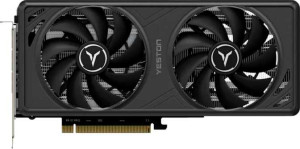
Yeston Gaea GeForce RTX 5070

Manufacturer: Yeston

The Yeston Gaea GeForce RTX 5070 is a desktop graphics card based on NVIDIA's Blackwell architecture, manufactured on a 5nm process with 31.1 billion transistors. It ships with 12GB of GDDR7 video memory across a 192-bit bus, delivering an effective memory speed of 28000 MHz and a peak bandwidth of 672 GB/s. The card supports ray tracing, DLSS, and RGB lighting, and can drive up to four displays simultaneously through its combination of one HDMI 2.1b port and three DisplayPort outputs.

On the performance side, the RTX 5070 operates with a base GPU clock of 2325 MHz that boosts up to 2512 MHz under load, yielding a floating-point throughput of 30.87 TFLOPS and a texture rate of 482.3 GTexels/s. Its 6144 shading units are complemented by 192 texture mapping units and 80 render output units. The card conforms to DirectX 12 Ultimate, OpenGL 4.6, and OpenCL 3.0, and connects via a PCIe 5.0 slot. With a thermal design power of 250W and dimensions of 283 mm by 141 mm, it relies entirely on air cooling and includes support for Intel Resizable BAR alongside ECC memory.

Pros
  • Supports DLSS and hardware-accelerated ray tracing, enabling two demanding rendering features within a single card
  • Can drive up to four displays simultaneously through a combination of one HDMI 2.1b and three DisplayPort outputs
  • GDDR7 memory delivers an effective speed of 28000 MHz and a peak bandwidth of 672 GB/s, which is notably high for a 192-bit bus
  • ECC memory support adds a layer of data integrity useful for workloads where memory errors cannot be tolerated
  • Double Precision Floating Point (DPFP) support broadens the card beyond pure graphics use cases
  • Intel Resizable BAR support allows the CPU to access the full VRAM pool, improving data transfer efficiency
Cons
  • The 192-bit memory bus is relatively narrow for a card with this level of compute throughput, limiting potential bandwidth scaling
  • No USB-C output is available, which may require adapters for displays or devices that rely on that connection type
  • Water cooling is not supported, leaving air cooling as the only thermal solution for a 250W TDP card
  • 12GB of VRAM may prove limiting for certain high-resolution or memory-intensive workloads given the card's overall compute capability
  • No DVI or mini DisplayPort outputs, which could be restrictive for users with older display hardware
Who is this for?

This card is well-suited to users who need strong throughput for ray-traced rendering and DLSS-accelerated workloads, where its 30.87 TFLOPS of floating-point performance and hardware ray tracing support can be fully utilized. The combination of GDDR7 memory, ECC support, and Double Precision Floating Point capability also makes it a reasonable fit for professionals running compute-intensive or data-sensitive tasks alongside graphics work. Users who manage multiple screens will find the four-display output configuration — covering one HDMI 2.1b and three DisplayPort connections — practical for wide multi-monitor setups, whether for productivity or content creation.

Who is this NOT for?

Users working with extremely memory-hungry applications such as large-scale 3D scene rendering or high-resolution texture pipelines may find the 12GB VRAM ceiling restrictive given the card's compute headroom. The absence of water-cooling support means those building thermally constrained or near-silent systems will need to plan carefully around its 250W TDP in a purely air-cooled configuration. Additionally, users with legacy display equipment relying on DVI connectors, or those who depend on USB-C video output for modern portable monitors or docking setups, will find no native support for either on this card.

Performance:

GPU clock speed 2325 MHz
GPU turbo 2512 MHz
pixel rate 201 GPixel/s
floating-point performance 30.87 TFLOPS
texture rate 482.3 GTexels/s
GPU memory speed 1750 MHz
shading units 6144
texture mapping units (TMUs) 192
render output units (ROPs) 80
Has Double Precision Floating Point (DPFP)

The Performance section of the Yeston Gaea GeForce RTX 5070 shows a GPU base clock of 2325 MHz with a turbo frequency reaching 2512 MHz, supported by 6144 shading units, 192 texture mapping units, and 80 render output units. These combine to produce a texture rate of 482.3 GTexels/s and a pixel rate of 201 GPixel/s, while overall compute throughput reaches 30.87 TFLOPS of floating-point performance. The GPU memory operates at 1750 MHz, and the card includes support for Double Precision Floating Point (DPFP), broadening its suitability beyond graphics-only workloads.

Memory:

effective memory speed 28000 MHz
maximum memory bandwidth 672 GB/s
VRAM 12GB
GDDR version GDDR7
memory bus width 192-bit
Supports ECC memory

The Yeston Gaea GeForce RTX 5070 is equipped with 12GB of GDDR7 VRAM running across a 192-bit memory bus, with an effective memory speed of 28000 MHz that translates into a maximum memory bandwidth of 672 GB/s. The card also supports ECC memory, which helps detect and correct data errors during operation, adding a layer of reliability for workloads where memory integrity matters.

Features:

DirectX version DirectX 12 Ultimate
OpenGL version 4.6
OpenCL version 3
Supports multi-display technology
supports ray tracing
Supports 3D
supports DLSS
has XeSS (XMX)
AMD SAM / Intel Resizable BAR Intel Resizable BAR
has LHR
has RGB lighting
supported displays 4

The Yeston Gaea GeForce RTX 5070 supports DirectX 12 Ultimate, OpenGL 4.6, and OpenCL 3, covering a broad range of graphics and compute APIs. It includes hardware-accelerated ray tracing, DLSS, and stereoscopic 3D support, while XeSS (XMX) and LHR are not present on this card. Multi-display technology is supported, allowing connections to up to four screens simultaneously, and the card takes advantage of Intel Resizable BAR for improved CPU-to-GPU data access. RGB lighting is built in, rounding out the feature set on the hardware side.

Ports:

has an HDMI output
HDMI ports 1
HDMI version HDMI 2.1b
DisplayPort outputs 3
USB-C ports 0
DVI outputs 0
mini DisplayPort outputs 0

The Yeston Gaea GeForce RTX 5070 offers a total of four video outputs: one HDMI 2.1b port and three DisplayPort outputs. There are no USB-C, DVI, or mini DisplayPort connections on this card, keeping the port layout straightforward and focused on the two most widely used modern display interfaces.

General info:

GPU architecture Blackwell
Thermal Design Power (TDP) 250W
PCI Express (PCIe) version 5
semiconductor size 5 nm
number of transistors 31100 million
Has air-water cooling
width 283 mm
height 141 mm

The Yeston Gaea GeForce RTX 5070 is built on the Blackwell architecture, using a 5nm manufacturing process with 31,100 million transistors packed onto the die. It connects via a PCIe 5.0 slot and carries a thermal design power of 250W, relying on air cooling without any water-cooling option. The card measures 283 mm in width and 141 mm in height, and its physical dimensions place it in a fairly standard dual or triple-slot form factor for this class of hardware.
Final Verdict

The Yeston Gaea GeForce RTX 5070 is a well-specified graphics card built on the Blackwell architecture, bringing together a capable compute profile, modern API support, and a versatile four-display output configuration into a single air-cooled package. Its GDDR7 memory subsystem with 672 GB/s of peak bandwidth stands out as a defining technical strength, complementing the card's ray tracing and DLSS capabilities for users whose workloads can take full advantage of them. While the 12GB VRAM ceiling and the absence of water-cooling or USB-C output will matter to a subset of users, the card's overall specification set — including ECC support, DPFP capability, and Intel Resizable BAR — gives it a broader appeal than a purely gaming-focused product. For users seeking a Blackwell-generation card that balances compute versatility with display flexibility, the Yeston Gaea GeForce RTX 5070 represents a coherent and technically grounded option.

Popular Comparisons

Yeston Gaea GeForce RTX 5070
VS
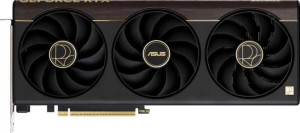
Asus ProArt GeForce RTX 5070 Ti