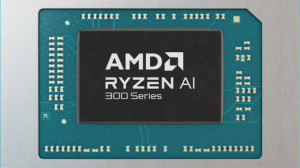
AMD Ryzen AI 5 330 specifications and in-depth review

AMD Ryzen AI 5 330

Manufacturer: AMD

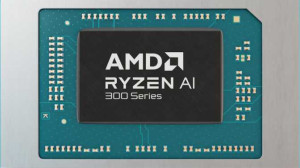
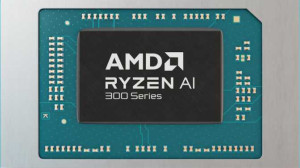
The AMD Ryzen AI 5 330 is a versatile processor suitable for both laptops and desktops. Featuring integrated Radeon 820M graphics, it offers a base clock speed of 2–3 GHz with a turbo boost of 4.5 GHz. Its 8 threads ensure efficient multitasking performance for various computing needs.

With a 4 nm semiconductor size, the Ryzen AI 5 330 supports up to 256GB of DDR5 RAM with a maximum speed of 8000 MHz. Its thermal design power (TDP) is 28W, while the CPU temperature can reach up to 100 °C, providing a balance between power and efficiency for everyday tasks.

Pros
  • Supports up to 256GB of RAM, allowing for significant memory capacity in compatible systems.
  • Integrated Radeon 820M graphics with a turbo boost up to 2800 MHz, offering decent graphical performance.
  • Uses multithreading for enhanced parallel processing capabilities.
  • Supports modern instruction sets, including AVX2 and AES, enabling efficient handling of complex tasks.
  • Compatible with PCIe 4.0 for faster data transfer speeds.
Cons
  • Does not support ECC memory, which may limit error correction capabilities in certain professional or server environments.
  • Lacks an unlocked multiplier, preventing overclocking for users seeking higher performance customization.
  • Maximum CPU temperature can reach up to 100°C, potentially limiting thermal headroom for sustained high performance.
Who is this for?

The AMD Ryzen AI 5 330 is ideal for users who require a balanced CPU for general computing tasks such as web browsing, office applications, and light gaming. Its 8 threads and integrated Radeon 820M graphics provide sufficient power for multitasking and casual graphics use, while the support for up to 256GB of RAM allows for future-proofing in systems that may need higher memory capacity. The processor is also suitable for environments where power efficiency is key, with a TDP of just 28W.

Who is this NOT for?

This processor may not be well-suited for users who require heavy computational performance, such as high-end gaming or professional content creation. The lack of support for ECC memory and the absence of an unlocked multiplier for overclocking limit its suitability for critical applications or enthusiasts seeking maximum performance. Additionally, the CPU temperature can reach up to 100°C, which may be a concern in extended workloads requiring lower thermal output.

General info:

Type Laptop, Desktop
Has integrated graphics
release date July 2025
Thermal Design Power (TDP) 28W
semiconductor size 4 nm
CPU temperature 100 °C
PCI Express (PCIe) version 4
Supports 64-bit

The AMD Ryzen AI 5 330 is designed for both laptops and desktops, featuring integrated graphics and a 4 nm semiconductor size for improved efficiency. With a thermal design power (TDP) of 28W, it provides a balance of performance and power consumption. The processor supports PCIe 4.0, ensuring fast data transfer, and operates with a maximum CPU temperature of 100 °C. Additionally, it is compatible with 64-bit systems, offering broad software support.

Performance:

CPU speed 1 x 2 & 3 x 2 GHz
CPU threads 8 threads
turbo clock speed 4.5GHz
Has an unlocked multiplier
L2 cache 4 MB
L3 cache 8 MB
Uses big.LITTLE technology
clock multiplier 20

The AMD Ryzen AI 5 330 offers a solid performance profile with 8 threads and a clock speed range of 2 to 3 GHz, along with a turbo boost of 4.5 GHz for enhanced processing power. It features 4 MB of L2 cache and 8 MB of L3 cache to improve data handling, and utilizes big.LITTLE technology to optimize efficiency. Although it has a fixed clock multiplier of 20, it does not support an unlocked multiplier for overclocking.

Benchmarks:

PassMark result 13809
PassMark result (single) 3816

The AMD Ryzen AI 5 330 achieves a PassMark result of 13809, demonstrating solid overall performance. For single-threaded tasks, it scores 3816 in PassMark, highlighting its capability in handling less parallelized workloads efficiently.

Integrated graphics:

GPU clock speed 0 MHz
GPU name Radeon 820M
GPU turbo 2800 MHz
DirectX version DirectX 12
supported displays 4
OpenGL version 4.6
OpenCL version 2.1

The AMD Ryzen AI 5 330 features integrated Radeon 820M graphics with a turbo clock speed of 2800 MHz, providing decent graphical performance. It supports up to 4 displays and is compatible with DirectX 12, OpenGL 4.6, and OpenCL 2.1, enabling modern graphics and compute capabilities.

Memory:

RAM speed (max) 8000 MHz
DDR memory version 5
memory channels 2
maximum memory amount 256GB
Supports ECC memory

The AMD Ryzen AI 5 330 supports up to 256GB of RAM and can handle memory speeds of up to 8000 MHz. It uses DDR5 memory across 2 memory channels, offering good bandwidth and capacity for demanding tasks. However, it does not support ECC memory for error correction.

Features:

instruction sets MMX, F16C, FMA3, AES, AVX, AVX2, SSE 4.1, SSE 4.2
uses multithreading
Has NX bit

The AMD Ryzen AI 5 330 supports a wide range of instruction sets, including MMX, F16C, FMA3, AES, AVX, AVX2, SSE 4.1, and SSE 4.2, enhancing its ability to handle complex operations. It also utilizes multithreading for improved parallel processing, and features the NX bit for added security by preventing the execution of malicious code.

Final Verdict

The AMD Ryzen AI 5 330 is a solid processor for users seeking a balanced solution for everyday computing tasks. With its support for up to 256GB of RAM and integrated Radeon 820M graphics, it offers decent performance for multitasking, casual gaming, and general productivity. While it lacks overclocking potential and ECC memory support, its efficiency and modern instruction set make it a reliable choice for basic to moderate workloads. Overall, the Ryzen AI 5 330 is a well-suited option for users who prioritize efficiency and solid performance in typical computing environments.

Popular Comparisons

AMD Ryzen AI 5 330
AMD Ryzen AI 5 330
VS
AMD Ryzen 7 H 260
AMD Ryzen 7 H 260
AMD Ryzen AI 5 330
AMD Ryzen AI 5 330
VS
AMD Ryzen 7 Pro 250
AMD Ryzen 7 Pro 250
AMD Ryzen AI 5 330
AMD Ryzen AI 5 330
VS
Intel Core 5 120U
Intel Core 5 120U
AMD Ryzen AI 5 330
AMD Ryzen AI 5 330
VS
Intel Core Ultra 5 125H
AMD Ryzen AI 5 330
AMD Ryzen AI 5 330
VS
Intel Core Ultra 5 225H
AMD Ryzen AI 5 330
AMD Ryzen AI 5 330
VS
Intel Core Ultra 9 285HX
AMD Ryzen AI 5 330
AMD Ryzen AI 5 330
VS
AMD Ryzen AI 7 350
AMD Ryzen AI 7 350
AMD Ryzen AI 5 330
AMD Ryzen AI 5 330
VS
AMD Ryzen AI 5 H 330
AMD Ryzen AI 5 330
AMD Ryzen AI 5 330
VS
AMD Ryzen AI 5 H 340
AMD Ryzen AI 5 330
AMD Ryzen AI 5 330
VS
AMD Ryzen AI 5 340
AMD Ryzen AI 5 340
AMD Ryzen AI 5 330
AMD Ryzen AI 5 330
VS
Intel Core Ultra 5 225U