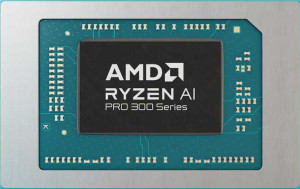
The AMD Ryzen AI 7 H 350 is designed for both laptop and desktop use, offering flexibility across different form factors. It is built on a 4 nm semiconductor process and operates within a 28W Thermal Design Power (TDP), with a maximum CPU temperature of 100 °C. The processor includes integrated graphics and fully supports 64-bit computing. Connectivity is handled through PCIe 4.0, enabling modern peripheral and storage compatibility.
The processor features 16 threads and employs big.LITTLE technology, distributing tasks across two groups of cores each running at a base speed of 2 GHz, with a turbo clock speed reaching up to 5 GHz for demanding workloads. The clock multiplier is set at 20 and the multiplier is locked, meaning frequency adjustments through overclocking are not supported. Cache configuration consists of 8 MB of L2 cache and 16 MB of L3 cache, providing a layered memory buffer that helps reduce latency during data-intensive tasks.
In PassMark benchmarking, the processor achieves a multi-core score of 27316 and a single-core score of 3970, giving a clear indication of its capability across both parallel and single-threaded workloads.
The integrated Radeon 860M has a base GPU clock speed of 600 MHz and a turbo frequency of 3000 MHz, with its rendering pipeline built around 512 shading units, 32 texture mapping units (TMUs), and 8 render output units (ROPs). It supports up to 4 displays simultaneously and is compatible with DirectX 12, OpenGL 4.6, and OpenCL 2.1, covering a broad range of graphics and compute workloads.
The processor supports DDR5 memory across two channels, with a maximum RAM speed of 8000 MHz and an upper capacity limit of 256 GB. ECC memory is not supported, placing this chip squarely within mainstream consumer and prosumer use cases rather than error-critical workstation environments.
The processor includes multithreading support and the NX bit for hardware-level execution protection. Its instruction set support spans MMX, F16C, FMA3, AES, AVX, AVX2, SSE 4.1, and SSE 4.2, covering a wide range of operations from legacy multimedia instructions through to modern floating-point, encryption, and advanced vector extensions used in compute-intensive applications.