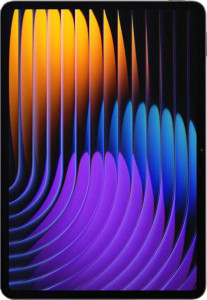
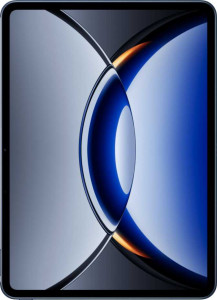
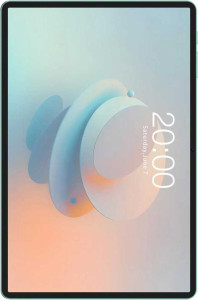
The Apple iPad Air 13 (2025) has a physical footprint of 280.6 mm wide by 214.9 mm tall, with a slim 6.1 mm thickness and a total volume of approximately 367.84 cm³. It weighs 617 g and does not include a stylus, detachable keyboard, or backlit keyboard in the box, though the digitizer does support pen tilt sensitivity. The tablet offers no rated water resistance, and its operating temperature range runs from 0 °C up to a maximum of 35 °C.
The Apple iPad Air 13 (2025) features a 13″ IPS LCD touchscreen with a resolution of 2048 x 2732 px at 264 ppi, delivering a sharp and detailed image across its large panel. Typical brightness is rated at 600 nits, and an anti-reflection coating is present to help reduce glare, though the display does not use branded damage-resistant glass or sapphire glass. The refresh rate is fixed at 60 Hz, and the screen does not support HDR10+ or e-paper technology.
The Apple iPad Air 13 (2025) is powered by the Apple M3 chipset, built on a 3 nm process with 25 billion transistors and an 8-core CPU configuration running at 4 x 3.2 GHz and 4 x 2 GHz across 8 threads, using big.LITTLE and HMP scheduling for workload distribution. The SoC includes an integrated Apple M3 GPU capable of driving up to 2 displays, and carries a TDP of 20W with a rated maximum CPU temperature of 114 °C. The tablet ships with 8 GB of RAM and up to 1024 GB of internal storage, with no external memory slot available; the memory subsystem supports a maximum bandwidth of 100 GB/s and a maximum addressable memory of 24 GB, though ECC memory is not supported. Additional processor features include 64-bit support, NX bit, TrustZone hardware security, and integrated graphics, rounding out a well-specified silicon platform for this tablet.
The Apple iPad Air 13 (2025) has a 12 MP rear camera with a BSI CMOS sensor, an aperture of f/1.8, and support for 4K video recording at up to 60 fps, along with slow-motion video, timelapse, HDR, panorama, burst mode, touch autofocus, and manual controls for focus, exposure, and shutter speed. The rear camera does not include optical image stabilization, continuous autofocus during video, a flash, or a video light, and manual white balance and manual ISO are also absent. The 12 MP front camera sits behind an f/2.4 aperture and has no LED flash of its own. Neither camera supports 3D recording or 360-degree panorama capture, and no flash variant — dual-tone or RGB — is present on the device.
The Apple iPad Air 13 (2025) includes stereo speakers and a dual-microphone setup, but does not offer a 3.5 mm headphone jack or a built-in radio receiver.
The Apple iPad Air 13 (2025) houses a 9705 mAh rechargeable battery with a rated life of 10 hours, and supports fast charging for quicker top-ups. The battery is not removable and does not support wireless charging, though a battery level indicator is available to monitor remaining charge.
The Apple iPad Air 13 (2025) supports Wi-Fi 6E, Wi-Fi 6, Wi-Fi 5, and Wi-Fi 4 alongside Bluetooth 5.3, a cellular module with 5G support, and a SIM configuration of one physical SIM plus one eSIM. Wired connectivity is handled via a USB Type-C port running USB 3.1, while HDMI output, NFC, Ethernet, ANT+, and an infrared sensor are all absent. Location capabilities include GPS, Galileo, and device position tracking, and onboard sensors cover a gyroscope, accelerometer, barometer, and compass. Biometric authentication is provided through a fingerprint scanner, while 3D facial recognition and an iris scanner are not present. On the software side, the tablet offers a broad set of privacy tools including Mail Privacy Protection, clipboard warnings, location privacy options, camera and microphone access controls, app tracking blocking, and cross-site tracking prevention. Productivity and usability features include split-screen support, Picture-in-Picture, SharePlay, Live Text, focus modes, full-page screenshots, Wi-Fi password sharing, Quick Start, media picker, app offloading, widgets, customizable notifications, sharing intents, dark mode, battery health check, AirPlay, offline voice recognition, voice commands, child lock, on-device machine learning, and direct OS vendor updates. The device does not support multi-user accounts, theme customization, dynamic theming, an extra dim mode, playing games while downloading, or DLNA certification, and it is not free or open source.
The chipset in the Apple iPad Air 13 (2025) is classified under the Laptop and Desktop processor type category, and the device uses DDR5 memory running at a maximum speed of 6400 MHz.