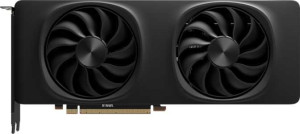
ASRock Radeon RX 7650 GRE Challenger OC specifications and in-depth review

ASRock Radeon RX 7650 GRE Challenger OC

Manufacturer: ASRock

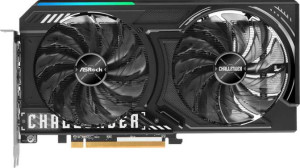
The ASRock Radeon RX 7650 GRE Challenger OC is a mid-range graphics card based on AMD's RDNA 3.0 architecture, fabricated on a 6 nm process with 13,300 million transistors. It operates at a base clock of 1720 MHz and can boost up to 2725 MHz, delivering 11.16 TFLOPS of floating-point performance alongside a pixel rate of 174.4 GPixel/s. The card measures 249 mm in length and 132 mm in height, and includes RGB lighting as part of its physical design.

On the memory side, the card carries 8GB of GDDR6 VRAM across a 128-bit bus, with an effective speed of 18,000 MHz and a maximum bandwidth of 288 GB/s. It supports ECC memory and AMD SAM (Smart Access Memory). Feature support includes DirectX 12 Ultimate, OpenGL 4.6, OpenCL 2.2, ray tracing, and stereoscopic 3D, while DLSS is not supported. The card provides four display outputs — one HDMI 2.1 port and three DisplayPort connections — and has a rated TDP of 170W with a PCIe 4.0 interface.

Pros
  • Supports up to four simultaneous displays through a combination of one HDMI 2.1 and three DisplayPort outputs
  • Ray tracing is supported, enabling hardware-accelerated rendering for compatible applications
  • AMD SAM (Smart Access Memory) is included, allowing the CPU to access the full VRAM pool directly
  • RGB lighting is built into the card's design
  • ECC memory support adds a layer of data reliability for error-sensitive workloads
  • Double Precision Floating Point (DPFP) support extends the card's utility beyond typical graphics workloads into compute tasks
Cons
  • The 128-bit memory bus width is relatively narrow, which can limit memory throughput headroom
  • DLSS is not supported, leaving only AMD's own upscaling ecosystem as an option
  • XeSS (XMX) is not available on this card
  • No USB-C, DVI, or mini DisplayPort outputs, limiting connectivity flexibility
  • Air-water cooling is not supported, restricting thermal management to the card's default cooler
Who is this for?

This card is well-suited to users building a capable gaming or compute-oriented desktop system around AMD's ecosystem, particularly those who want ray tracing support alongside AMD SAM for optimized CPU-GPU data flow. The four-display output capability makes it a practical choice for multi-monitor setups, whether for productivity workflows or wide desktop arrangements. Those with compute or data-integrity requirements will also find value in the card's DPFP and ECC memory support, which extend its usefulness beyond purely graphical tasks.

Who is this NOT for?

Users who rely on DLSS or XeSS upscaling for resolution scaling in supported titles will find this card lacking, as neither technology is available. The 128-bit memory bus may also be a limiting factor for workloads that push high-resolution textures or demand sustained memory throughput, making it a poor fit for users working with very large assets or high-fidelity content creation pipelines. Additionally, those seeking flexible display connectivity through USB-C or legacy DVI outputs will need to look elsewhere, as neither is present on this card.

Performance:

GPU clock speed 1720 MHz
GPU turbo 2725 MHz
pixel rate 174.4 GPixel/s
floating-point performance 11.16 TFLOPS
texture rate 348.8 GTexels/s
GPU memory speed 2250 MHz
shading units 2048
texture mapping units (TMUs) 128
render output units (ROPs) 64
Has Double Precision Floating Point (DPFP)

The Performance section of this card centers on a base GPU clock of 1720 MHz that can boost up to 2725 MHz, supporting a floating-point output of 11.16 TFLOPS. The 2048 shading units work alongside 128 texture mapping units and 64 render output units to achieve a texture rate of 348.8 GTexels/s and a pixel rate of 174.4 GPixel/s. GPU memory operates at 2250 MHz, and the card includes support for Double Precision Floating Point (DPFP), adding utility for compute-oriented workloads.

Memory:

effective memory speed 18000 MHz
maximum memory bandwidth 288 GB/s
VRAM 8GB
GDDR version GDDR6
memory bus width 128-bit
Supports ECC memory

The card is equipped with 8GB of GDDR6 VRAM running across a 128-bit memory bus, with an effective memory speed of 18,000 MHz and a maximum bandwidth of 288 GB/s. ECC memory support is included, which helps maintain data integrity in error-sensitive workloads.

Features:

DirectX version DirectX 12 Ultimate
OpenGL version 4.6
OpenCL version 2.2
Supports multi-display technology
supports ray tracing
Supports 3D
supports DLSS
has XeSS (XMX)
AMD SAM / Intel Resizable BAR AMD SAM
has LHR
has RGB lighting
supported displays 4

This card supports DirectX 12 Ultimate, OpenGL 4.6, and OpenCL 2.2, covering a broad range of graphics and compute APIs. Ray tracing and stereoscopic 3D are both supported, while DLSS and XeSS (XMX) are not available on this card. It supports up to four simultaneous displays through its multi-display technology and comes with AMD SAM (Smart Access Memory) enabled. RGB lighting is present, and the card does not feature LHR (Lite Hash Rate) restrictions.

Ports:

has an HDMI output
HDMI ports 1
HDMI version HDMI 2.1
DisplayPort outputs 3
USB-C ports 0
DVI outputs 0
mini DisplayPort outputs 0

The card's output configuration consists of one HDMI 2.1 port and three DisplayPort outputs, offering a total of four connections for display setups. There are no DVI, mini DisplayPort, or USB-C outputs present on this card.

General info:

GPU architecture RDNA 3.0
Thermal Design Power (TDP) 170W
PCI Express (PCIe) version 4
semiconductor size 6 nm
number of transistors 13300 million
Has air-water cooling
width 249 mm
height 132 mm

Built on AMD's RDNA 3.0 architecture, this card uses a 6 nm manufacturing process and integrates 13,300 million transistors. It connects via a PCIe 4.0 interface and carries a Thermal Design Power (TDP) of 170W. The card does not include air-water cooling and relies on its own cooling solution. Physically, it measures 249 mm in width and 132 mm in height.

Final Verdict

The ASRock Radeon RX 7650 GRE Challenger OC is a well-defined offering within AMD's RDNA 3.0 lineup, bringing together a solid set of features for users invested in the AMD ecosystem. Its support for ray tracing, AMD SAM, and up to four simultaneous display outputs gives it genuine versatility across gaming and light compute workloads, while ECC memory and DPFP support add a layer of utility that goes beyond typical consumer graphics cards. That said, the 128-bit memory bus and the absence of DLSS and XeSS upscaling define the boundaries of its reach, particularly for users with more demanding or mixed-platform requirements. For those who align with its capabilities and ecosystem, it represents a focused and technically coherent option within its category.

Popular Comparisons

ASRock Radeon RX 7650 GRE Challenger OC
VS
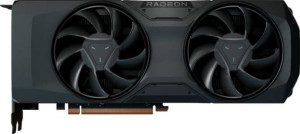
AMD Radeon RX 7700 XT
ASRock Radeon RX 7650 GRE Challenger OC
VS
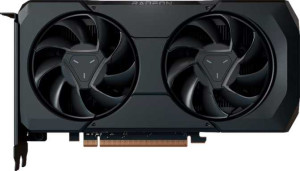
AMD Radeon RX 7600 XT
ASRock Radeon RX 7650 GRE Challenger OC
VS
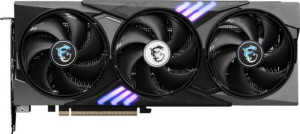
MSI GeForce RTX 5060 Ti Gaming Trio OC 16GB
ASRock Radeon RX 7650 GRE Challenger OC
VS
Intel Arc B580
Intel Arc B580
ASRock Radeon RX 7650 GRE Challenger OC
VS
Nvidia GeForce RTX 4060
ASRock Radeon RX 7650 GRE Challenger OC
VS
MSI GeForce RTX 5060 Ti Vanguard OC 16GB