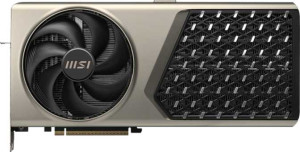
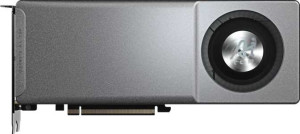
ASRock Radeon RX 9070 XT Monster Hunter Wilds Edition specifications and in-depth review

ASRock Radeon RX 9070 XT Monster Hunter Wilds Edition

Manufacturer: ASRock

The ASRock Radeon RX 9070 XT Monster Hunter Wilds Edition is a graphics card designed around AMD's RDNA 4.0 architecture, fabricated on a 4 nm process with 53,900 million transistors. It ships with 16GB of GDDR6 memory across a 256-bit bus, delivering up to 644 GB/s of memory bandwidth at an effective speed of 20,100 MHz. The card carries RGB lighting and supports up to four simultaneous displays, making it a feature-complete option for multi-monitor setups.

On the performance side, the GPU operates at a base clock of 1,660 MHz with a turbo frequency reaching 2,970 MHz, translating to 48.66 TFLOPS of floating-point throughput. Its 4,096 shading units are complemented by 256 texture mapping units and 128 render output units, yielding a texture rate of 760.3 GTexels/s and a pixel rate of 380.2 GPixel/s. The card supports DirectX 12 Ultimate, OpenGL 4.6, ray tracing, and AMD SAM, connects via PCIe 5.0, and offers one HDMI 2.1b port alongside three DisplayPort outputs. Its rated TDP sits at 304W, with physical dimensions of 298 mm × 131 mm.

Pros
  • 48.66 TFLOPS of floating-point performance and a 2970 MHz turbo clock indicate substantial compute headroom for demanding rendering workloads
  • 16GB of GDDR6 VRAM across a 256-bit bus with 644 GB/s bandwidth supports memory-intensive tasks and high-resolution textures without running short on capacity
  • Support for up to four simultaneous displays makes this card well-suited for multi-monitor setups
  • Ray tracing support is included, enabling hardware-accelerated lighting and shadow rendering
  • AMD SAM is supported, allowing the CPU to access the full VRAM pool for improved data throughput
  • ECC memory support adds data integrity protection, useful for workloads where memory accuracy matters
Cons
  • A 304W TDP demands a capable power supply and adequate case airflow, with no water-cooling option available
  • DLSS and XeSS upscaling technologies are not supported, limiting upscaling choices to AMD's own ecosystem
  • There is only one HDMI port, with no USB-C or DVI outputs, which may restrict connectivity options for users with older or specialized display hardware
  • At 298 mm in length, the card requires a sufficiently spacious case to fit without clearance issues
Who is this for?

This card is well-matched for users running high-resolution or multi-monitor setups, given its support for up to four simultaneous displays and 16GB of GDDR6 VRAM with 644 GB/s bandwidth. Its ray tracing support and 48.66 TFLOPS of compute throughput make it a solid fit for graphically demanding rendering workloads, including real-time 3D applications. The inclusion of ECC memory and Double Precision Floating Point support also makes it relevant for users who blend visual workloads with compute-oriented or data-sensitive tasks.

Who is this NOT for?

Users with compact or small-form-factor builds may find the 298 mm card length a poor fit due to case clearance constraints, and the 304W TDP requires a robust power delivery setup that not all systems can accommodate. Those who rely on DLSS or XeSS upscaling technologies will find neither available here, which limits options for users deeply invested in those workflows. Additionally, anyone needing USB-C display output or DVI connectivity will not find support for either on this card, making it a poor match for setups that depend on those interfaces.

Performance:

GPU clock speed 1660 MHz
GPU turbo 2970 MHz
pixel rate 380.2 GPixel/s
floating-point performance 48.66 TFLOPS
texture rate 760.3 GTexels/s
GPU memory speed 2518 MHz
shading units 4096
texture mapping units (TMUs) 256
render output units (ROPs) 128
Has Double Precision Floating Point (DPFP)

The GPU runs at a base clock of 1,660 MHz, with a turbo frequency of 2,970 MHz under load. Backed by 4,096 shading units, 256 texture mapping units, and 128 render output units, it achieves a texture rate of 760.3 GTexels/s and a pixel rate of 380.2 GPixel/s. Floating-point performance reaches 48.66 TFLOPS, while the GPU memory operates at 2,518 MHz. The card also supports Double Precision Floating Point (DPFP), broadening its suitability for compute-oriented workloads alongside standard rendering tasks.

Memory:

effective memory speed 20100 MHz
maximum memory bandwidth 644 GB/s
VRAM 16GB
GDDR version GDDR6
memory bus width 256-bit
Supports ECC memory

The card is equipped with 16GB of GDDR6 VRAM running at an effective speed of 20,100 MHz across a 256-bit memory bus, yielding a maximum memory bandwidth of 644 GB/s. ECC memory support is also present, adding a layer of data integrity for workloads where memory accuracy is a concern.

Features:

DirectX version DirectX 12 Ultimate
OpenGL version 4.6
OpenCL version 2.2
Supports multi-display technology
supports ray tracing
Supports 3D
supports DLSS
has XeSS (XMX)
AMD SAM / Intel Resizable BAR AMD SAM
has LHR
has RGB lighting
supported displays 4

This card supports DirectX 12 Ultimate, OpenGL 4.6, and OpenCL 2.2, covering a broad range of rendering and compute APIs. Ray tracing and stereoscopic 3D are both supported, while DLSS and XeSS (XMX) are not available on this card. Multi-display technology is present with support for up to four simultaneous outputs, and AMD SAM is included to help optimize CPU-GPU data throughput. It does not carry LHR restrictions, and RGB lighting is built into the card's design.

Ports:

has an HDMI output
HDMI ports 1
HDMI version HDMI 2.1b
DisplayPort outputs 3
USB-C ports 0
DVI outputs 0
mini DisplayPort outputs 0

The card's output configuration consists of three DisplayPort outputs and one HDMI 2.1b port, totaling four display connections. There are no USB-C, DVI, or mini DisplayPort outputs present on this model.

General info:

GPU architecture RDNA 4.0
Thermal Design Power (TDP) 304W
PCI Express (PCIe) version 5
semiconductor size 4 nm
number of transistors 53900 million
Has air-water cooling
width 298 mm
height 131 mm

Built on the RDNA 4.0 architecture, the GPU is manufactured using a 4 nm process and houses 53,900 million transistors, connecting to the system via PCIe 5.0. It carries a Thermal Design Power of 304W and relies solely on air cooling, with no water-cooling support. The card measures 298 mm in width and 131 mm in height.
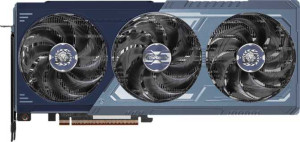
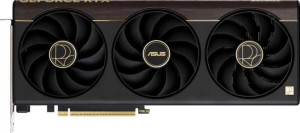
Final Verdict

The ASRock Radeon RX 9070 XT Monster Hunter Wilds Edition is a well-specified graphics card that brings together RDNA 4.0 architecture, ray tracing support, and 16GB of GDDR6 VRAM with 644 GB/s of memory bandwidth into a package suited for high-resolution and multi-display workloads. Its compute throughput, ECC memory support, and AMD SAM integration give it a degree of versatility that extends beyond typical gaming use cases. That said, its 304W power requirement, lack of water-cooling support, and absence of DLSS and XeSS upscaling mean it asks something of the user's system and workflow in return. For those whose setup can accommodate it, this card represents a technically thorough option within its category.

Popular Comparisons

ASRock Radeon RX 9070 XT Monster Hunter Wilds Edition
VS
Asus ProArt GeForce RTX 5070 Ti
ASRock Radeon RX 9070 XT Monster Hunter Wilds Edition
VS
Asus ProArt GeForce RTX 5080 OC Edition
ASRock Radeon RX 9070 XT Monster Hunter Wilds Edition
VS
MSI GeForce RTX 5070 Ti Expert OC
ASRock Radeon RX 9070 XT Monster Hunter Wilds Edition
VS
Gigabyte Radeon AI Pro R9700 AI Top