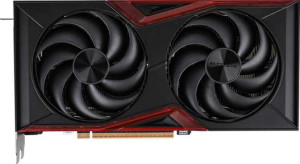
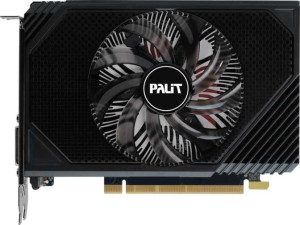
Colorful GeForce RTX 5050 Battle AX Duo specifications and in-depth review

Colorful GeForce RTX 5050 Battle AX Duo

Manufacturer: Colorful

The Colorful GeForce RTX 5050 Battle AX Duo is a mid-range graphics card based on NVIDIA's Blackwell architecture, fabricated on a 5 nm process with 16,900 million transistors. It operates at a base clock of 2317 MHz and reaches a boost of 2572 MHz, delivering 13.17 TFLOPS of floating-point performance alongside RGB lighting and a compact 231 × 120 mm form factor.

On the memory side, the card pairs 8GB of GDDR6 across a 128-bit bus with an effective speed of 20,000 MHz, yielding up to 320 GB/s of bandwidth. Feature support includes DirectX 12 Ultimate, OpenGL 4.6, ray tracing, DLSS, and Intel Resizable BAR, while connectivity is handled by one HDMI 2.1b port and three DisplayPort outputs, allowing up to four simultaneous displays. The card draws 130W and connects via PCIe 5.0.

Pros
  • Supports ray tracing and DLSS, enabling more advanced rendering techniques in compatible applications
  • Four simultaneous display outputs via one HDMI 2.1b port and three DisplayPort connections offer flexible multi-monitor setups
  • ECC memory support adds a layer of data integrity for error-sensitive workloads
  • Intel Resizable BAR support allows the CPU to access the full VRAM pool, which can improve data transfer efficiency
  • RGB lighting provides visual customization options
  • Compact dimensions of 231 x 120 mm make it suitable for builds with limited physical space
Cons
  • 128-bit memory bus width is narrow for this VRAM capacity, which can limit memory throughput in bandwidth-demanding scenarios
  • No USB-C output limits connectivity options for modern displays and devices that rely on that interface
  • Air-water cooling is not supported, restricting thermal management to the card's default cooling solution
  • 8GB of VRAM may be limiting for memory-intensive workloads at higher resolutions
  • XeSS (XMX) is not supported, reducing upscaling options to DLSS only
Who is this for?

This card is a reasonable fit for users building compact systems, given its 231 x 120 mm footprint and 130W TDP, which keep space and power requirements manageable. It suits those looking to run ray tracing and DLSS-enabled titles at moderate settings, as well as users who need multi-monitor setups of up to four displays for productivity or light creative work. ECC memory support also makes it a viable option for compute tasks where data integrity matters.

Who is this NOT for?

Users targeting high-resolution or memory-intensive workloads — such as 4K gaming, large texture rendering, or complex 3D scene editing — may find the 8GB GDDR6 capacity and 128-bit bus width restrictive. The absence of a USB-C output makes it a poor match for users relying on modern displays or devices that connect exclusively via USB-C. Additionally, those requiring the flexibility of air-water hybrid cooling for sustained thermal management under heavy, continuous loads will find that option unavailable on this model.

Performance:

GPU clock speed 2317 MHz
GPU turbo 2572 MHz
pixel rate 82.3 GPixel/s
floating-point performance 13.17 TFLOPS
texture rate 205.8 GTexels/s
GPU memory speed 2500 MHz
shading units 2560
texture mapping units (TMUs) 80
render output units (ROPs) 32
Has Double Precision Floating Point (DPFP)

The card runs at a base clock of 2317 MHz, boosting up to 2572 MHz under load, and delivers 13.17 TFLOPS of floating-point performance alongside a pixel rate of 82.3 GPixel/s and a texture rate of 205.8 GTexels/s. Its 2560 shading units work in tandem with 80 texture mapping units and 32 render output units, while GPU memory operates at 2500 MHz. The card also supports Double Precision Floating Point (DPFP), adding flexibility for compute-oriented workloads.

Memory:

effective memory speed 20000 MHz
maximum memory bandwidth 320 GB/s
VRAM 8GB
GDDR version GDDR6
memory bus width 128-bit
Supports ECC memory

The card is equipped with 8GB of GDDR6 VRAM running across a 128-bit memory bus at an effective speed of 20,000 MHz, resulting in a maximum memory bandwidth of 320 GB/s. ECC memory support is also included, which helps maintain data integrity in error-sensitive workloads.

Features:

DirectX version DirectX 12 Ultimate
OpenGL version 4.6
OpenCL version 3
Supports multi-display technology
supports ray tracing
Supports 3D
supports DLSS
has XeSS (XMX)
AMD SAM / Intel Resizable BAR Intel Resizable BAR
has LHR
has RGB lighting
supported displays 4

The card supports DirectX 12 Ultimate, OpenGL 4.6, and OpenCL 3, covering a broad range of graphics and compute workloads. Ray tracing and DLSS are both supported, while XeSS (XMX) is not available on this model. Multi-display technology is included, with support for up to four simultaneous displays, and stereoscopic 3D is also on the feature list. Intel Resizable BAR is supported, whereas LHR is not present. The card additionally features RGB lighting for visual customization.

Ports:

has an HDMI output
HDMI ports 1
HDMI version HDMI 2.1b
DisplayPort outputs 3
USB-C ports 0
DVI outputs 0
mini DisplayPort outputs 0

The card offers a total of four video outputs: one HDMI 2.1b port and three DisplayPort outputs. There are no USB-C, DVI, or mini DisplayPort connectors on this model.

General info:

GPU architecture Blackwell
Thermal Design Power (TDP) 130W
PCI Express (PCIe) version 5
semiconductor size 5 nm
number of transistors 16900 million
Has air-water cooling
width 231 mm
height 120 mm

Built on the Blackwell architecture and manufactured using a 5 nm process, the GPU integrates 16,900 million transistors and connects via PCIe 5.0. It carries a Thermal Design Power of 130W and does not include air-water cooling. The card measures 231 mm in width and 120 mm in height.

Final Verdict

The Colorful GeForce RTX 5050 Battle AX Duo is a compact, moderately capable graphics card built on the Blackwell architecture that covers the essentials well — ray tracing, DLSS, four-display output, and ECC memory support within a restrained 130W power envelope. Its DLSS and ray tracing support give it relevance for users who want access to modern rendering features without demanding large system resources. That said, the 8GB GDDR6 capacity on a 128-bit bus does place a ceiling on how far it can scale with memory-intensive tasks, and the lack of USB-C connectivity narrows its compatibility with newer display hardware. Overall, the RTX 5050 Battle AX Duo is best suited to users who prioritize a small footprint, manageable power draw, and a solid feature set for everyday workloads, rather than those pushing the boundaries of high-resolution or compute-heavy applications.

Popular Comparisons

Colorful GeForce RTX 5050 Battle AX Duo
VS
Asus Dual GeForce RTX 5050 OC Edition
Colorful GeForce RTX 5050 Battle AX Duo
VS
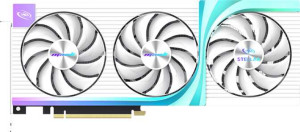
Manli Stellar GeForce RTX 5060 Ti OC 16GB
Colorful GeForce RTX 5050 Battle AX Duo
VS
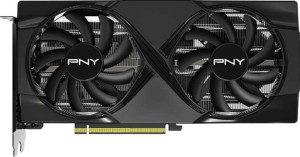
PNY GeForce RTX 5060 Ti OC Dual Fan 16GB
Colorful GeForce RTX 5050 Battle AX Duo
VS
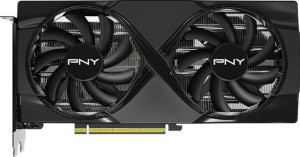
PNY GeForce RTX 5060 Ti OC Dual Fan 8GB
Colorful GeForce RTX 5050 Battle AX Duo
VS
Palit GeForce RTX 3050 StormX 6GB