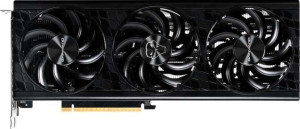
Gainward GeForce RTX 5060 Ti Ghost 8GB specifications and in-depth review

Gainward GeForce RTX 5060 Ti Ghost 8GB

Manufacturer: Gainward

The Gainward GeForce RTX 5060 Ti Ghost 8GB is a mid-range graphics card based on NVIDIA's Blackwell architecture, manufactured on a 5 nm process with 21,900 million transistors. It ships with 8GB of GDDR7 VRAM across a 128-bit memory bus, delivering an effective memory speed of 28,000 MHz and a peak memory bandwidth of 448 GB/s. The card includes RGB lighting and supports up to four simultaneous displays.

On the performance side, the RTX 5060 Ti Ghost operates at a base GPU clock of 2,407 MHz with a boost of 2,572 MHz, producing 23.7 TFLOPS of floating-point throughput and a texture rate of 370.4 GTexels/s. Its 4,608 shading units are complemented by 144 texture mapping units and 48 render output units. The card supports DirectX 12 Ultimate, OpenGL 4.6, OpenCL 3, ray tracing, and DLSS, and connects via PCIe 5.0. Display output is handled through one HDMI 2.1b port and three DisplayPort connectors, with a rated TDP of 180W.

Pros
  • Equipped with GDDR7 memory delivering an effective speed of 28,000 MHz and up to 448 GB/s of bandwidth, well above what older memory types offer at this bus width
  • Supports ray tracing, DLSS, DirectX 12 Ultimate, and Intel Resizable BAR, covering a broad set of modern rendering and optimization features
  • Four display outputs — three DisplayPort and one HDMI 2.1b — allow flexible multi-monitor setups without adapters
  • ECC memory support adds data integrity for workloads that require reliable computation
  • PCIe 5.0 interface ensures compatibility with current-generation platforms without bandwidth constraints
  • RGB lighting is included for users who want visual customization within their build
Cons
  • The 128-bit memory bus limits scalability of memory bandwidth regardless of the fast GDDR7 speed
  • Only 8GB of VRAM may be a constraint for memory-intensive workloads at higher resolutions
  • No USB-C display output is available, limiting compatibility with certain monitors and displays that rely on that connector
  • Air-water cooling is not supported, restricting thermal management options to the card's built-in cooler only
  • XeSS (XMX) is not supported, narrowing upscaling options to DLSS alone
Who is this for?

This card is a solid fit for users engaged in modern PC gaming at 1080p and 1440p, where its GDDR7 memory, ray tracing support, and DLSS capability combine to handle current titles with up-to-date rendering features. Its four display outputs also make it a practical choice for anyone running a multi-monitor setup, while ECC memory support extends its appeal to users who occasionally run compute or reliability-sensitive workloads alongside everyday tasks. The PCIe 5.0 interface means it slots naturally into current-generation builds without any bottleneck concerns.

Who is this NOT for?

Users targeting 4K gaming or high-resolution content creation may find the 8GB VRAM ceiling and 128-bit memory bus insufficient, as these workloads tend to demand larger frame buffers and greater memory throughput than this configuration provides. Similarly, professionals working with memory-intensive GPU compute tasks — such as large model inference or high-resolution video processing — are likely to run into capacity limits. Those who require a USB-C display connection will also find this card lacking, as no such output is present on its port configuration.

Performance:

GPU clock speed 2407 MHz
GPU turbo 2572 MHz
pixel rate 123.5 GPixel/s
floating-point performance 23.7 TFLOPS
texture rate 370.4 GTexels/s
GPU memory speed 1750 MHz
shading units 4608
texture mapping units (TMUs) 144
render output units (ROPs) 48
Has Double Precision Floating Point (DPFP)

The card runs at a base GPU clock of 2,407 MHz, boosting up to 2,572 MHz under load, and delivers 23.7 TFLOPS of floating-point performance alongside a pixel rate of 123.5 GPixel/s and a texture rate of 370.4 GTexels/s. Underpinning these figures are 4,608 shading units, 144 texture mapping units, and 48 render output units, while the GPU memory itself runs at 1,750 MHz. The card also supports Double Precision Floating Point (DPFP), extending its suitability beyond standard rendering workloads.

Memory:

effective memory speed 28000 MHz
maximum memory bandwidth 448 GB/s
VRAM 8GB
GDDR version GDDR7
memory bus width 128-bit
Supports ECC memory

This card is equipped with 8GB of GDDR7 VRAM running at an effective speed of 28,000 MHz across a 128-bit memory bus, resulting in a maximum memory bandwidth of 448 GB/s. ECC memory support is also included, adding a layer of data integrity for workloads where memory accuracy is a priority.

Features:

DirectX version DirectX 12 Ultimate
OpenGL version 4.6
OpenCL version 3
Supports multi-display technology
supports ray tracing
Supports 3D
supports DLSS
has XeSS (XMX)
AMD SAM / Intel Resizable BAR Intel Resizable BAR
has LHR
has RGB lighting
supported displays 4

The card supports DirectX 12 Ultimate, OpenGL 4.6, and OpenCL 3, covering a broad range of graphics and compute workloads. Ray tracing and DLSS are both supported, while XeSS (XMX) is not present. Multi-display technology is included with support for up to four simultaneous displays, and Intel Resizable BAR is available to help optimize data transfer between the CPU and GPU. Stereoscopic 3D and RGB lighting are also featured, whereas LHR (Lite Hash Rate) is not implemented on this card.

Ports:

has an HDMI output
HDMI ports 1
HDMI version HDMI 2.1b
DisplayPort outputs 3
USB-C ports 0
DVI outputs 0
mini DisplayPort outputs 0

The card's output configuration consists of three DisplayPort connectors and one HDMI 2.1b port, providing a total of four display outputs. There are no DVI, mini DisplayPort, or USB-C ports included on this card.

General info:

GPU architecture Blackwell
Thermal Design Power (TDP) 180W
PCI Express (PCIe) version 5
semiconductor size 5 nm
number of transistors 21900 million
Has air-water cooling
width 262.1 mm
height 126.3 mm

Built on the Blackwell architecture and fabricated using a 5 nm process, this card integrates 21,900 million transistors and connects via PCIe 5.0. It carries a Thermal Design Power of 180W and does not include air-water cooling. The card measures 262.1 mm in width and 126.3 mm in height.
Final Verdict

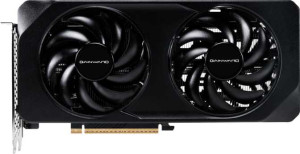
The Gainward GeForce RTX 5060 Ti Ghost 8GB sits comfortably as a feature-complete card for users building around current-generation platforms, bringing the Blackwell architecture together with GDDR7 memory and modern API support including ray tracing, DLSS, and DirectX 12 Ultimate. Its strengths are most apparent at 1080p and 1440p workloads, where its memory speed and rendering feature set are well utilized, though users with more demanding resolution or VRAM requirements will find its 8GB capacity and 128-bit bus a limiting factor over time. For those whose needs align with its design parameters, it represents a well-rounded option with a capable port layout, PCIe 5.0 connectivity, and ECC support rounding out a specification sheet that covers the essentials without overreaching.

Popular Comparisons

Gainward GeForce RTX 5060 Ti Ghost 8GB
VS
Gainward GeForce RTX 5060 Ghost OC
Gainward GeForce RTX 5060 Ti Ghost 8GB
VS
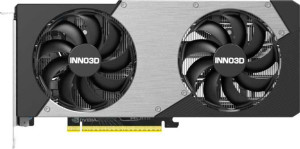
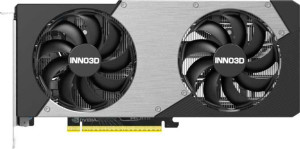
Inno3D GeForce RTX 5060 Ti Twin X2 OC 16GB
Gainward GeForce RTX 5060 Ti Ghost 8GB
VS
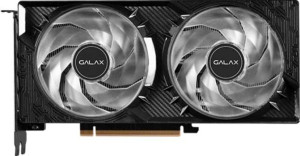
Galax GeForce RTX 5060 Ti 1-Click OC 16GB
Gainward GeForce RTX 5060 Ti Ghost 8GB
VS
Inno3D GeForce RTX 5060 Ti Twin X2 OC 8GB
Gainward GeForce RTX 5060 Ti Ghost 8GB
VS
Nvidia GeForce RTX 5060 Ti 16GB
Gainward GeForce RTX 5060 Ti Ghost 8GB
VS
Gainward GeForce RTX 5060 Ti PythoN III 16GB