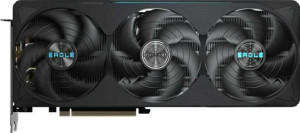
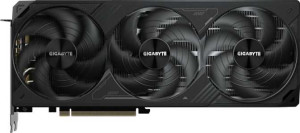
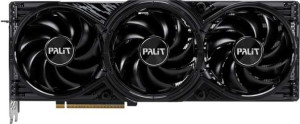
Gigabyte GeForce RTX 5070 Ti Eagle OC SFF specifications and in-depth review

Gigabyte GeForce RTX 5070 Ti Eagle OC SFF

Manufacturer: Gigabyte

The Gigabyte GeForce RTX 5070 Ti Eagle OC SFF is a compact graphics card based on NVIDIA's Blackwell architecture, designed for systems where space is at a premium without sacrificing processing capability. It runs at a base clock of 2295 MHz with a boost up to 2542 MHz, and ships with RGB lighting along with support for up to four simultaneous displays. The card carries a 300W TDP and connects via PCIe 5.0, measuring 304 mm in length and 126 mm in height.

On the memory side, the card is equipped with 16GB of GDDR7 across a 256-bit bus, reaching an effective speed of 28000 MHz and delivering up to 896 GB/s of bandwidth, with ECC support included. It provides 8960 shading units, 280 texture mapping units, and 96 render output units, yielding a texture rate of 711.8 GTexels/s and a pixel rate of 244 GPixel/s. Feature support includes DirectX 12 Ultimate, OpenGL 4.6, OpenCL 3, ray tracing, DLSS, Intel Resizable BAR, and stereoscopic 3D. For connectivity, the card offers one HDMI 2.1b port and three DisplayPort outputs.

Pros
  • 16GB of GDDR7 VRAM with a 256-bit bus and 896 GB/s of bandwidth makes for a well-provisioned memory configuration for demanding workloads
  • Support for ray tracing and DLSS broadens compatibility with modern rendering techniques without requiring additional hardware
  • ECC memory support adds a degree of data reliability useful in compute-oriented tasks
  • The card can drive up to four displays simultaneously via one HDMI 2.1b port and three DisplayPort outputs
  • RGB lighting is built in, offering visual customization without the need for additional hardware
  • Intel Resizable BAR support allows the CPU broader access to GPU memory, which can benefit frame delivery in supported scenarios
Cons
  • A 300W TDP places notable demands on system power delivery and case airflow
  • No water cooling support is offered, leaving thermal management entirely dependent on the air cooling solution
  • The 304 mm length may present fitment challenges in smaller or more restrictive cases despite the SFF designation
  • No USB-C display output is available, limiting connectivity options for monitors or devices that rely on that interface
  • DVI and mini DisplayPort outputs are absent, ruling out compatibility with older display equipment without an adapter
Who is this for?

This card is well-suited to users who need a capable graphics solution in a physically constrained build, as its 304 mm length and SFF designation make it more manageable in tighter enclosures than many full-sized alternatives. The 16GB of GDDR7 VRAM paired with 896 GB/s of bandwidth makes it a solid fit for those running memory-intensive rendering, compute, or content creation workloads, especially given the added reliability of ECC memory support. Users who want to take advantage of ray tracing and DLSS in modern titles, or who need to connect up to four displays simultaneously, will find the feature set well-aligned with those demands.

Who is this NOT for?

The card's 300W TDP makes it a poor match for users with modest power supplies or systems lacking robust airflow, as the thermal load requires both adequate wattage headroom and effective case ventilation — particularly given that no water cooling option is included. Those working in environments where USB-C display connectivity is standard, or who rely on older DVI-based monitors, will find the port selection limiting without the use of adapters. Additionally, users who prioritize the absolute smallest form factor may find the 304 mm width more restrictive than expected for a card marketed toward compact system builds.

Performance:

GPU clock speed 2295 MHz
GPU turbo 2542 MHz
pixel rate 244 GPixel/s
floating-point performance 45.55 TFLOPS
texture rate 711.8 GTexels/s
GPU memory speed 1750 MHz
shading units 8960
texture mapping units (TMUs) 280
render output units (ROPs) 96
Has Double Precision Floating Point (DPFP)

The card operates at a base GPU clock of 2295 MHz, boosting up to 2542 MHz under load, while the GPU memory runs at 1750 MHz. With 45.55 TFLOPS of floating-point performance and double precision floating point support, it is equipped to handle computationally intensive workloads. The 8960 shading units work alongside 280 texture mapping units and 96 render output units, producing a texture rate of 711.8 GTexels/s and a pixel rate of 244 GPixel/s.

Memory:

effective memory speed 28000 MHz
maximum memory bandwidth 896 GB/s
VRAM 16GB
GDDR version GDDR7
memory bus width 256-bit
Supports ECC memory

This card comes with 16GB of GDDR7 VRAM running across a 256-bit memory bus, reaching an effective memory speed of 28000 MHz and a maximum bandwidth of 896 GB/s. ECC memory support is also included, adding a layer of data integrity for workloads where memory accuracy is important.

Features:

DirectX version DirectX 12 Ultimate
OpenGL version 4.6
OpenCL version 3
Supports multi-display technology
supports ray tracing
Supports 3D
supports DLSS
has XeSS (XMX)
AMD SAM / Intel Resizable BAR Intel Resizable BAR
has LHR
has RGB lighting
supported displays 4

The card supports DirectX 12 Ultimate, OpenGL 4.6, and OpenCL 3, covering a broad range of graphics and compute APIs. Ray tracing and DLSS are both supported, alongside stereoscopic 3D and multi-display technology spanning up to four screens simultaneously. Intel Resizable BAR is included, while XeSS (XMX) and LHR are not present on this card. RGB lighting is built in, rounding out a feature set that also excludes Lite Hash Rate limiting.

Ports:

has an HDMI output
HDMI ports 1
HDMI version HDMI 2.1b
DisplayPort outputs 3
USB-C ports 0
DVI outputs 0
mini DisplayPort outputs 0

The card's output configuration consists of one HDMI 2.1b port and three DisplayPort outputs, offering a total of four display connections. There are no USB-C, DVI, or mini DisplayPort outputs present on this card.

General info:

GPU architecture Blackwell
Thermal Design Power (TDP) 300W
PCI Express (PCIe) version 5
semiconductor size 5 nm
number of transistors 45600 million
Has air-water cooling
width 304 mm
height 126 mm

Built on the Blackwell architecture, this card uses a 5 nm semiconductor process and packs 45,600 million transistors onto the die. It connects via PCIe 5.0 and carries a thermal design power of 300W, with cooling handled exclusively through air — there is no water cooling support. The card measures 304 mm in width and 126 mm in height, and its 5 nm fabrication reflects a relatively compact process node for this class of hardware.

Final Verdict

The Gigabyte GeForce RTX 5070 Ti Eagle OC SFF presents a well-rounded specification sheet for a card aimed at users who want capable graphics processing in a more space-conscious form factor. Its 16GB of GDDR7 VRAM with 896 GB/s of bandwidth, combined with ray tracing, DLSS, and four-display support, gives it genuine versatility across both creative and gaming workloads. That said, the 300W TDP and reliance on air cooling alone mean that system compatibility deserves careful consideration before committing to a build. For users whose enclosures and power delivery can accommodate those demands, the RTX 5070 Ti Eagle OC SFF offers a technically substantive option within the compact graphics card segment.

Popular Comparisons

Gigabyte GeForce RTX 5070 Ti Eagle OC SFF
VS
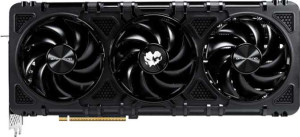
Gainward GeForce RTX 5070 Ti Phantom
Gigabyte GeForce RTX 5070 Ti Eagle OC SFF
VS
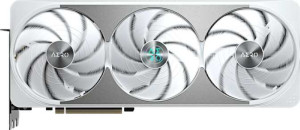
Gigabyte GeForce RTX 5070 Ti Aero OC
Gigabyte GeForce RTX 5070 Ti Eagle OC SFF
VS
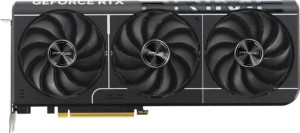
Asus Prime GeForce RTX 5070 Ti
Gigabyte GeForce RTX 5070 Ti Eagle OC SFF
VS
Asus TUF Gaming GeForce RTX 5070 Ti
Gigabyte GeForce RTX 5070 Ti Eagle OC SFF
VS
MSI GeForce RTX 5070 Ti Ventus 3X OC
Gigabyte GeForce RTX 5070 Ti Eagle OC SFF
VS
MSI GeForce RTX 5070 Ti Shadow 3X
Gigabyte GeForce RTX 5070 Ti Eagle OC SFF
VS
Palit GeForce RTX 5070 Ti GamingPro-S
Gigabyte GeForce RTX 5070 Ti Eagle OC SFF
VS
Gigabyte GeForce RTX 5070 Ti WindForce OC SFF
Gigabyte GeForce RTX 5070 Ti Eagle OC SFF
VS
MSI GeForce RTX 5080 Ventus 3X OC
Gigabyte GeForce RTX 5070 Ti Eagle OC SFF
VS
Palit GeForce RTX 5070 Ti GamingPro OC
Gigabyte GeForce RTX 5070 Ti Eagle OC SFF
VS
Gigabyte GeForce RTX 5070 Ti Gaming OC