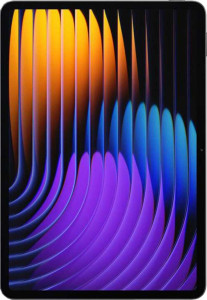
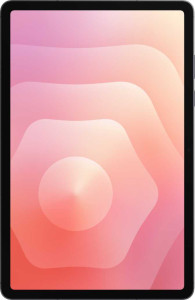
Huawei MatePad 11.5 S (2025) specifications and in-depth review

Huawei MatePad 11.5 S (2025)

Manufacturer: Huawei

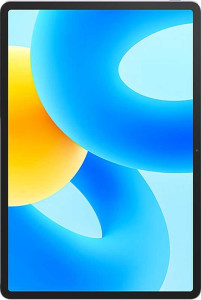
The Huawei MatePad 11.5 S (2025) is a mid-to-upper-range tablet aimed at users who need a capable slate for productivity and media consumption. It ships with both a stylus and a detachable keyboard, making it a reasonably self-contained package for note-taking or document work straight out of the box. The device measures 6.1 mm thick and weighs 515 g, keeping it relatively slim while accommodating an 8800 mAh battery with fast-charging support.

The 11.5″ IPS LCD panel resolves at 2800 x 1840 px, yielding a pixel density of 291 ppi, and runs at a 144Hz refresh rate with a 1500:1 contrast ratio and an anti-reflection coating. Under the hood sits the HiSilicon Kirin 9000 SoC, built on a 5 nm process and paired with 12 GB of RAM running at 2750 MHz and 512 GB of internal storage expandable via a memory card slot. Connectivity covers Wi-Fi 6 (802.11ax) and Bluetooth 5.2, while the USB Type-C port meets the USB 3.0 standard. The main camera captures 13 MP stills and records 1080p video at 30 fps, backed by a BSI sensor and an f/1.8 aperture, and the tablet also features stereo speakers along with a gyroscope and accelerometer.

Pros
  • The 144Hz refresh rate on the 11.5-inch IPS panel ensures noticeably smoother scrolling and on-screen motion for everyday use
  • Comes bundled with both a stylus supporting 4096 pressure levels and a detachable keyboard, making it ready for note-taking and typing tasks without additional accessories
  • The 8800 mAh battery supports fast charging, reducing downtime between uses
  • 512GB of internal storage combined with an external memory slot provides substantial space that can be expanded further
  • Wi-Fi 6 support enables faster and more reliable wireless connections on compatible networks
  • The HiSilicon Kirin 9000 SoC is built on a 5nm process with 12GB of RAM at 2750MHz, offering a solid foundation for multitasking and demanding applications
Cons
  • No water resistance rating means the tablet offers no protection against liquid exposure
  • The detachable keyboard lacks backlighting, limiting usability in low-light environments
  • There is no fingerprint scanner or 3D facial recognition, leaving the tablet without a dedicated biometric unlock method
  • Wireless charging is not supported, restricting recharging to wired connections only
  • GPS is absent, making the tablet unsuitable for standalone navigation without an external solution
  • No 3.5mm headphone jack is present, ruling out direct use of wired headphones without an adapter
Who is this for?

This tablet is a solid fit for students, writers, and light creative professionals who want a versatile productivity device without carrying multiple accessories, since the bundled stylus with 4096 pressure levels and detachable keyboard make it immediately usable for note-taking, sketching, and document work. The 144Hz IPS display combined with 12GB of RAM and the 5nm Kirin 9000 chipset also makes it well-suited for media consumption, casual gaming, and smooth multitasking across split-screen apps. Users who work primarily on Wi-Fi in fixed locations will benefit from the Wi-Fi 6 support and the generous 512GB of expandable storage, making it a capable companion for home or classroom use.

Who is this NOT for?

Users who need reliable outdoor or field use will find the complete absence of water resistance and GPS a significant limitation, ruling it out for navigation, fieldwork, or use in environments where moisture exposure is a realistic concern. Those who rely on biometric security will be disappointed by the lack of a fingerprint scanner or facial recognition, making secure unlocking less convenient. The tablet is also a poor fit for professionals who depend on cellular connectivity for on-the-go work, as there is no 4G or 5G module, and the missing 3.5mm headphone jack adds friction for users who prefer wired audio without adapters.

Design:

weight 515 g
thickness 6.1 mm
width 261 mm
height 177.3 mm
volume 282.27933 cm³
Stylus included
Has a detachable keyboard
Has a backlit keyboard
water resistance None
Has tilt sensitivity
pen pressure levels 4096

The Huawei MatePad 11.5 S (2025) measures 261 x 177.3 mm with a 6.1 mm thickness and a weight of 515 g, giving it a fairly slim and manageable form factor for a tablet of its size. It comes bundled with a stylus that supports 4096 pressure levels, though tilt sensitivity is not available. A detachable keyboard is also included in the package, although it lacks backlighting. The tablet carries no water resistance rating, so exposure to liquids is not covered.

Display:

screen size 11.5"
resolution 2800 x 1840 px
pixel density 291 ppi
Display type LCD, IPS
refresh rate 144Hz
has branded damage-resistant glass
has anti-reflection coating
supports HDR10
has a touch screen
Has sapphire glass display
supports HDR10+
contrast ratio 1500:1
supports Dolby Vision
Has an e-paper display

The tablet features an 11.5″ IPS LCD touchscreen with a resolution of 2800 x 1840 px and a pixel density of 291 ppi, delivering reasonably sharp visuals across its panel. The display runs at a 144Hz refresh rate, which contributes to smoother on-screen motion, and maintains a contrast ratio of 1500:1 alongside an anti-reflection coating to help reduce glare. Neither HDR10, HDR10+, nor Dolby Vision are supported, and the screen does not use branded damage-resistant glass or sapphire glass.

Performance:

internal storage 512GB
RAM 12GB
Chipset (SoC) name HiSilicon Kirin 9000
GPU name Mali-G57
CPU speed 1 x 3.13 & 3 x 2.54 & 4 x 2.05 GHz
has an external memory slot
semiconductor size 5 nm
Supports 64-bit
Has integrated LTE
Uses big.LITTLE technology
DirectX version DirectX 12
Has integrated graphics
L2 cache 0.512 MB
CPU threads 8 threads
Supports ECC memory
RAM speed 2750 MHz
Has TrustZone
L1 cache 64 KB
turbo clock speed 3.3GHz
Thermal Design Power (TDP) 6W
L2 core 0.256 MB/core
L3 cache 4 MB
L3 core 2 MB/core
maximum memory bandwidth 44 GB/s
OpenGL ES version 3.2
OpenCL version 2

The tablet is powered by the HiSilicon Kirin 9000 SoC, fabricated on a 5 nm process and configured with an 8-thread CPU running in a big.LITTLE arrangement at speeds of 1 x 3.13, 3 x 2.54, and 4 x 2.05 GHz, with a turbo frequency reaching 3.3 GHz and a TDP of 6W. Graphics are handled by an integrated Mali-G57 GPU with support for DirectX 12, OpenGL ES 3.2, and OpenCL 2. The chipset is paired with 12 GB of RAM at 2750 MHz and 512 GB of internal storage, with a maximum memory bandwidth of 44 GB/s, and storage can be expanded further via the external memory slot. Cache is organized across 64 KB of L1, 0.512 MB of L2 at 0.256 MB per core, and 4 MB of L3 at 2 MB per core. The SoC also includes integrated LTE and ARM TrustZone support, while ECC memory is not supported.

Cameras:

megapixels (main camera) 13 MP
megapixels (front camera) 8MP
video recording (main camera) 1080 x 30 fps
has a flash
has a front camera
has a built-in HDR mode
can create panoramas in-camera
has touch autofocus
optical zoom 0x
has a BSI sensor
has manual white balance
has a CMOS sensor
wide aperture (main camera) 1.8f
supports HDR10 recording
has continuous autofocus when recording movies
supports Dolby Vision recording
Has a front-facing LED flash
number of flash LEDs 1
has manual ISO
has a video light
Has timelapse function
wide aperture (front camera) 2f
Shoots 360° panorama
has a serial shot mode
has built-in optical image stabilization
has 3D photo/video recording capabilities
Has a dual-tone LED flash
has manual focus
Has a RGB LED flash
has manual exposure
has manual shutter speed

The main camera resolves at 13 MP with an f/1.8 aperture and uses a CMOS BSI sensor, recording video at up to 1080p at 30 fps with continuous autofocus during recording and a single LED flash, though optical zoom, optical image stabilization, and HDR10 or Dolby Vision recording are not available. Manual controls cover ISO, white balance, focus, and exposure, while timelapse and HDR photo modes are also supported; burst mode and manual shutter speed are absent. The front camera captures 8 MP stills at an f/2.0 aperture and includes a video light, but has no dedicated flash of its own. Neither panorama nor 360° panorama shooting is supported, and the flash uses a standard single-tone LED rather than dual-tone or RGB configurations.

Audio:

has aptX
has aptX HD
has LDAC
has aptX Low Latency
has aptX Adaptive
has aptX Lossless
has stereo speakers
has a socket for a 3.5 mm audio jack
Has a radio

The tablet includes stereo speakers for built-in audio output, but omits a 3.5 mm headphone jack and does not feature a radio. On the wireless audio side, none of the Qualcomm aptX variants — including aptX, aptX HD, aptX Low Latency, aptX Adaptive, and aptX Lossless — are supported, and LDAC is likewise absent.

Battery:

battery power 8800 mAh
Supports fast charging
has wireless charging
has a battery level indicator
has a rechargeable battery
has a removable battery

The tablet is equipped with an 8800 mAh rechargeable battery that supports fast charging, and a battery level indicator is available to keep track of remaining charge. Wireless charging is not supported, and the battery is non-removable.

Connectivity & Features:

Wi-Fi version Wi-Fi 4 (802.11n), Wi-Fi 5 (802.11ac), Wi-Fi 6 (802.11ax)
has camera/microphone privacy options
supports split screen
has dark mode
has battery health check
Has USB Type-C
has a cellular module
has 5G support
is a multi-user system
gets direct OS updates
has GPS
has a child lock
has an HDMI output
has NFC
Has a fingerprint scanner
USB version 3
Supports widgets
Bluetooth version 5.2
has a gyroscope
has a compass
supports Wi-Fi
Has sharing intents
Has customizable notifications
Uses 3D facial recognition
Has a barometer
has an accelerometer
has voice commands
Has an iris scanner
Has a built-in projector
supports Ethernet
Has an infrared sensor
Tracks the current position of a mobile device

Wireless connectivity covers Wi-Fi 6 (802.11ax) alongside Wi-Fi 4 and Wi-Fi 5, paired with Bluetooth 5.2, while the wired interface is handled by a USB Type-C port running at USB 3.0 speeds; HDMI output and Ethernet are not available. The tablet has no cellular module, meaning neither 4G nor 5G connectivity is present, and GPS, NFC, and an infrared sensor are also absent. On the sensor side, a gyroscope and accelerometer are included, but there is no compass or barometer. Software features include split-screen multitasking, multi-user support, dark mode, widgets, voice commands, sharing intents, customizable notifications, a child lock, camera and microphone privacy options, battery health check, and mobile device position tracking. Biometric security options such as a fingerprint scanner, iris scanner, and 3D facial recognition are not supported, and the device does not receive direct OS updates from the vendor.

Final Verdict

The Huawei MatePad 11.5 S (2025) presents itself as a well-rounded productivity-oriented tablet that arrives ready to work, with its included stylus and detachable keyboard complementing a 144Hz IPS display that makes everyday tasks and media consumption genuinely comfortable. The Kirin 9000 chipset, 12GB of RAM, and generous 512GB of expandable storage give it a capable technical foundation for multitasking and creative workflows, while Wi-Fi 6 and fast charging round out its practical feature set. It does carry notable gaps — the absence of GPS, cellular connectivity, biometric security, and water resistance narrows its appeal to users who operate mainly in controlled, indoor environments. For those who fit that profile, it stands as a competent all-in-one slate; those with more demanding mobility or security requirements will need to weigh those omissions carefully.

Popular Comparisons

Huawei MatePad 11.5 S (2025)
VS
Huawei MatePad 11.5 (2025)
Huawei MatePad 11.5 S (2025)
VS
Xiaomi Pad 8 Pro
Xiaomi Pad 8 Pro
Huawei MatePad 11.5 S (2025)
VS
Xiaomi Redmi Pad 2 Pro
Huawei MatePad 11.5 S (2025)
VS
Motorola Moto Pad 60 Neo
Huawei MatePad 11.5 S (2025)
VS
Huawei MatePad Air (2025)
Huawei MatePad 11.5 S (2025)
VS
Samsung Galaxy Tab S10 Lite
Huawei MatePad 11.5 S (2025)
VS
Samsung Galaxy Tab S10 FE
Huawei MatePad 11.5 S (2025)
VS
Xiaomi Pad 7 (128GB / 8GB RAM)
Huawei MatePad 11.5 S (2025)
VS
Lenovo Idea Tab Pro
Lenovo Idea Tab Pro
Huawei MatePad 11.5 S (2025)
VS
Samsung Galaxy Tab S11