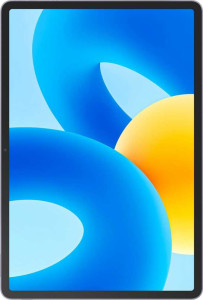
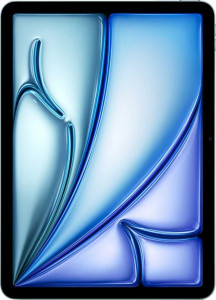
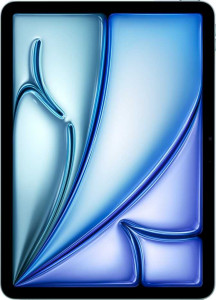
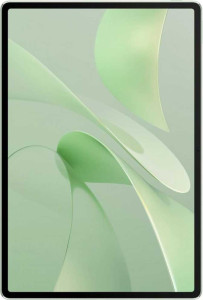
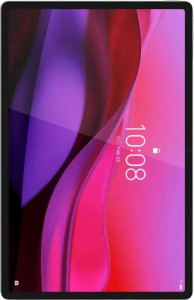
Design:
| weight |
508 g |
| thickness |
5.5 mm |
| width |
271.3 mm |
| height |
182.5 mm |
| volume |
272.317375 cm³ |
| Stylus included |
✕ |
| Has a detachable keyboard |
✕ |
| Has a backlit keyboard |
✕ |
| water resistance |
None |
| Has tilt sensitivity |
✕ |
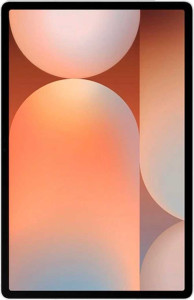
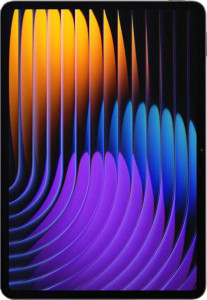
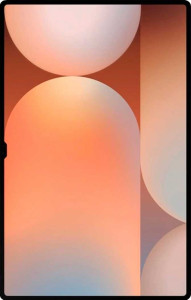
The Huawei MatePad Pro 12.2 (2025) measures 271.3 x 182.5 mm with a slim 5.5 mm thickness and weighs 508 g, giving it a total volume of 272.317375 cm³. The tablet ships without a stylus, detachable keyboard, or backlit keyboard, and it offers no water resistance. Tilt sensitivity is also absent, reflecting a design that keeps the hardware focused on its core slate form factor.
Display:
| screen size |
12.2" |
| resolution |
2800 x 1840 px |
| pixel density |
275 ppi |
| Display type |
OLED/AMOLED |
| refresh rate |
144Hz |
| has branded damage-resistant glass |
✕ |
| has anti-reflection coating |
✓ |
| supports HDR10 |
✕ |
| brightness (typical) |
2000 nits |
| has a touch screen |
✓ |
| Has sapphire glass display |
✕ |
| supports HDR10+ |
✕ |
| contrast ratio |
2000000:1 |
| Has an e-paper display |
✓ |
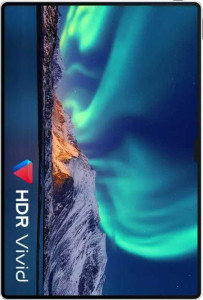
The display on this tablet measures 12.2″ and uses OLED/AMOLED technology with a resolution of 2800 x 1840 px at a pixel density of 275 ppi, paired with a 144Hz refresh rate for smooth on-screen motion. Brightness reaches 2000 nits typical, and the contrast ratio stands at 2,000,000:1, while an anti-reflection coating helps reduce glare. The screen supports touch input and also functions as an e-paper display, though it does not include branded damage-resistant glass, sapphire glass, or support for HDR10 or HDR10+.
Performance:
| internal storage |
512GB |
| RAM |
12GB |
| Chipset (SoC) name |
HiSilicon Kirin 9000S |
| GPU name |
Mali-G57 |
| CPU speed |
1 x 2.62 & 3 x 2.15 & 4 x 1.53 GHz |
| has an external memory slot |
✕ |
| semiconductor size |
5 nm |
| Supports 64-bit |
✓ |
| Has integrated LTE |
✓ |
| Uses big.LITTLE technology |
✓ |
| DirectX version |
DirectX 12 |
| Has integrated graphics |
✓ |
| L2 cache |
0.512 MB |
| CPU threads |
8 threads |
| Supports ECC memory |
✕ |
| RAM speed |
2750 MHz |
| Has TrustZone |
✓ |
| L1 cache |
64 KB |
| turbo clock speed |
3.3GHz |
| Thermal Design Power (TDP) |
6W |
| L2 core |
0.256 MB/core |
| L3 cache |
4 MB |
| L3 core |
2 MB/core |
| maximum memory bandwidth |
44 GB/s |
| OpenGL ES version |
3.2 |
| OpenCL version |
2 |
The tablet is powered by the HiSilicon Kirin 9000S chipset, built on a 5 nm process with an octa-core CPU configuration — one core at 2.62 GHz, three at 2.15 GHz, and four at 1.53 GHz — reaching a turbo clock speed of 3.3 GHz across 8 threads, with a TDP of 6W. It pairs with 12 GB of RAM running at 2750 MHz and 512 GB of internal storage, though no external memory slot is available. The SoC uses big.LITTLE technology, supports 64-bit processing, and integrates both LTE and a Mali-G57 GPU with DirectX 12, OpenGL ES 3.2, and OpenCL 2 support. Cache is distributed across 64 KB L1, 0.512 MB L2 (0.256 MB/core), and 4 MB L3 (2 MB/core), with a maximum memory bandwidth of 44 GB/s. TrustZone is supported for hardware-level security, while ECC memory is not available.
Cameras:
| megapixels (main camera) |
50 & 8 MP |
| megapixels (front camera) |
8MP |
| video recording (main camera) |
2160 x 30 fps |
| has a flash |
✓ |
| has a front camera |
✓ |
| has a built-in HDR mode |
✓ |
| can create panoramas in-camera |
✕ |
| has touch autofocus |
✓ |
| optical zoom |
0x |
| has a BSI sensor |
✕ |
| has manual white balance |
✓ |
| has a CMOS sensor |
✓ |
| supports HDR10 recording |
✕ |
| has continuous autofocus when recording movies |
✓ |
| supports Dolby Vision recording |
✕ |
| Has a front-facing LED flash |
✕ |
| number of flash LEDs |
1 |
| has manual ISO |
✓ |
| has a video light |
✓ |
| wide aperture (front camera) |
2f |
| Shoots 360° panorama |
✕ |
| has a serial shot mode |
✕ |
| has built-in optical image stabilization |
✕ |
| has 3D photo/video recording capabilities |
✕ |
| Has a dual-tone LED flash |
✕ |
| has manual focus |
✓ |
| Has a RGB LED flash |
✕ |
| has manual exposure |
✓ |
| has manual shutter speed |
✕ |
The rear camera system consists of two lenses — a 50 MP primary sensor and an 8 MP secondary — both using CMOS technology, while the front camera offers 8 MP with a wide aperture of f/2. Main camera video recording tops out at 2160p at 30 fps, supported by a video light and continuous autofocus during recording, though optical image stabilization, HDR10 recording, and Dolby Vision recording are not available. Manual controls cover ISO, focus, exposure, and white balance, with touch autofocus and built-in HDR mode also on hand, but manual shutter speed and burst mode are absent. The flash setup includes a single LED unit, with no dual-tone, RGB, or front-facing flash present. Optical zoom is not available, and features such as in-camera panorama, 360° panorama, and 3D photo or video recording are not supported.
Audio:
| has aptX |
✕ |
| has aptX HD |
✕ |
| has LDAC |
✕ |
| has aptX Low Latency |
✕ |
| has aptX Adaptive |
✕ |
| has aptX Lossless |
✕ |
| has stereo speakers |
✓ |
| has a socket for a 3.5 mm audio jack |
✕ |
| Has a radio |
✕ |
The tablet includes stereo speakers but lacks a 3.5 mm headphone jack and a radio tuner. On the wireless audio side, none of the advanced Bluetooth codec options are supported — aptX, aptX HD, aptX Low Latency, aptX Adaptive, aptX Lossless, and LDAC are all absent.
Battery:
| battery power |
10100 mAh |
| Supports fast charging |
✕ |
| has wireless charging |
✕ |
| has a battery level indicator |
✓ |
| has a rechargeable battery |
✓ |
| has a removable battery |
✕ |
The tablet houses a 10,100 mAh rechargeable battery with a built-in battery level indicator, though it is not removable. Neither fast charging nor wireless charging is supported.
Connectivity & Features:
| Wi-Fi version |
Wi-Fi 4 (802.11n), Wi-Fi 5 (802.11ac), Wi-Fi 6 (802.11ax), Wi-Fi 7 (802.11be) |
| has camera/microphone privacy options |
✓ |
| supports split screen |
✓ |
| has dark mode |
✓ |
| has battery health check |
✓ |
| Has USB Type-C |
✓ |
| has a cellular module |
✕ |
| has 5G support |
✕ |
| is a multi-user system |
✓ |
| gets direct OS updates |
✕ |
| has GPS |
✓ |
| has a child lock |
✓ |
| has an HDMI output |
✕ |
| has NFC |
✕ |
| Has a fingerprint scanner |
✓ |
| USB version |
3.2 |
| Supports widgets |
✓ |
| Bluetooth version |
5.2 |
| has a gyroscope |
✓ |
| has a compass |
✓ |
| supports Wi-Fi |
✓ |
| Has sharing intents |
✓ |
| Has customizable notifications |
✓ |
| Uses 3D facial recognition |
✕ |
| supports Galileo |
✓ |
| Has a barometer |
✕ |
| has an accelerometer |
✓ |
| has voice commands |
✓ |
| Has an iris scanner |
✕ |
| Has a built-in projector |
✕ |
| supports Ethernet |
✕ |
| Has an infrared sensor |
✕ |
| Tracks the current position of a mobile device |
✓ |
Wireless connectivity covers Wi-Fi 4 through Wi-Fi 7 (802.11n/ac/ax/be) and Bluetooth 5.2, while a USB Type-C port running at USB 3.2 handles wired connections; HDMI output, Ethernet, and NFC are not available. The tablet has no cellular module and therefore no 5G support, but GPS and Galileo are present for location tracking, complemented by a gyroscope, compass, and accelerometer. Security options include a fingerprint scanner and camera/microphone privacy controls, though 3D facial recognition and an iris scanner are absent. On the software side, the tablet supports split screen, dark mode, widgets, multi-user profiles, child lock, customizable notifications, sharing intents, voice commands, and battery health check, but it does not receive direct OS updates from the vendor. A barometer, infrared sensor, and built-in projector are not included.