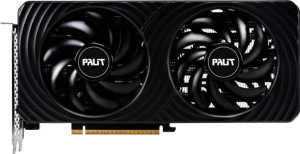
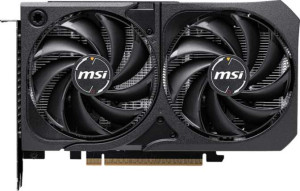
Palit GeForce RTX 5060 Infinity 3 specifications and in-depth review

Palit GeForce RTX 5060 Infinity 3

Manufacturer: Palit

The Palit GeForce RTX 5060 Infinity 3 is a desktop graphics card based on NVIDIA's Blackwell architecture, manufactured on a 5 nm process with 21,900 million transistors. It ships with 8GB of GDDR7 memory across a 128-bit bus, delivering an effective memory speed of 28,000 MHz and a maximum bandwidth of 448 GB/s. The card measures 291.9 mm in length and 116.6 mm in height, drawing 145W under load via PCIe 5.0.

The RTX 5060 Infinity 3 is configured with 3,840 shading units, 120 texture mapping units, and 48 render output units, yielding a texture rate of 299.6 GTexels/s and 19.18 TFLOPS of floating-point performance. A base clock of 2,280 MHz boosts to 2,497 MHz under load. Display output consists of one HDMI 2.1b port and three DisplayPort outputs, supporting up to four monitors simultaneously. The card supports DirectX 12 Ultimate, OpenGL 4.6, OpenCL 3.0, ray tracing, DLSS, and Intel Resizable BAR, alongside ECC memory support.

Pros
  • GDDR7 memory with an effective speed of 28,000 MHz and 448 GB/s bandwidth provides substantial throughput for memory-intensive workloads
  • Support for ray tracing and DLSS expands rendering options for compatible applications
  • Four simultaneous display outputs give flexibility for multi-monitor setups
  • HDMI 2.1b and three full-size DisplayPort outputs cover a wide range of modern display connections
  • ECC memory support adds a layer of data reliability for compute-sensitive tasks
  • Intel Resizable BAR support allows the CPU to access the full VRAM pool more efficiently
Cons
  • The 128-bit memory bus width is relatively narrow for an 8GB GDDR7 configuration, which may limit headroom in bandwidth-demanding scenarios
  • A 145W TDP requires adequate case airflow, and the card does not include an air-water cooling option
  • No USB-C output is available, limiting compatibility with USB-C or Thunderbolt-based displays
  • The card lacks RGB lighting, which may not suit builds where visual customisation is a priority
Who is this for?

This card is a solid fit for users running multi-monitor setups, given its support for up to four simultaneous displays across HDMI 2.1b and three full-size DisplayPort outputs. Those working on compute or data-integrity-sensitive workloads will appreciate the ECC memory support alongside GDDR7 memory with 448 GB/s of bandwidth. The inclusion of ray tracing, DLSS, and DirectX 12 Ultimate also makes it appropriate for users engaged in graphics rendering or content creation pipelines that benefit from hardware-accelerated features.

Who is this NOT for?

Users who demand the highest memory capacity for large-scale AI inference, 3D scene rendering, or high-resolution texture work may find the 8GB VRAM ceiling limiting, particularly given the 128-bit bus width that constrains scalability. Those building compact or passively cooled systems may also struggle, as the card's 145W TDP and 291.9 mm length require a well-ventilated, full-size case with active cooling. Additionally, users seeking a display connection via USB-C or Thunderbolt will need an adapter, as no USB-C output is present.

Performance:

GPU clock speed 2280 MHz
GPU turbo 2497 MHz
pixel rate 119.9 GPixel/s
floating-point performance 19.18 TFLOPS
texture rate 299.6 GTexels/s
GPU memory speed 1750 MHz
shading units 3840
texture mapping units (TMUs) 120
render output units (ROPs) 48
Has Double Precision Floating Point (DPFP)

The Performance section of this card centers on a base GPU clock of 2,280 MHz that boosts up to 2,497 MHz under load, paired with a GPU memory speed of 1,750 MHz. The 3,840 shading units work alongside 120 texture mapping units and 48 render output units to produce a texture rate of 299.6 GTexels/s and a pixel rate of 119.9 GPixel/s. Overall floating-point throughput reaches 19.18 TFLOPS, and the card includes support for Double Precision Floating Point (DPFP), broadening its suitability for compute-oriented workloads.

Memory:

effective memory speed 28000 MHz
maximum memory bandwidth 448 GB/s
VRAM 8GB
GDDR version GDDR7
memory bus width 128-bit
Supports ECC memory

This card is equipped with 8GB of GDDR7 VRAM running across a 128-bit memory bus, reaching an effective memory speed of 28,000 MHz. That configuration yields a maximum memory bandwidth of 448 GB/s, providing substantial throughput for memory-intensive tasks. ECC memory support is also included, adding a layer of data integrity for workloads where memory accuracy is a priority.

Features:

DirectX version DirectX 12 Ultimate
OpenGL version 4.6
OpenCL version 3
Supports multi-display technology
supports ray tracing
Supports 3D
supports DLSS
has XeSS (XMX)
AMD SAM / Intel Resizable BAR Intel Resizable BAR
has LHR
has RGB lighting
supported displays 4

On the software and feature side, this card supports DirectX 12 Ultimate, OpenGL 4.6, and OpenCL 3, covering a broad range of graphics and compute APIs. Hardware-accelerated ray tracing and DLSS are both supported, alongside stereoscopic 3D and multi-display technology for up to four simultaneous outputs. Intel Resizable BAR is included to help the CPU access the full frame buffer more efficiently. XeSS (XMX) and LHR are not present, and the card does not feature RGB lighting.

Ports:

has an HDMI output
HDMI ports 1
HDMI version HDMI 2.1b
DisplayPort outputs 3
USB-C ports 0
DVI outputs 0
mini DisplayPort outputs 0

The card's output configuration consists of one HDMI 2.1b port and three DisplayPort outputs, totaling four available display connections. There are no USB-C, DVI, or mini DisplayPort outputs on this model.

General info:

GPU architecture Blackwell
Thermal Design Power (TDP) 145W
PCI Express (PCIe) version 5
semiconductor size 5 nm
number of transistors 21900 million
Has air-water cooling
width 291.9 mm
height 116.6 mm

This card is built on the Blackwell architecture, fabricated on a 5 nm process with 21,900 million transistors, and connects to the motherboard via PCIe 5.0. It carries a Thermal Design Power of 145W and does not include air-water cooling. Physically, the card measures 291.9 mm in width and 116.6 mm in height.

Final Verdict

The Palit GeForce RTX 5060 Infinity 3 is a well-rounded graphics card for users whose workflows intersect rendering, compute reliability, and multi-display flexibility. Its GDDR7 memory with 448 GB/s of bandwidth, combined with support for ray tracing, DLSS, and DirectX 12 Ultimate, positions it as a capable option for content creators and users running feature-rich graphics pipelines. That said, the 8GB VRAM capacity and 128-bit bus width do impose practical ceilings for the most demanding workloads, and the 145W TDP calls for a suitably ventilated build. Taken as a whole, this card delivers a coherent feature set within its specification tier, making it a reasonable choice for users who can work within those boundaries.

Popular Comparisons

Palit GeForce RTX 5060 Infinity 3
VS
Palit GeForce RTX 5060 Dual
Palit GeForce RTX 5060 Infinity 3
VS
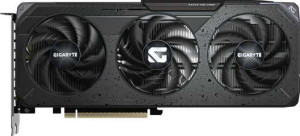
Gigabyte GeForce RTX 5060 Gaming OC
Palit GeForce RTX 5060 Infinity 3
VS
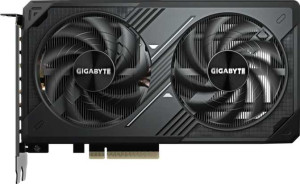
Gigabyte GeForce RTX 5060 WindForce OC
Palit GeForce RTX 5060 Infinity 3
VS
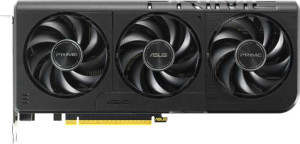
Asus Prime GeForce RTX 5060
Palit GeForce RTX 5060 Infinity 3
VS
MSI GeForce RTX 5060 Shadow 2X OC