Sapphire Radeon AI Pro R9700 specifications and in-depth review

Sapphire Radeon AI Pro R9700

Manufacturer: Sapphire

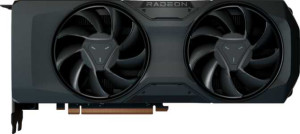
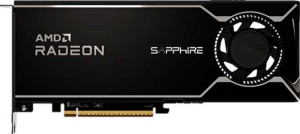
The Sapphire Radeon AI Pro R9700 is a graphics card designed around AMD's RDNA 4.0 architecture, fabricated on a 4nm process node and packed with 53,900 million transistors. It features 47.8 TFLOPS of floating-point performance, making it a specification-dense option in its category. The card runs at a base GPU clock of 1660 MHz with a turbo frequency reaching 2920 MHz, and its compact dimensions of 266.7mm x 111mm place it within a manageable physical footprint for compatible systems.

On the memory side, the R9700 is equipped with 32GB of GDDR6 VRAM across a 256-bit bus, delivering a maximum memory bandwidth of 644.6 GB/s at an effective speed of 20,100 MHz. ECC memory support is included, alongside AMD SAM for resizable BAR functionality. The card supports DirectX 12 Ultimate, OpenGL 4.6, and OpenCL 2.2, and includes ray tracing, FSR4, and stereoscopic 3D capabilities. Connectivity is handled through four DisplayPort outputs, supporting up to four simultaneous displays, while the card connects to the host system via PCIe 5.0.

Pros
  • With 32GB of GDDR6 VRAM and a 644.6 GB/s memory bandwidth, the card can handle large datasets and memory-intensive workloads without frequently hitting capacity limits
  • ECC memory support helps maintain data integrity in error-sensitive or compute-heavy environments
  • Four DisplayPort outputs allow connection of up to four displays simultaneously, which is practical for multi-monitor setups
  • FSR4 upscaling support and ray tracing capability are both present, broadening its compatibility with modern rendering techniques
  • AMD SAM (Resizable BAR) support enables more efficient data transfers between the CPU and GPU
  • Double Precision Floating Point (DPFP) support extends its usefulness to precision-demanding compute tasks
Cons
  • No HDMI output is available, which limits direct connectivity to displays or devices that lack DisplayPort inputs
  • The 300W TDP places a significant power demand on the system, requiring a well-specced power supply
  • Air-water cooling is not included, so thermal management depends entirely on the system's existing cooling setup
  • The absence of RGB lighting may be a drawback for users building visually customized systems
  • XeSS (XMX) is not supported, narrowing upscaling options to AMD FSR4 only
Who is this for?

This card is well-suited to workstation users and professionals who regularly deal with large memory-intensive workloads, thanks to its 32GB of GDDR6 VRAM with ECC support and 644.6 GB/s of memory bandwidth. Its Double Precision Floating Point capability makes it a practical fit for compute and scientific tasks that demand high numerical accuracy. The four DisplayPort outputs also make it a reasonable choice for users running multi-monitor setups, whether for data visualization, content creation, or extended desktop workflows.

Who is this NOT for?

Users looking for a straightforward home theater or media center build will find this card limiting, as it lacks an HDMI output, making direct connection to televisions or consumer displays inconvenient. The 300W TDP makes it a poor fit for compact or low-power system builds where thermal headroom and power supply capacity are constrained. Additionally, users who prefer visually customized rigs will be disappointed by the absence of RGB lighting, and those invested in Intel XeSS upscaling workflows will find no support for XeSS (XMX) on this card.

Performance:

GPU clock speed 1660 MHz
GPU turbo 2920 MHz
pixel rate 373.8 GPixel/s
floating-point performance 47.8 TFLOPS
texture rate 747.5 GTexels/s
GPU memory speed 2518 MHz
shading units 4096
texture mapping units (TMUs) 256
render output units (ROPs) 128
Has Double Precision Floating Point (DPFP)

The Sapphire Radeon AI Pro R9700 operates at a base GPU clock of 1660 MHz, with a turbo frequency that reaches up to 2920 MHz, while GPU memory runs at 2518 MHz. Its computational throughput is rated at 47.8 TFLOPS of floating-point performance, complemented by a pixel rate of 373.8 GPixel/s and a texture rate of 747.5 GTexels/s. The card is built with 4096 shading units, 256 texture mapping units, and 128 render output units, giving it a well-rounded hardware configuration across its rendering pipeline. Double Precision Floating Point (DPFP) is also supported, extending its utility to workloads that require high-precision computation.

Memory:

effective memory speed 20100 MHz
maximum memory bandwidth 644.6 GB/s
VRAM 32GB
GDDR version GDDR6
memory bus width 256-bit
Supports ECC memory

The card is equipped with 32GB of GDDR6 VRAM running at an effective memory speed of 20,100 MHz across a 256-bit bus, yielding a maximum memory bandwidth of 644.6 GB/s. ECC memory support is included, which helps maintain data integrity in error-sensitive workloads.

Features:

DirectX version DirectX 12 Ultimate
OpenGL version 4.6
OpenCL version 2.2
Supports multi-display technology
supports ray tracing
Supports 3D
has FSR4
has XeSS (XMX)
AMD SAM / Intel Resizable BAR AMD SAM
has LHR
has RGB lighting
supported displays 4

The Sapphire Radeon AI Pro R9700 supports DirectX 12 Ultimate, OpenGL 4.6, and OpenCL 2.2, covering a broad range of graphics and compute workloads. Ray tracing and stereoscopic 3D are both supported, as is AMD FSR4 for upscaling, while XeSS (XMX) is not available on this card. Multi-display technology is supported with a maximum of four simultaneous displays, and AMD SAM (Resizable BAR) is included for host-to-GPU memory access optimization. The card does not feature LHR (Lite Hash Rate) restrictions or RGB lighting.

Ports:

has an HDMI output
DisplayPort outputs 4
USB-C ports 0
DVI outputs 0
mini DisplayPort outputs 0

The card's output configuration consists entirely of four DisplayPort outputs, with no HDMI, DVI, mini DisplayPort, or USB-C ports present on this model.

General info:

GPU architecture RDNA 4.0
Thermal Design Power (TDP) 300W
PCI Express (PCIe) version 5
semiconductor size 4 nm
number of transistors 53900 million
Has air-water cooling
width 266.7 mm
height 111 mm

The Sapphire Radeon AI Pro R9700 is built on AMD's RDNA 4.0 architecture, manufactured using a 4nm process node and integrating 53,900 million transistors. It connects via PCIe 5.0 and carries a Thermal Design Power rating of 300W. The card measures 266.7mm in width and 111mm in height, and does not include air-water cooling.
Final Verdict

The Sapphire Radeon AI Pro R9700 presents itself as a specification-driven card built around professional and compute-oriented workloads rather than general consumer use. Its 32GB of ECC-supported GDDR6 VRAM, combined with Double Precision Floating Point capability and a high memory bandwidth, give it a clear identity within memory-intensive and precision-demanding environments. While its 300W power draw and lack of HDMI output place real constraints on system compatibility and display flexibility, these trade-offs appear deliberate for its intended use context. For users whose workflows align with its strengths — multi-display compute setups, data-intensive tasks, and modern rendering pipelines — the R9700 delivers a well-rounded and purposeful specification sheet.

Popular Comparisons

Sapphire Radeon AI Pro R9700
VS
AMD Radeon RX 9070 XT
Sapphire Radeon AI Pro R9700
VS
AMD Radeon RX 7800 XT
Sapphire Radeon AI Pro R9700
VS
Nvidia GeForce RTX 5080
Sapphire Radeon AI Pro R9700
VS
Galax GeForce RTX 5080 1-Click OC